
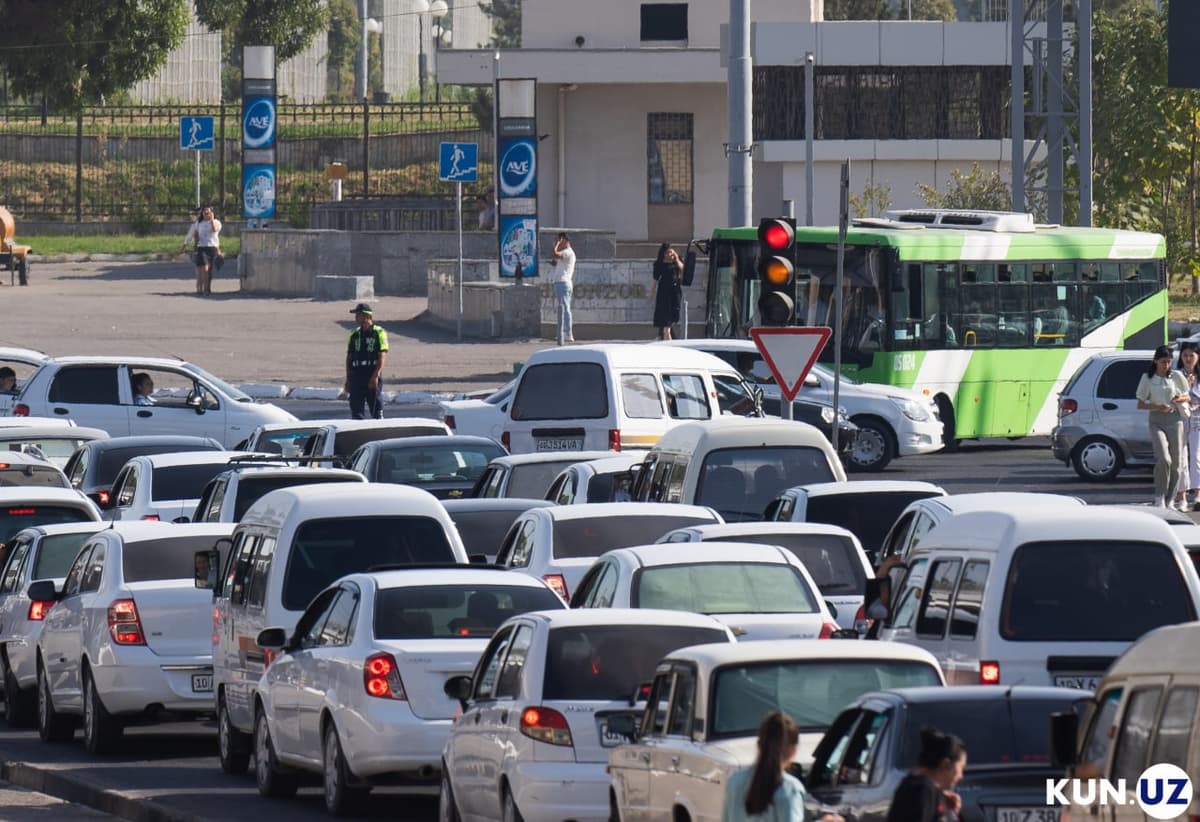
The report highlights several major challenges affecting urban mobility, including traffic congestion, road safety concerns, environmental pollution, and the limited attractiveness of public transport.
Growing population and rising traffic pressure
Currently, about 5.2 million people move around Tashkent every day. This figure includes 3.2 million permanent residents, 1.5 million daily commuters, and around 500,000 temporary residents.
The capacity of the city’s main roads – consisting of 81 streets with a total length of 472 km – is estimated at 400,000 vehicles per day. However, the actual traffic load is nearly double that level, reaching about 770,000 vehicles daily.
Overall, residents and visitors make approximately 11.2 million trips per day across the city. Of these:
- 3.6 million trips are made on foot
- 7.6 million trips are made using transport
Among transport trips:
- 60% are made by private cars
- 35% by buses
- 5% by personal mobility devices
Authorities aim to expand public transport use
The Tashkent city administration aims to increase the share of trips made by public transport from the current 30–35% to 60–65%, bringing the city closer to international standards.
To achieve this goal, authorities plan a significant expansion of both bus and metro services.
Planned measures include:
- increasing the number of buses from 1,897 to 3,161
- expanding routes from 168 to 280
- raising daily passenger numbers from 1.5 million to 3.4 million
The city also intends to expand the Tashkent Metro:
- the number of metro cars will increase from 345 to 895
- metro line length will expand from 71 km to 103 km
- daily ridership is expected to rise from 1 million to 2 million passengers