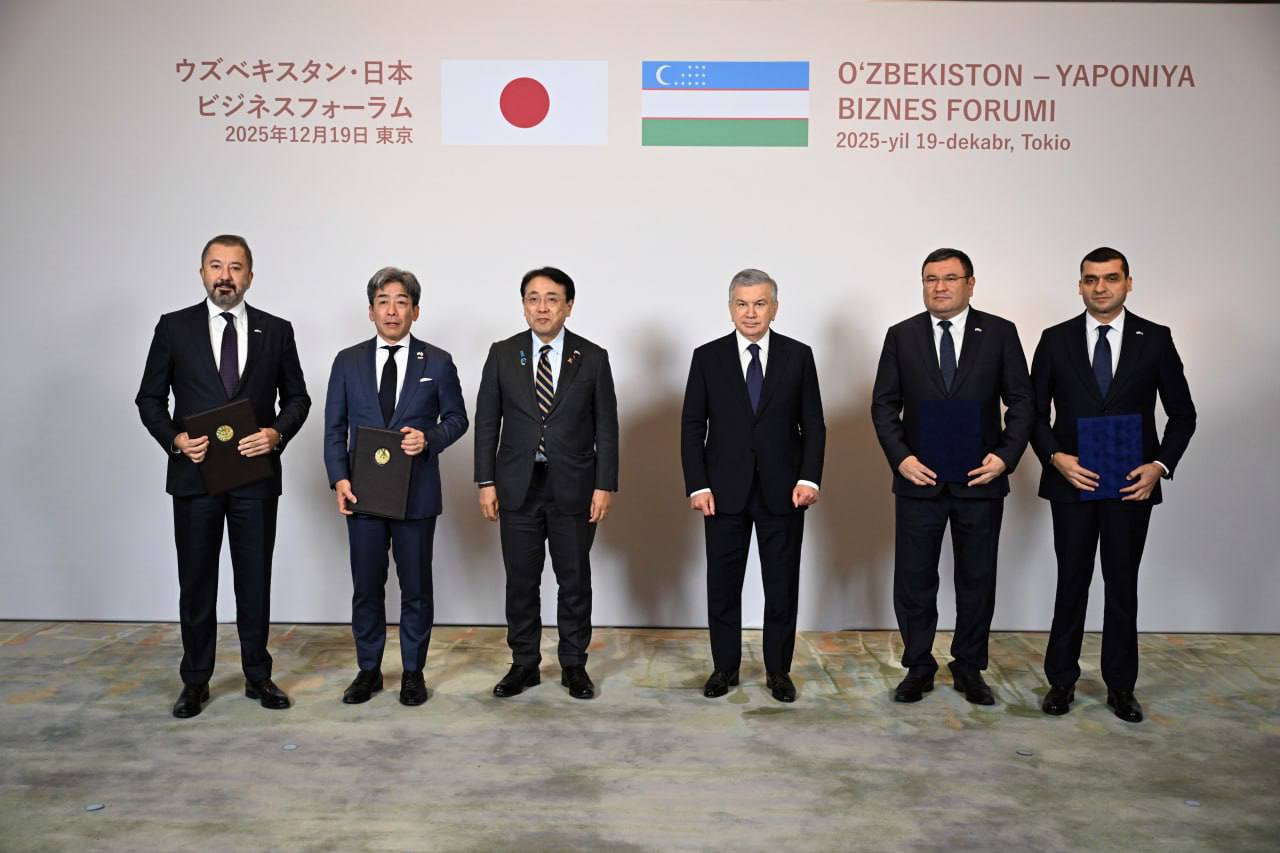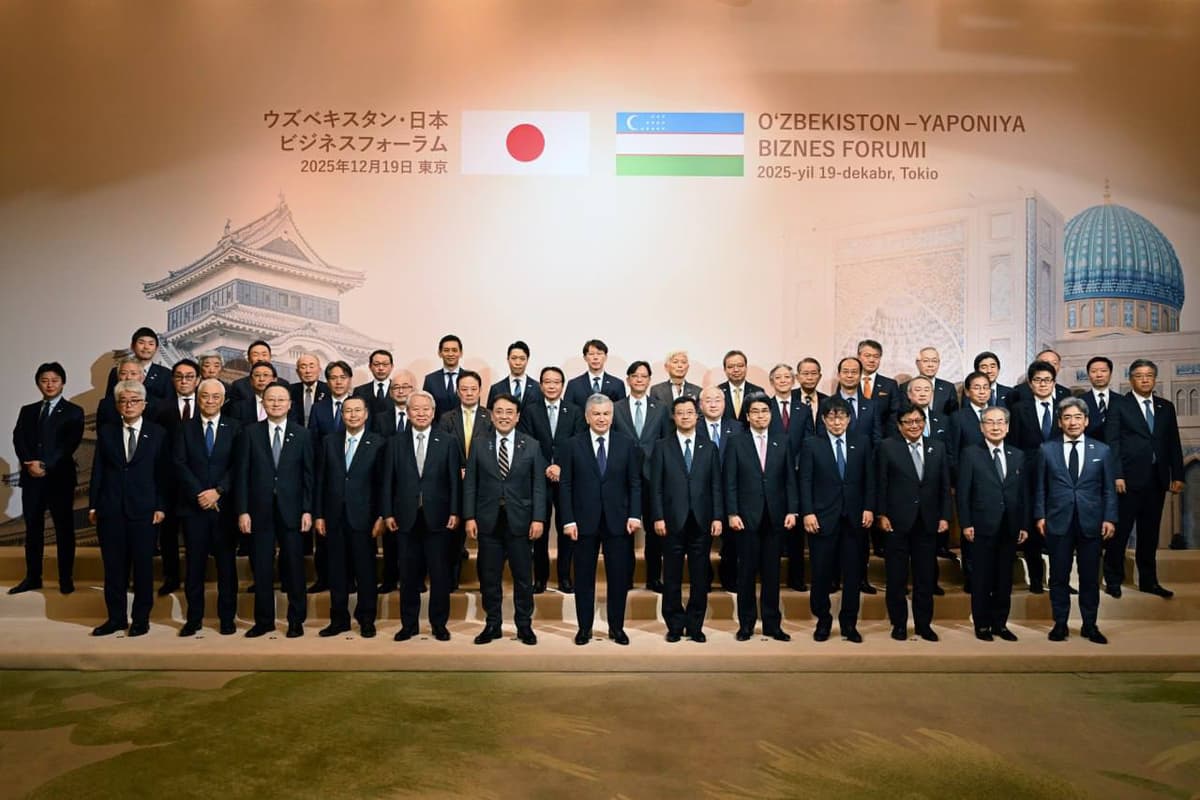
The meeting was attended by Japan’s Minister of Economy, Trade and Industry Ryosei Akazawa, as well as representatives of major corporations including Sojitz, Sumitomo, Toyota, ITOCHU, Mitsubishi, Marubeni, NEC, SBI Holdings, Ajinomoto, Hitachi, Mitsui, Eurus Energy, Chubu Electric Power, Shikoku Electric Power, Shimizu, and Hankyu Travel International. Participants also included the Japan Bank for International Cooperation (JBIC), the Japan International Cooperation Agency (JICA), Nippon Export and Investment Insurance (NEXI), the Japan External Trade Organization (JETRO), ROTOBO, the Japan Organization for Metals and Energy Security (JOGMEC), Norinchukin Bank, SBI Shinsei Bank, and representatives of the Japan Association of Travel Agents.
The president noted that the high-level and diverse composition of the Japanese delegation reflects strong mutual trust and a shared interest in further expanding bilateral economic cooperation. In recent years, Uzbekistan–Japan relations have reached a new qualitative stage, with Japanese companies moving beyond contract-based work to direct investment in Uzbekistan’s economy, the establishment of joint ventures, technology transfer, and the training of national personnel.
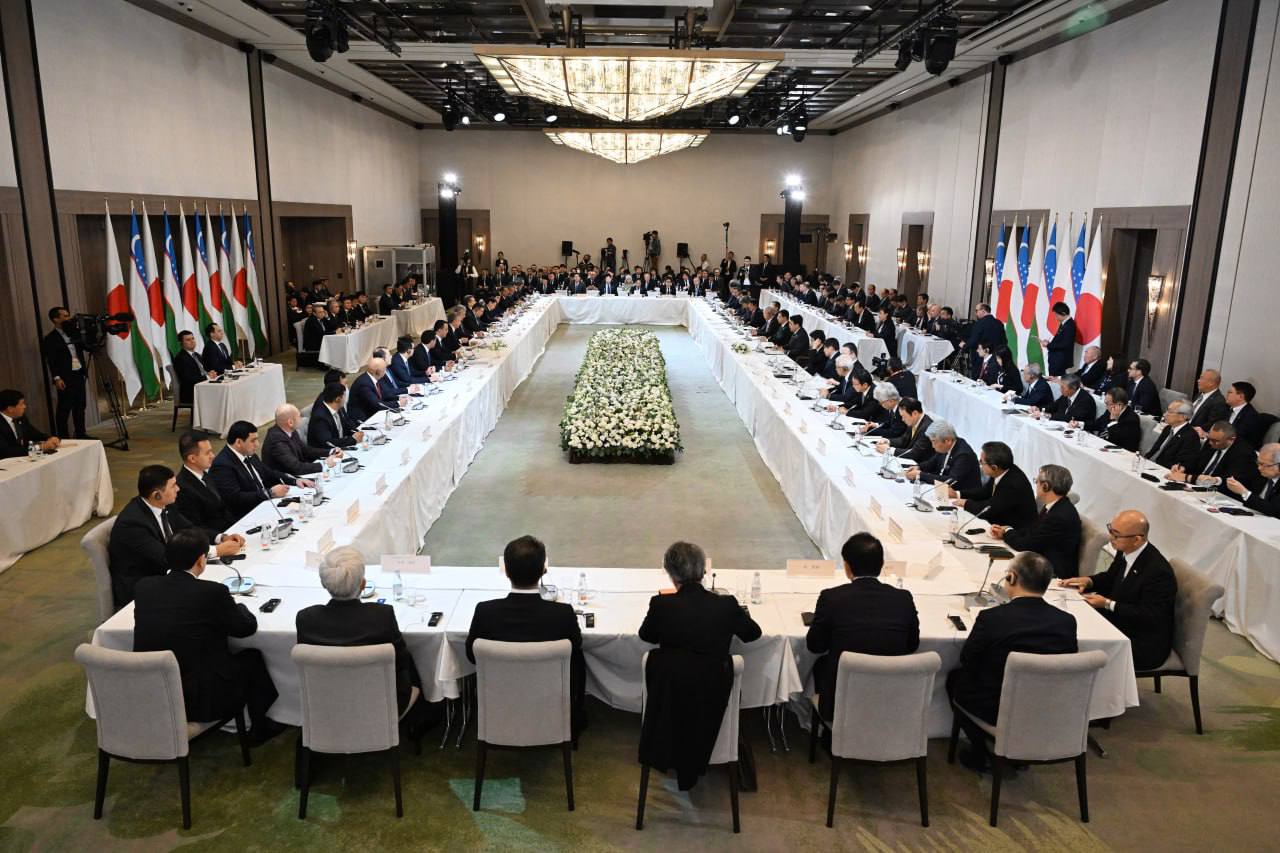
Positive dynamics in trade and economic indicators were highlighted during the meeting. Over the past eight years, bilateral trade has doubled, while the number of Japanese companies operating in Uzbekistan has increased tenfold. Cooperation is steadily expanding in such areas as energy, healthcare, geology, information technology, and infrastructure.
President Mirziyoyev outlined Uzbekistan’s key socio-economic development priorities, noting that the country’s gross domestic product has doubled over the past eight years. He reiterated the goal of elevating Uzbekistan to the group of upper-middle-income countries by 2030. In this context, representatives of Japanese business circles were invited to actively participate in the modernization of the economy, accelerated industrialization, adoption of advanced technologies, productivity growth, and the expansion of export capacity.
The talks identified several priority areas for cooperation. Particular attention was given to energy sustainability and the transition to a green economy, including the development of renewable energy sources and energy storage systems, as well as efforts to reduce the economy’s carbon footprint. Other promising areas included deep processing of critical minerals across the full value chain, expansion of machinery and industrial equipment manufacturing, and the implementation of artificial intelligence and digitalization programs.