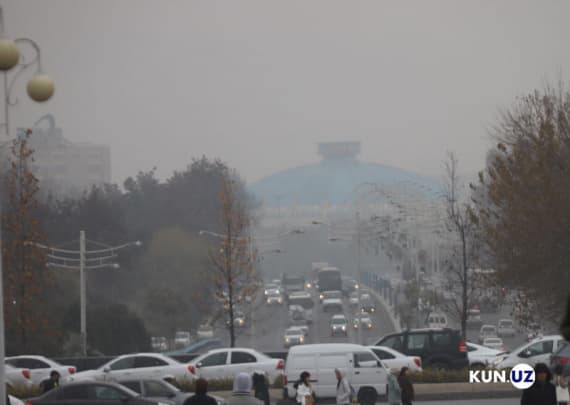
In recent days, air quality across the country has deteriorated due to unfavorable meteorological conditions associated with a temperature inversion. Iskandar Qutbiddinov, deputy chair of the National Committee on Ecology and Climate Change, said the phenomenon is being driven by sharp differences between daytime and nighttime temperatures – in some cases reaching up to 14 degrees – as well as fog formation and reduced wind speeds, which hinder the dispersion of pollutants in the atmosphere.
Based on expert assessments, the unfavorable weather conditions are expected to continue until January 16–17. With the arrival of anticyclones, precipitation and stronger winds are forecast, which should help normalize air quality.
According to information from UzHydromet, as of 9:00 a.m. on January 8, concentrations of PM10 fine particulate matter in Tashkent’s ambient air did not exceed permissible limits. However, PM2.5 concentrations reached 101 µg/m³, exceeding the allowable standard of 60 µg/m³ by 1.7 times.
Special Commission continues its work
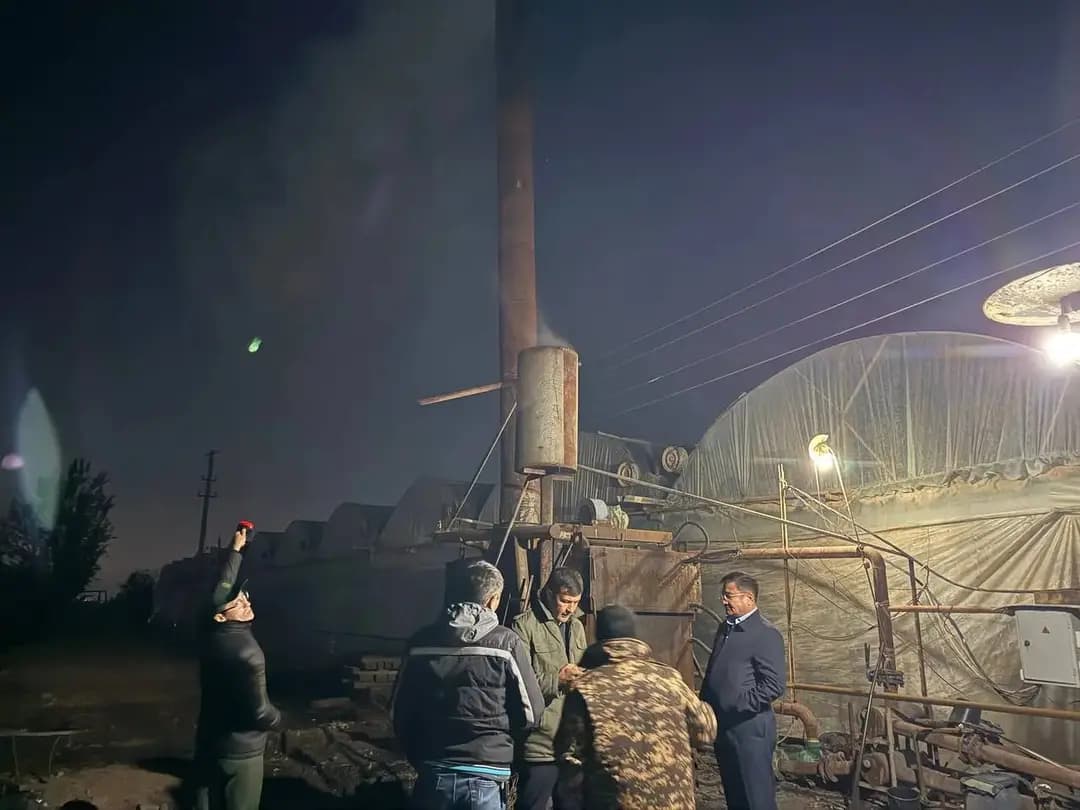
Qutbiddinov noted that the special commission has not suspended its activities and is providing the public with regular updates on the environmental situation while coordinating the work of relevant agencies. At present, the commission is focusing on environmental inspections and control measures at industrial and economic facilities.
To reduce the anthropogenic, that is, human-induced, burden on ambient air during adverse weather conditions, the operating capacity of some enterprises is being restricted, while the activities of others are being temporarily halted.
Between January 1 and January 7, inspections were carried out at 12 industrial enterprises in Tashkent and 22 in the Tashkent region, and enforcement measures were taken. Administrative action was also applied against dozens of vehicles found to be polluting the air. At the same time, preventive measures are underway – monitoring of emission sources has been intensified, and air quality is being assessed on an operative basis.
“Environmental raids and monitoring activities by the special commission will continue even after the inversion ends. All measures being taken are aimed at minimizing emerging risks and ensuring environmental safety for the population. Every step is being implemented in strict compliance with scientifically grounded recommendations,” the deputy chair said.