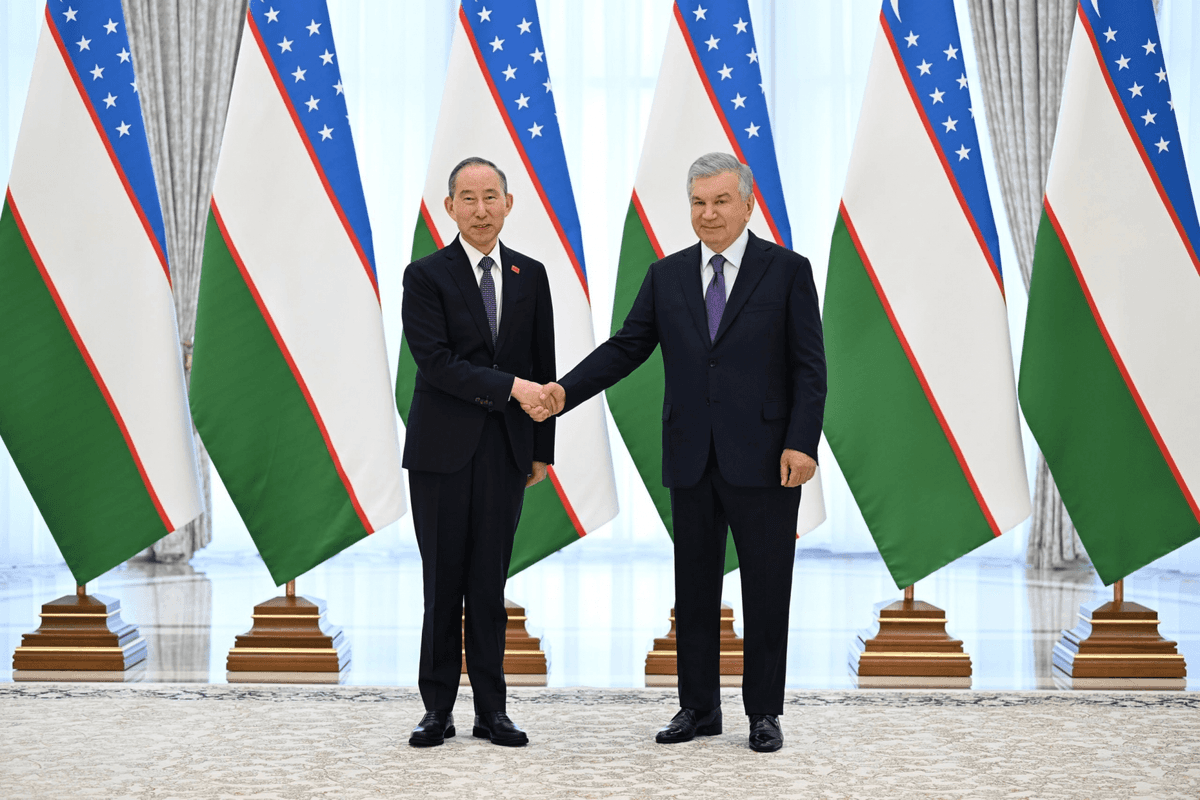
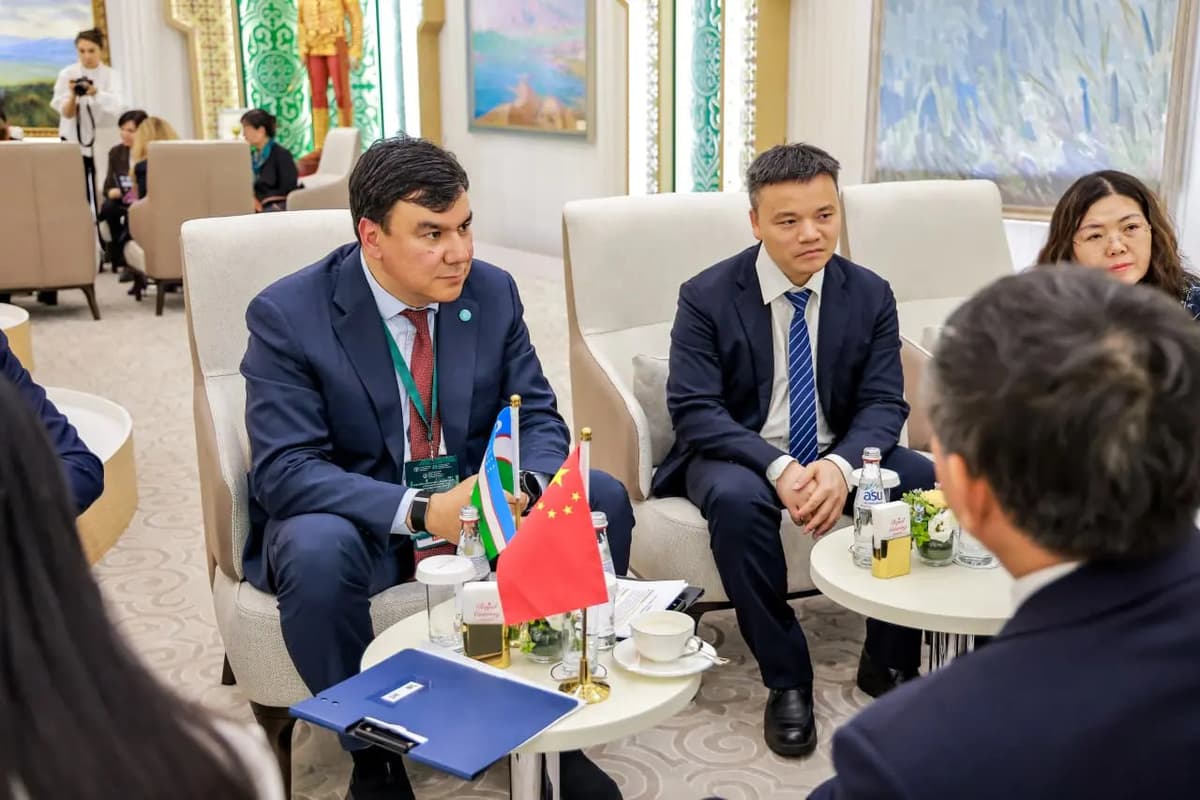
Aziz Abdukhakimov, Advisor to the President of Uzbekistan and Chairman of the National Committee on Ecology and Climate Change, met with Huang Runqiu, China’s Minister of Ecology and Environment, to discuss the current state and future prospects of bilateral cooperation.
The talks highlighted the steady progress of the partnership, which has moved toward practical implementation. The Uzbek side expressed gratitude for China's support in developing the Central Asian Regional Research Center for Combating Desertification and Desert Economy. This center operates under the Central Asian University of Environmental and Climate Change Studies, also known as Green University, and was established with the participation of the Chinese Academy of Sciences.

Minister Huang Runqiu noted that discussions initiated two years ago have already yielded tangible results. A primary example is the construction of 11 waste-to-energy plants currently being undertaken in Uzbekistan by Chinese investors, reflecting a high level of trust and the efficiency of bilateral investment cooperation.

To further expand this interaction, Uzbekistan proposed five key priority areas: studying Chinese satellite systems for climate change research, engaging with the World Meteorological Center in Beijing regarding dust storm monitoring, learning from China’s National Environmental Monitoring Center, organizing a China-Uzbekistan international ecological forum, and establishing a joint laboratory for air quality.

The Chinese delegation supported these initiatives and expressed readiness to move toward practical implementation. Specifically, the parties discussed creating a joint analytical laboratory for air and water quality monitoring and strengthening the capacity of national monitoring systems, potentially with support from the World Meteorological Organization.

Special attention was also given to the "desert economy." The sides considered using a specialized research institute in Tashkent as a regional platform for this field, while also expanding collaboration between Green University and leading Chinese educational and scientific institutions.