



Additional features
-
Night mode

Kazakhstan investigates near midair incident involving Uzbek and Russian planes
On January 10, an aircraft operated by Russia’s Pobeda Airlines came dangerously close to a plane operated by Uzbekistan Airways in Kazakhstan’s airspace. Kazakhstan’s competent authority has announced that an investigation has been launched.
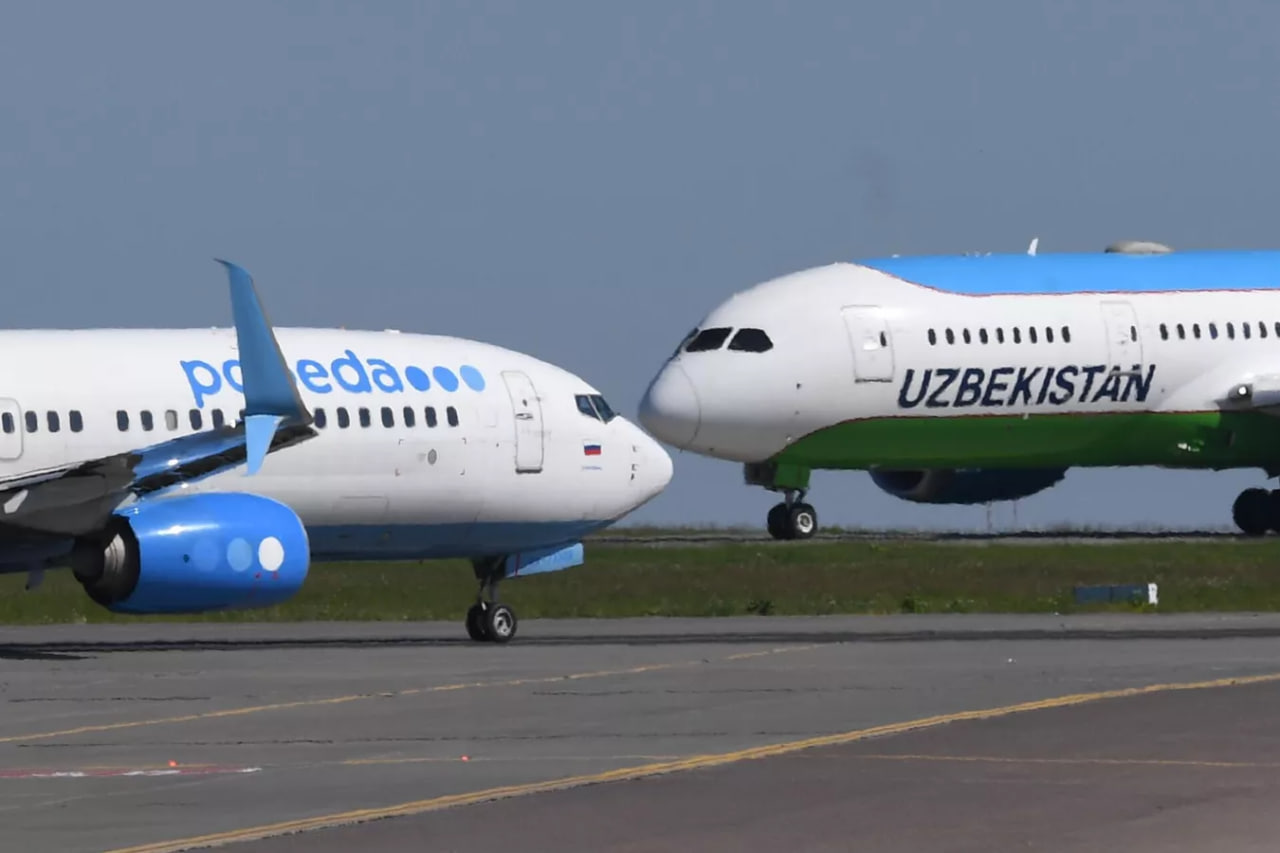
According to Nur, the Transport Accidents and Incidents Investigation Department of Kazakhstan’s Ministry of Transport reported on January 13 that a special commission has been established to investigate a serious aviation incident involving the dangerous proximity of two passenger aircraft flying to and from Moscow in Kazakhstan’s airspace.
In the early morning of January 10, within the area of responsibility of the Shymkent regional air traffic control center, the minimum vertical separation was violated between a Boeing 737-800 operated by Pobeda Airlines on flight DP-997 from Vnukovo to Samarkand and an Airbus A320neo operated by Uzbekistan Airways on flight HY-9609 from Termez to Vnukovo.
The aircraft were flying in opposite directions. One was at flight level 350 (35,000 feet, or 10,668 meters), while the other was at the opposite flight level 360 (36,000 feet, or 10,972 meters). Shortly afterward, the Pobeda crew requested clearance from the Kazakh air traffic controller to climb to flight level 370 (37,000 feet, or 11,277 meters). The controller mistakenly granted permission to cross the occupied opposite flight level.
After the climb began, the Traffic Collision Avoidance System (TCAS) was activated on both aircraft in Resolution Advisory (RA) mode.
In this mode, TCAS activates when the vertical distance between aircraft is 600 feet (183 meters) or less, the horizontal distance is 2.1 miles (3.38 km) or less, or when, taking into account the aircraft’s speed, there are 25 seconds or less remaining before a potential collision. Specifically in RA mode, TCAS warns the crew of an actual collision risk and issues immediate commands to climb or descend. These TCAS commands take priority over air traffic control instructions.
On board the Pobeda aircraft, which managed to climb to a maximum altitude of 35,323 feet, TCAS instructed the pilots to descend immediately, while the Uzbekistan Airways crew received the opposite instruction to climb immediately. The pilots executed the prescribed maneuvers, after which the minimum separation was restored and the TCAS alerts ceased. It is noted that the crews then reported the incident to air traffic control and continued their flights as normal, landing at their designated destinations.
The incident will now be examined by Kazakhstan’s Transport Accidents and Incidents Investigation Department.

Related News

10:22 / 24.06.2026
From wheat buyer to flour export leader: Uzbekistan reshapes Central Asia's grain trade
13:19 / 22.06.2026
Uzbekistan, Kazakhstan, and Kyrgyzstan align water release schedules for peak summer months

11:58 / 22.06.2026
Saida Mirziyoyeva visits Astana International Financial Center to study investment infrastructure
22:09 / 21.06.2026