POLITICS | 18:20
99
13 min read

The language barrier: What children often stay silent about

The law. Services. Helplines. Uzbekistan has built one of Central Asia’s strongest legal frameworks in combating the violence against children. However, for the system to reach a child, two things must come first: words to name what is happening, and someone willing to hear them.

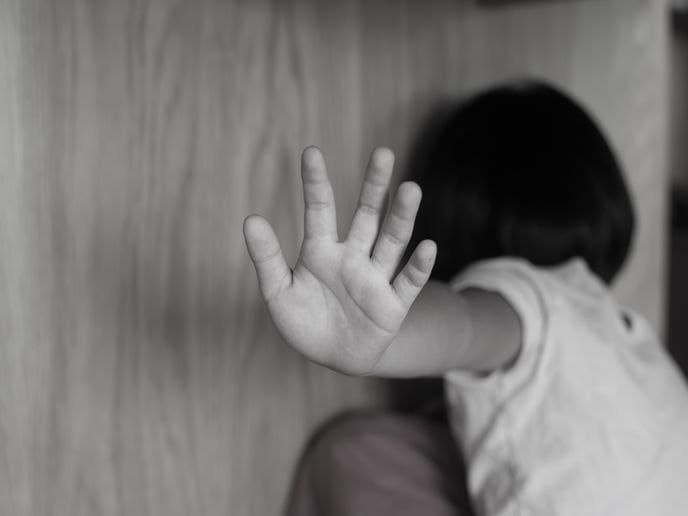
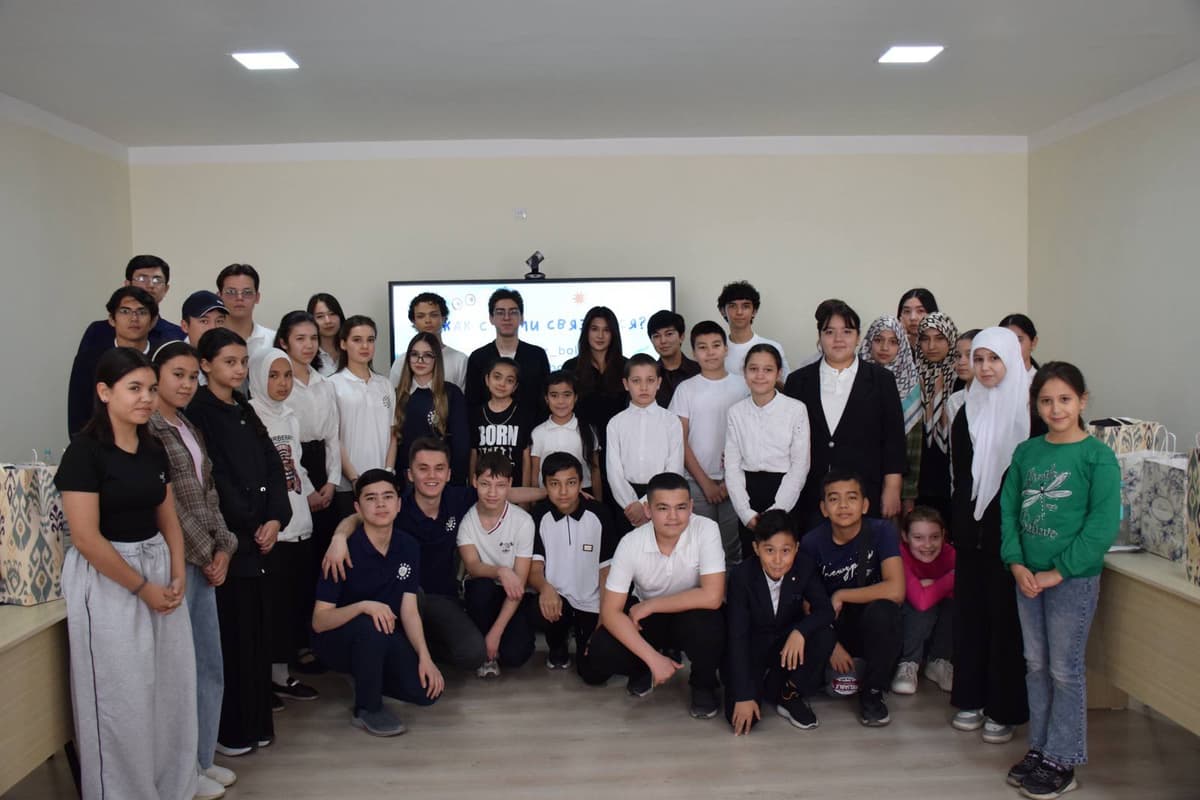
Photo: Xavfsiz Bolalik

Ask a ten-year-old what violence is, and they will most likely describe it this way: it is when someone hits you. Ask whether there is violence in their own home, and they will most likely say no. Even if they are compared to the neighbor's daughter every day, isolated from friends, or controlled through shame. Even when someone at home actually hits them, they see it not as violence but as standard upbringing. The word "violence" does not exist in their vocabulary for what is happening to them. Yet other words do: "we are just strict, that's all," "mom is on edge," "it's my own fault."

Every family in Uzbekistan has its own collection of gentler words for harder things: “that’s how we were brought up,” “to make you a proper person.” These words are not inherently harmful. They are, however, profoundly convenient: they allow what is happening to be described without being named. As a result, for most children in Uzbekistan, the word "violence" applies only to the most extreme cases - and excludes everything that falls short of them.

According to U-Report, a UNICEF survey of 1,879 young people conducted across the country, only 38% identified all forms of violence as such. The remaining 62% demonstrated only partial recognition: certain forms were registered as unacceptable, while others were not. Experiences that go linguistically unrecognized rarely reach an adult, let alone any form of assistance.

Three conditions must be present in order for a child to seek help: the recognition that something wrong is being done to them, the linguistic capacity to name it, and a trusted adult to whom it can be reported. The Law on the Protection of Children from All Forms of Violence addresses the third condition – instituting a category of adults legally required to act as listeners and protectors. However, the first two – recognition and language – fall outside the law's domain entirely, one shaped by family, school and community.
The law and society speak different languages

When the Uzbek government passed the Law on the Protection of Children from All Forms of Violence in November 2024, it accomplished a significant milestone: it gave violence a broad legal definition. The law identifies six forms of the violence: physical, psychological, sexual, exploitation, neglect, and bullying, including its online forms. Under this definition, a mother who humiliates her child every day is in violation of the law. A teacher who allows classmates to bully a student is in violation of the law. A guardian who has not spoken to their child for months is in violation of the law as well.
The law recognizes this. Society, for the most part, does not yet. If, in a child's vocabulary, "violence" applies only to the most extreme cases, then "humiliation," "neglect," and "bullying" do not function as designations of the unacceptable either. There is only life. Life as the child has always known it. And there is nothing for which to seek help, because what one seeks help for must first be named.

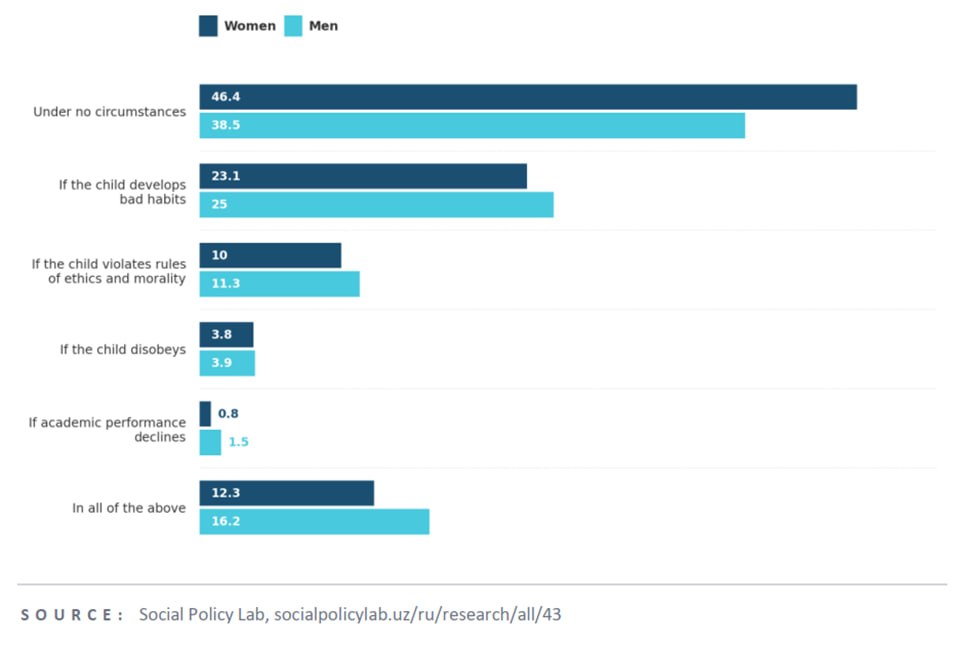
This pattern extends beyond just children. The same survey demonstrates that young people — the generation that will, within a few years, will be raising children of their own — continue to hold many of these inherited views. Slightly more than 40% of young Uzbeks hold that the physical punishment of a child is unacceptable under any circumstances. Around 23 to 25% regard it as acceptable in cases where a child "has fallen into bad habits." Approximately one in ten justifies it as a response to "breaking the rules of ethics."

Considerable progress has been made in recent years. The 1146 child helpline has been but into operation. Prevention inspectors and mahalla social workers (local officials embedded in Uzbekistan's traditional neighborhood structure) function across the country. The national Uzbekistan–2030 Strategy designates the strengthening of child protection as a central priority. This work is substantial. Yet the state alone cannot transform the daily realities of family life; those conceptions of upbringing under which the physical punishment of a child remains the norm.

“What the law calls violence, society still calls upbringing.”

The first border of silence lies between these two languages

When physical punishment of a child is seen as acceptable

Multiple-choice question, % of responses. n = 1,453

The Language barrier and why peer support matters

One reason for children's silence is the absence of words. The other is an absence of trust. Even when children come to understand that something wrong is being done to them, they still do not turn to adults. Children remain silent not because they have nothing to say. They remain silent because they are afraid. Afraid of being dismissed. Afraid of not being believed. Afraid, worst of all, of being punished. They fear bringing shame upon the family. They fear scandal. They fear what the mahalla will say. They fear their parents. For most of them, the adult represents authority first and only then, if at all, a source of trust. The school, the inspector, and the helpline – all of them belong to a different world, one that children do not trust. They speak a different language. They think differently. And they live differently.

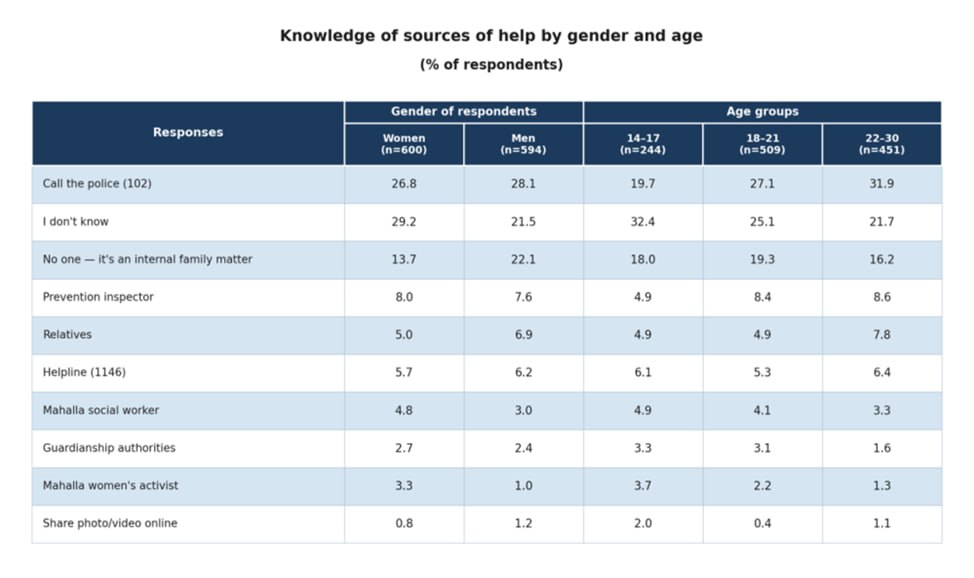
According to the Social Policy’s Report, only 17.6% of young people are aware that they can call 102, the police emergency line, in cases of violence. Another 16.2% openly admit they do not know whom to turn to. A further 11.4% consider violence within the family an "internal matter" in which outsiders should not intervene. And those aged 14 to 17 - the demographic most affected by violence - report a willingness to seek help less frequently than any other age group.

In other words: the children most exposed to violence are the least likely to be heard. This is the gap the peer fills.

Friends and peers are often the only people who know what a teenager goes through, and what they will not say out loud. They hear what no homeroom teacher hears. They see what even a mother does not see. This is why it is imperative for peers to be part of child protection work. The peer-to-peer model has been recommended by UNICEF and the United Nations, and adopted in many countries. Its premise is straightforward: adolescents are trained to recognize the signs of violence, to understand children's rights, and to know to whom a peer in difficulty can turn. They do not become psychologists. They do not replace specialists. They become a bridge – between the child and those adults, those services, those laws that, without such a bridge, remain out of reach.

Notably, society itself acknowledges that the roots of the problem lie beyond legislation. When asked which measures against violence toward children would prove most effective, both women and men placed improved parental education ahead of stricter punishment.

This indicates that addressing violence is, above all, work on knowledge, attitudes, and norms. Such work cannot proceed without trust. And where there is no trust between a child and an adult, the only person able to build it is a peer.

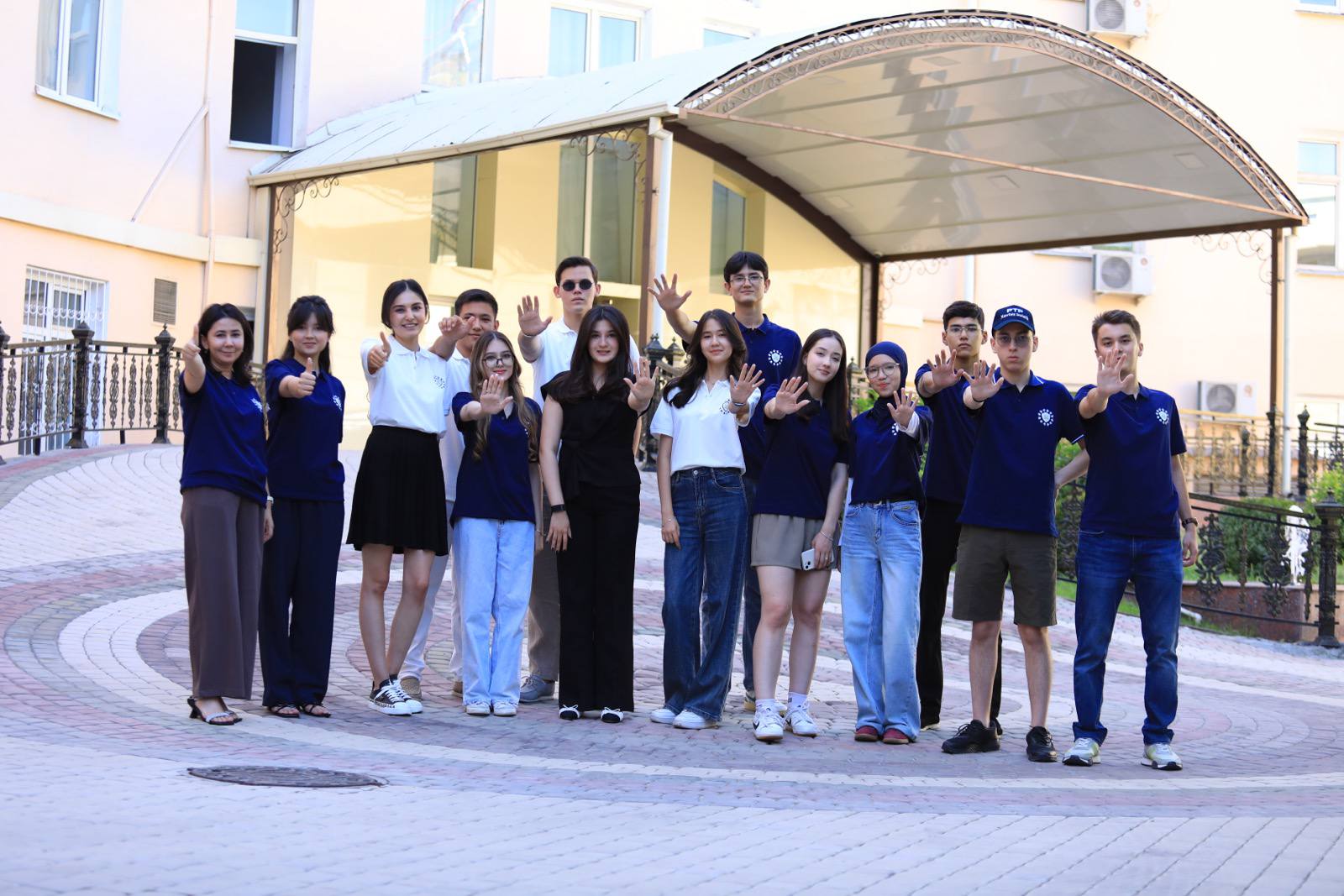
Xavfsiz Bolalik (Safe Childhood)  

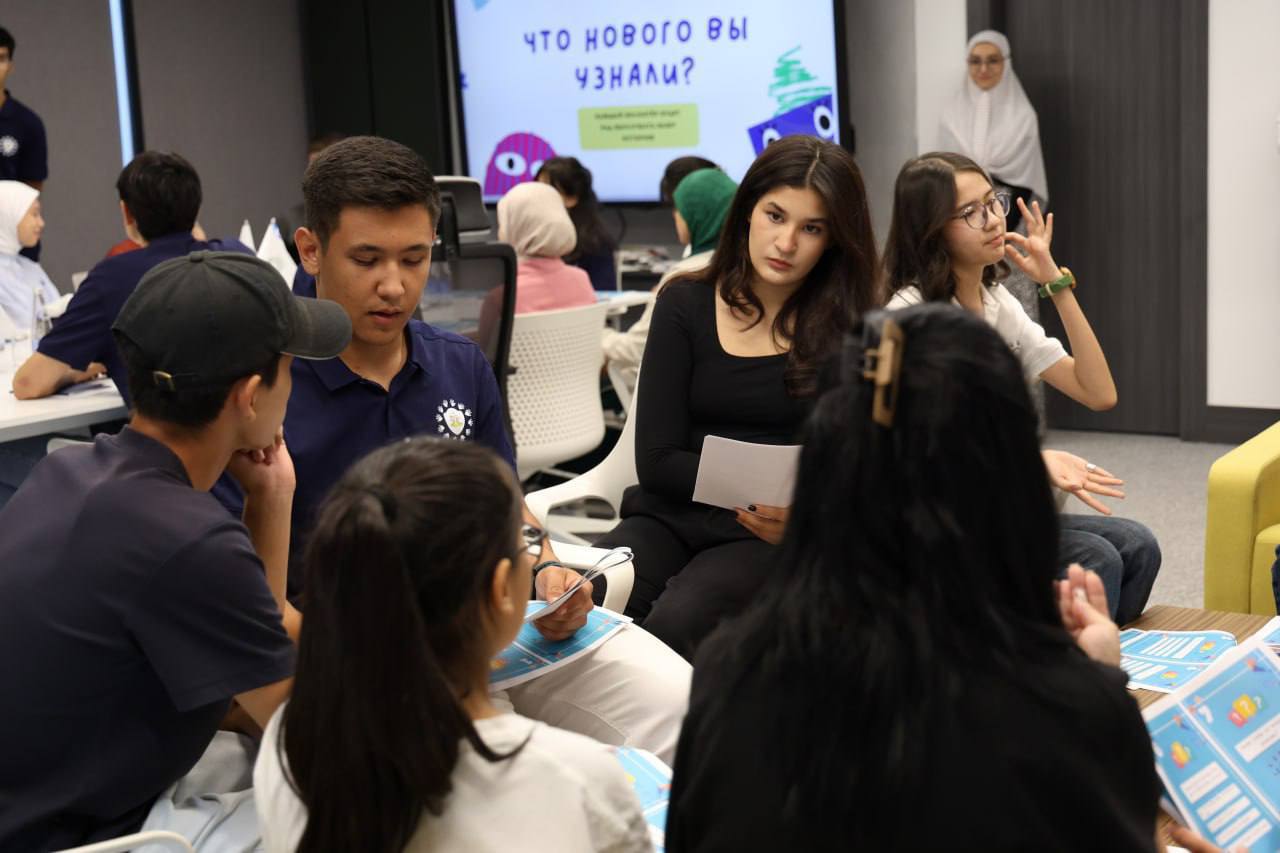
Xavfsiz Bolalik – Safe Childhood – is the initiative I founded to bring the peer-to-peer model into the conditions of our country. In our first year, we held sessions in 24 schools across Tashkent and in five children's residential institutions, reaching more than 2,400 children and students.

What surprised me was not how little children knew. It was how quickly they came forward when they were given the space to speak. In schools where violence had never been openly discussed, the children at first sat silent, then began to ask questions, and then to share their stories. They did not begin with themselves; they spoke of someone they knew – a friend of a friend, "this one boy from the parallel class." But they left with something they had not had before: the recognition that humiliation has a name; that fear is a signal, not a norm; that asking for help is not weakness, but a right. They carry this back to their friends and families. The work spreads – slowly, but it spreads. In 2026, we will take it beyond Tashkent, into the regions, where these conversations happen even more rarely.

Peers do not replace parents or specialists. They should never replace them. But they are the first to be there , closer to the child than anyone else. Where the relationship with an adult is already difficult to build through authority, distance, or fear of punishment , the peer may be the first one to hear. For a child who has neither the words nor the trust in adults, the peer becomes the first to be told.

Xavfsiz Bolalik works with the children who would otherwise go unheard, thus supporting state reforms from below.

“Protecting a child takes more than rights. It takes the right to be heard.”

Marifatkhon Umarova,
Founder of the Xavfsiz Bolalik initiative

Follow Kun.uz news on Google News
+ Subscribe

Related News