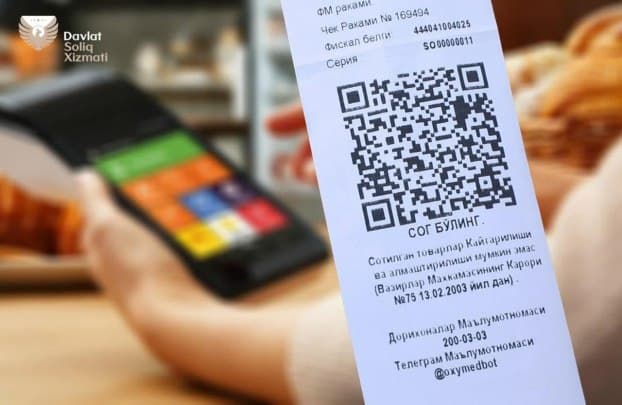
The proposal was put forward by the Institute for Fiscal Studies under the Ministry of Economy and Finance, which focuses on reducing the shadow economy.
According to the institute, spending on the cashback program has risen steadily since its introduction. Cashback payments amounted to UZS 820 billion in 2022 and could reach UZS 1.8 trillion in 2026 if the current mechanism remains in place.
The institute noted that the projected cost is twice the UZS 900 billion allocated in this year's state budget for the construction of kindergartens.
"The mechanism requires permanent financing from the state budget. As the number of registered fiscal receipts increases, budget expenditures continue to grow accordingly," the institute said in an analytical article.
In May 2026 alone, total cashback payments reached UZS 146.6 billion. Of that amount, UZS 15.7 billion, or 10.7%, went to customers of the country's 10 largest retail chains.
According to the institute, this suggests that a significant share of government support is already benefiting consumers shopping at businesses that operate fully within the formal economy.
"As a result, the state budget is effectively subsidizing transactions that would most likely have taken place even without the cashback program," the authors said.
The institute argues that budget-funded incentives should be viewed as a temporary tool for improving tax compliance and fostering a stronger tax culture rather than as a permanent feature of tax policy.
It also noted that international practice generally does not regard financial rewards for requesting purchase receipts as a universal or long-term tax policy instrument.
State lottery proposed as alternative
Instead of guaranteeing cashback for every registered receipt, the institute proposes introducing a state lottery for consumers who register receipts issued by businesses operating in sectors with elevated tax compliance risks, such as restaurants, cafes, and small retail outlets.
According to the proposal, this approach would preserve consumers' incentive to request fiscal receipts in industries where underreporting of revenue remains more likely.