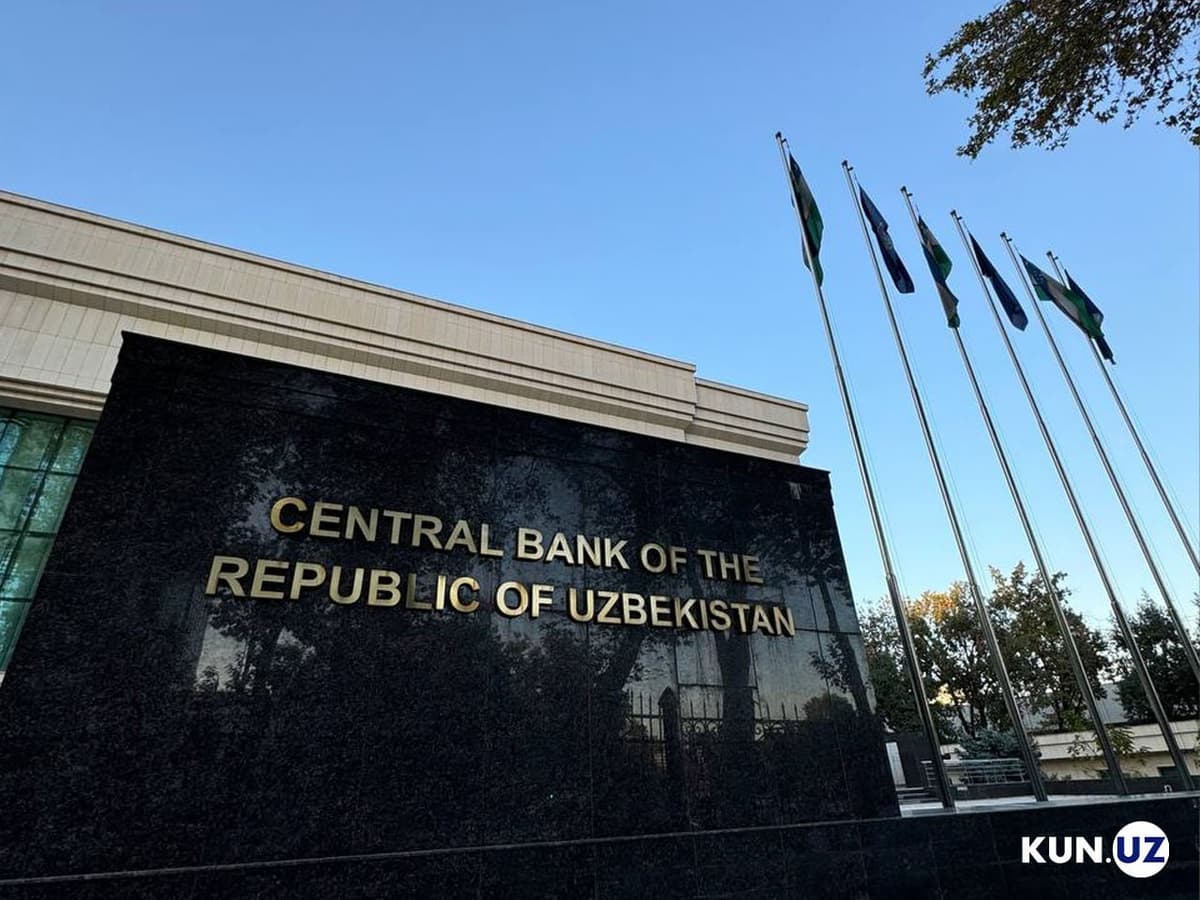
The findings were published in CERR's Banking Activity Index for the second quarter of 2026, which assesses the performance of 34 banks operating in Uzbekistan as of June 1.
The report divides lenders into large and small banks. Under CERR's methodology, a large bank is one whose assets account for at least 1% of the banking system's total assets and which operates branches or banking service offices in at least one-third of Uzbekistan's regions.
Banking sector assets reached UZS 984.4 trillion, up 19% from a year earlier and 5.6% from the previous quarter. Liabilities increased to UZS 838.8 trillion, rising 18.4% year-on-year and 5.65% compared with March. State-owned banks accounted for 62.7% of total sector assets and 66.1% of the country's loan portfolio.
Deposit growth continued to outpace lending, with deposits increasing by 33% compared with 12% growth in loans, indicating that the banking system remains highly liquid. In private banks, deposits amounted to UZS 103 for every UZS 100 in loans, compared with UZS 57 in state-owned banks.
The share of non-performing loans (NPLs) declined from 4.1% to 3.7% over the past year, pointing to an overall improvement in asset quality, although the report notes that several state-owned and private banks continue to report relatively high NPL ratios.
The sector also continued to reduce its reliance on foreign currency. The share of foreign currency loans fell from 41% to 39%, while the share of foreign currency deposits dropped from 24% to 19%.
According to CERR, the increase in net profit was driven primarily by higher non-interest income, with the sector's non-interest margin reaching UZS 15.8 trillion. Return on assets (ROA) rose to 2.4%, while return on equity (ROE) reached 14.5%.
Kapitalbank retains top spot among large banks
The top three positions among large banks remained unchanged from the previous quarter, with Kapitalbank, Hamkorbank and Asia Alliance Bank leading the ranking.
Trastbank climbed one place to fourth after improving its management quality and capital adequacy indicators. Davr Bank entered the top five for the first time since joining the large-bank category, supported by stronger capital adequacy, asset quality, profitability and accessibility.