How to get a full scholarship to a South Korean university: a student’s experience from Uzbekistan
|12:20 / 19.08.20261,25820 min
Sevinch Albekova from Samarkand was accepted to several American universities, but did not receive a full scholarship from any of them. She then applied to Korea University in Seoul — and the university itself offered her a full scholarship covering four years of undergraduate study, worth around $40,000. In this article, she shares how she prepared for admission, what helped her secure the scholarship, and how much it costs to live as a student in South Korea.
Kun.uzKun.uz
Why I chose South Korea
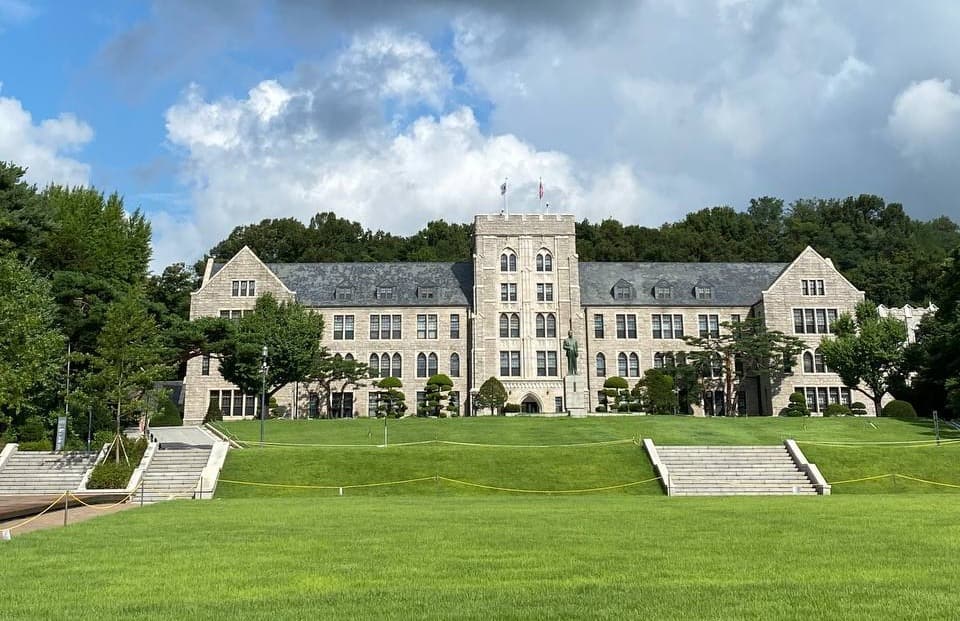
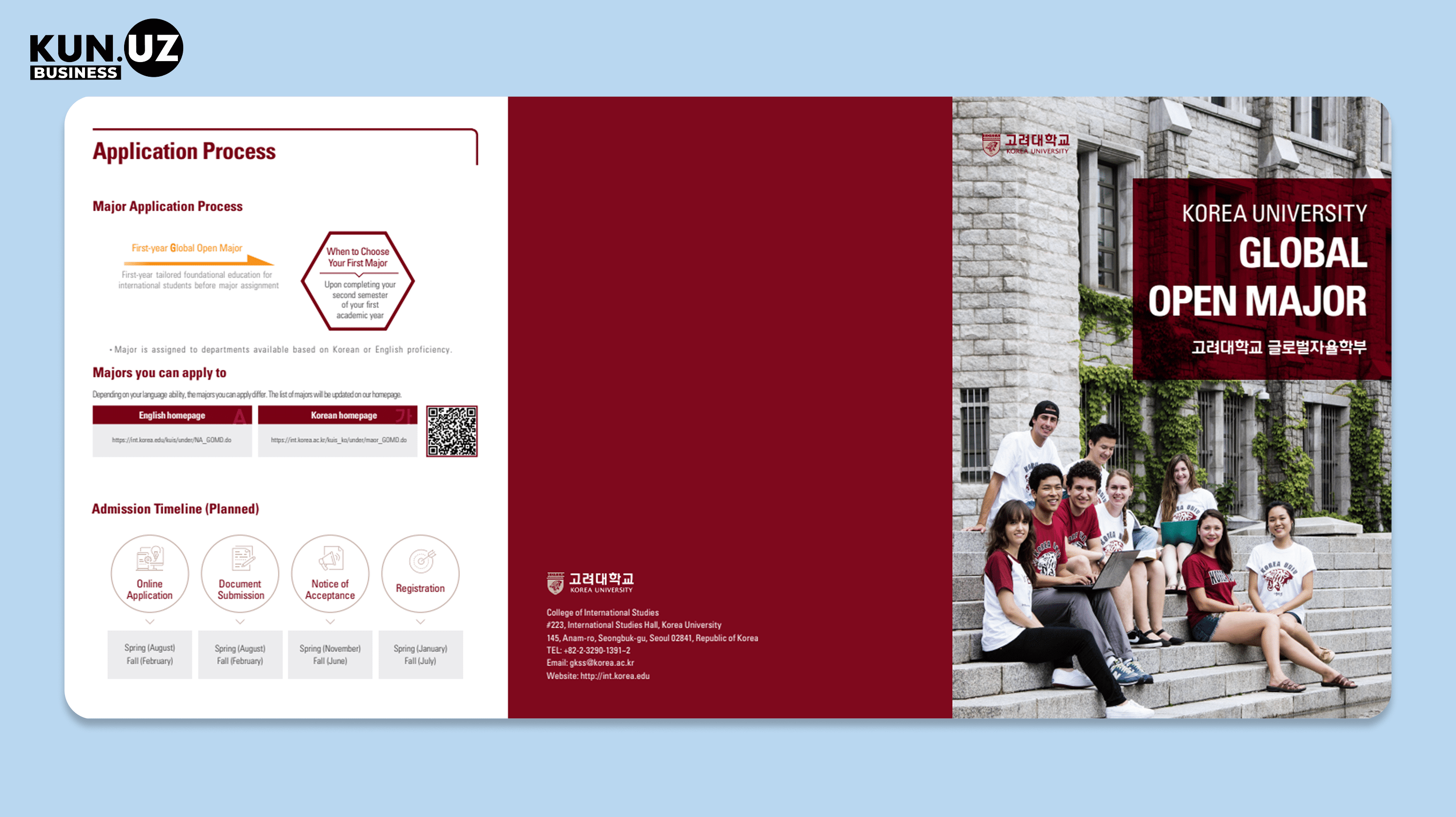
Korea University attracted me not only because of the full scholarship, but also because of its strong academic reputation and the Global Open Major program. After high school, I still wasn’t sure what major I wanted to choose, and this program allows students to postpone that decision. During their first year, students study general education courses and Korean, and choose their major by the end of their first year. That’s how I eventually chose Business Administration.
Kun.uz
The available majors depend on the language of instruction: there are fewer options in English — Business Administration, International Studies, and several engineering and natural science programs. The choice is broader in Korean and includes Computer Science, Psychology, and other fields. The full list is available on the program’s website.
Kun.uz
Another factor that influenced my decision was that South Korea is considered one of the safest countries, especially for women. For my family, this was just as important as the university’s reputation.
How I prepared for university admission
I started preparing to study abroad back in 9th–10th grade. My parents have always placed a strong emphasis on my education, so from an early age I studied English, took math classes, graduated from music school and attended sports clubs.
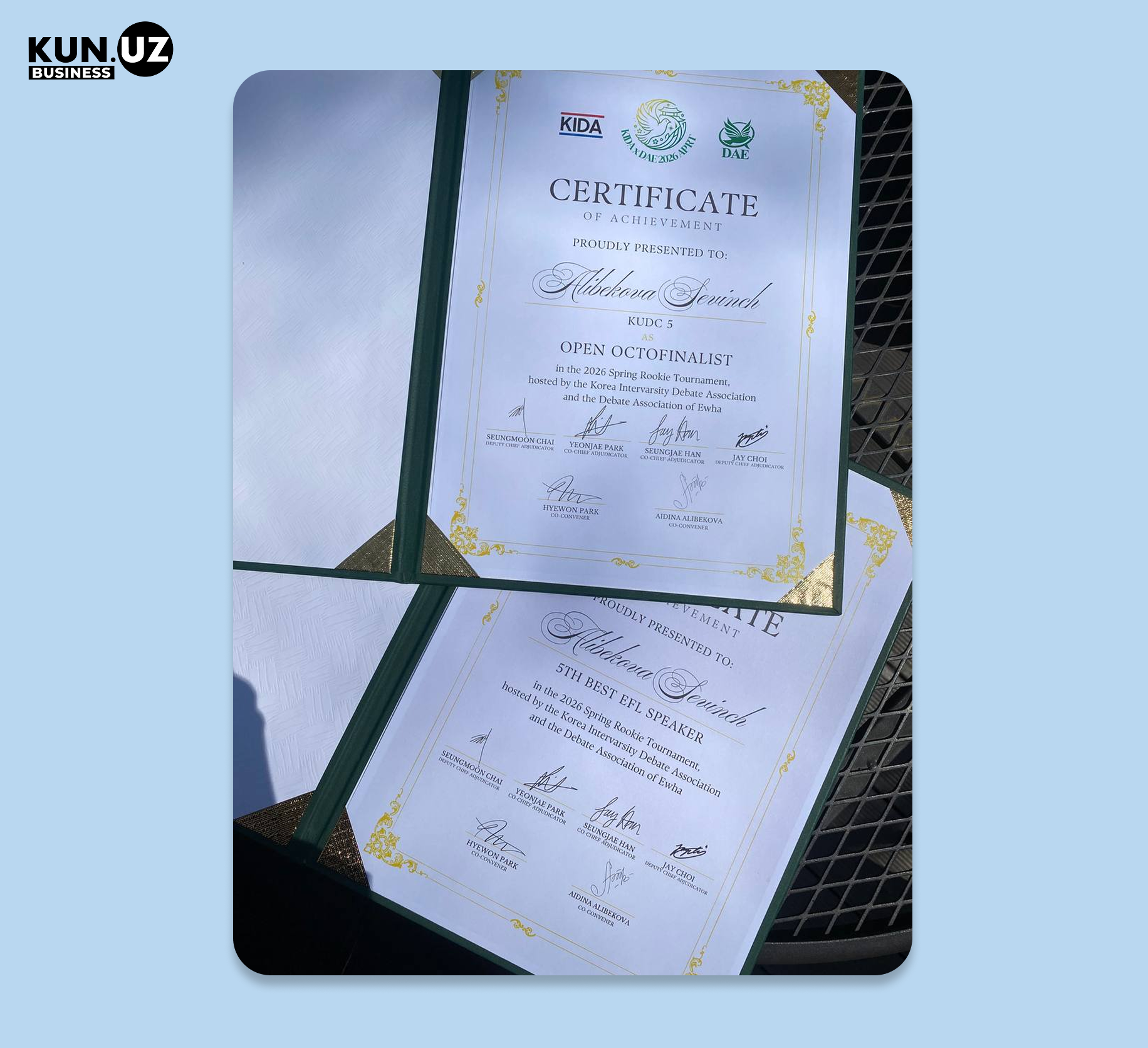
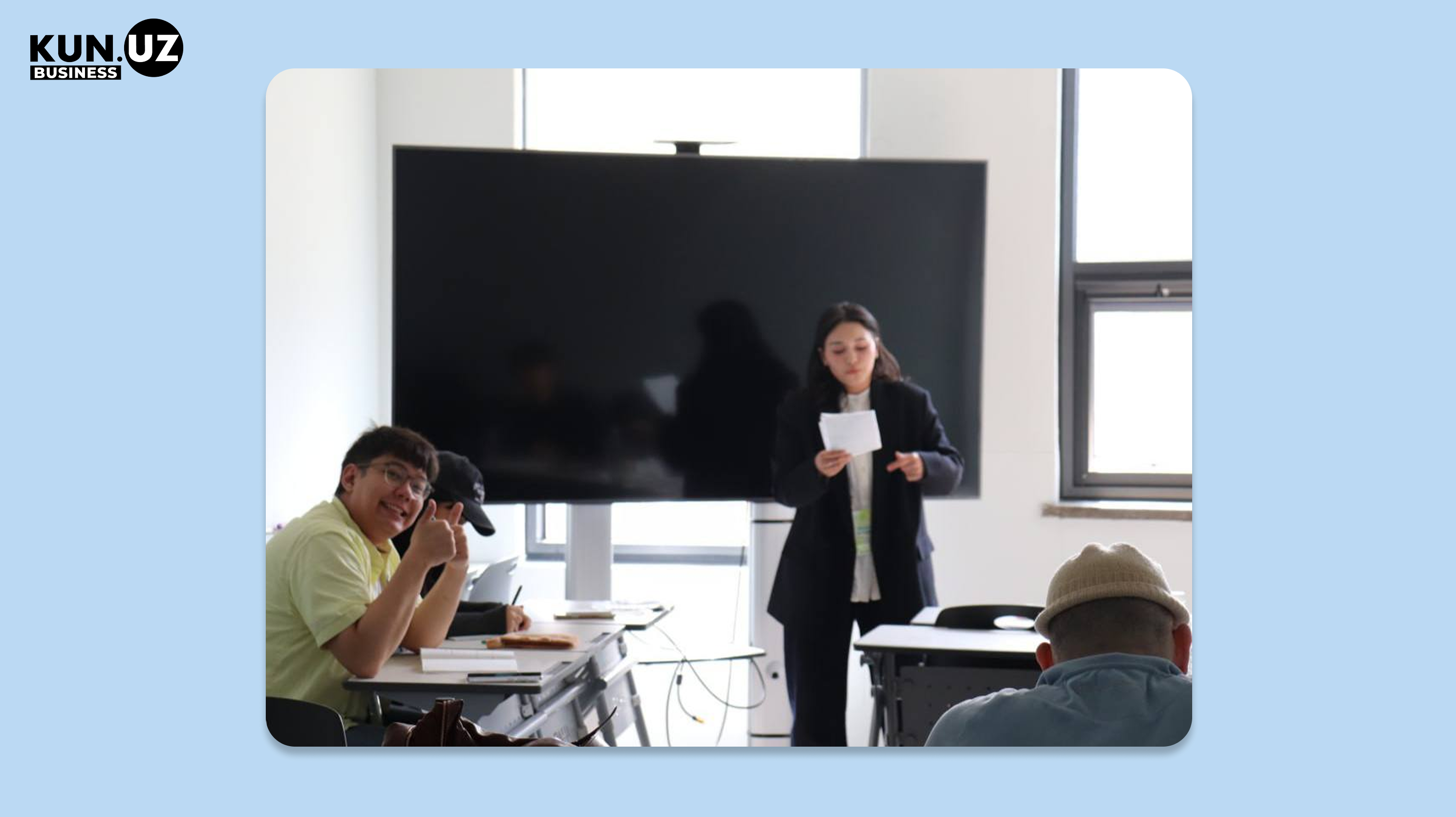
Once I had made the final decision to apply to a foreign university, I focused on specific preparation: I studied for the IELTS, gathered the necessary documents and, at the same time, took part in volunteer projects and other extracurricular activities — academic competitions, community initiatives and various events. Later, these became one of the strengths of my application.
Kun.uz
Related topics
Universities abroad evaluate more than just grades on your school transcript. The Korea University admissions committee assessed my application as a whole: my school grades, English proficiency, personal statement and extracurricular achievements. The SAT was not mandatory, but it could give an applicant an additional advantage.
To apply to Korea University, you need to prepare:
school certificate and transcript
IELTS certificate
personal statement
documents confirming extracurricular achievements
passport copy
What IELTS score do you need
The university does not publish a minimum IELTS score for applying. However, your language level by the end of the first year determines which major you can enter in your second year. There are three scenarios:
IELTS 7.0 or higher — full access to your chosen major
IELTS 6.5–6.9 — you can enter the major, but the number of major-specific courses you can take each semester is limited
IELTS 6.0 or lower — you will not be able to enter a major, and your second year will not begin in the regular format
You should start preparing for the language exam in advance rather than relying on your first year to catch up.
Personal statement
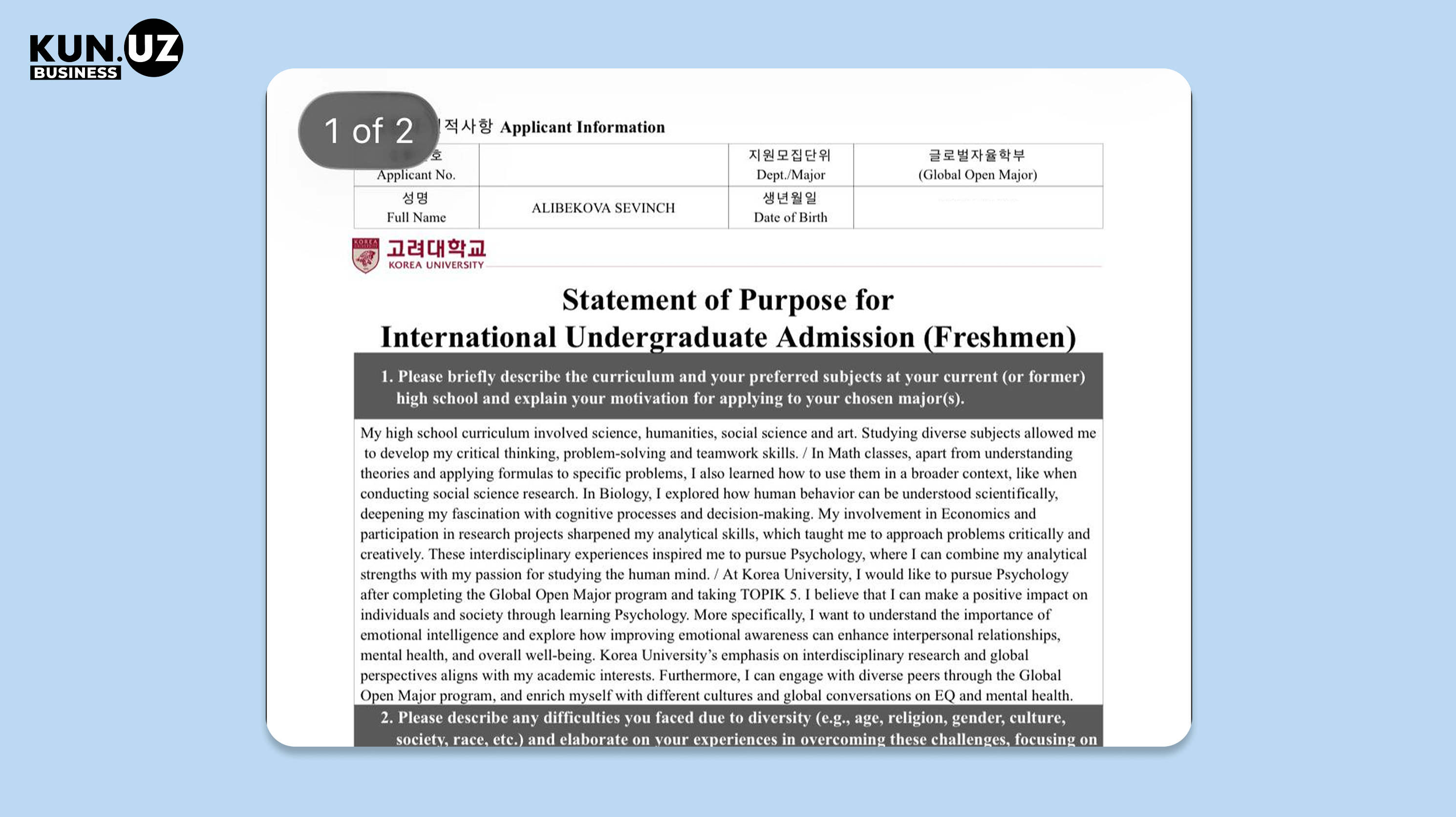
The personal statement took me the most time. This is where you can show who you are as a person, rather than just presenting your grades and certificates. At Korea University, the personal statement consists of three separate 800-character essays:
why you chose this major and which subjects you are interested in
how you dealt with difficulties caused by cultural or other differences
why the university should choose you and what your plans are after admission
Kun.uz
This is not one general essay, but three specific responses, and each one requires separate preparation. I think it was the combination of a strong personal statement and my extracurricular achievements that helped me receive the full scholarship.
If I were going through this process again, I would focus on one country and would not apply to several universities at the same time. It is better to have one truly strong application than several that are not sufficiently well prepared. And one more thing: I would worry less about the outcome, because confidence in yourself also plays a role.
How I submitted my application
All documents need to be translated into English, notarized and sent to South Korea in hard-copy form. This stage takes longer than it may seem, so it is better to start two or three months before the deadline.
The application process works as follows: first, you register on theoia.korea.ac.kr website, complete the online application and upload your documents. Then, you need to print the same set of documents and send it to the university by international mail.
Kun.uz
Deadlines: online applications are accepted until the end of August, while the paper documents must arrive by the beginning of September. Results are published at the end of November. Exact dates change every year — check the current schedule on theoia.korea.ac.kr website.
Kun.uz
I contacted an agency that helps students apply to universities abroad. The specialists helped me check that everything was completed correctly and that the documents were sent properly. I prepared the personal statement, application and all the documents myself.
After sending everything, all I could do was wait. For me, this was the most nerve-racking stage: the documents were already at the university, and there was nothing more I could do to influence the outcome.
How much does it cost to apply to Korea University
Even before moving, I had to set aside a separate budget for the application process. The expenses were not limited to the application fee: I also had to pay for the IELTS exam, document translation, notarization and international delivery to the university.
Expense
Approximate cost
Application fee
$110*
IELTS exam
$180–250
Document translation and notarization
$50–150
International document delivery (DHL, FedEx or EMS)
$40–100
Photos, document copies and other administrative expenses
$20–50
*150,000 won (around $110 at the current exchange rate). The dollar amount will vary depending on the exchange rate, but the fee must be paid in won.
Total: preparing and submitting the application costs approximately $400–650. This does not include visa expenses, airfare or your initial expenses after moving.
How I received a full scholarship
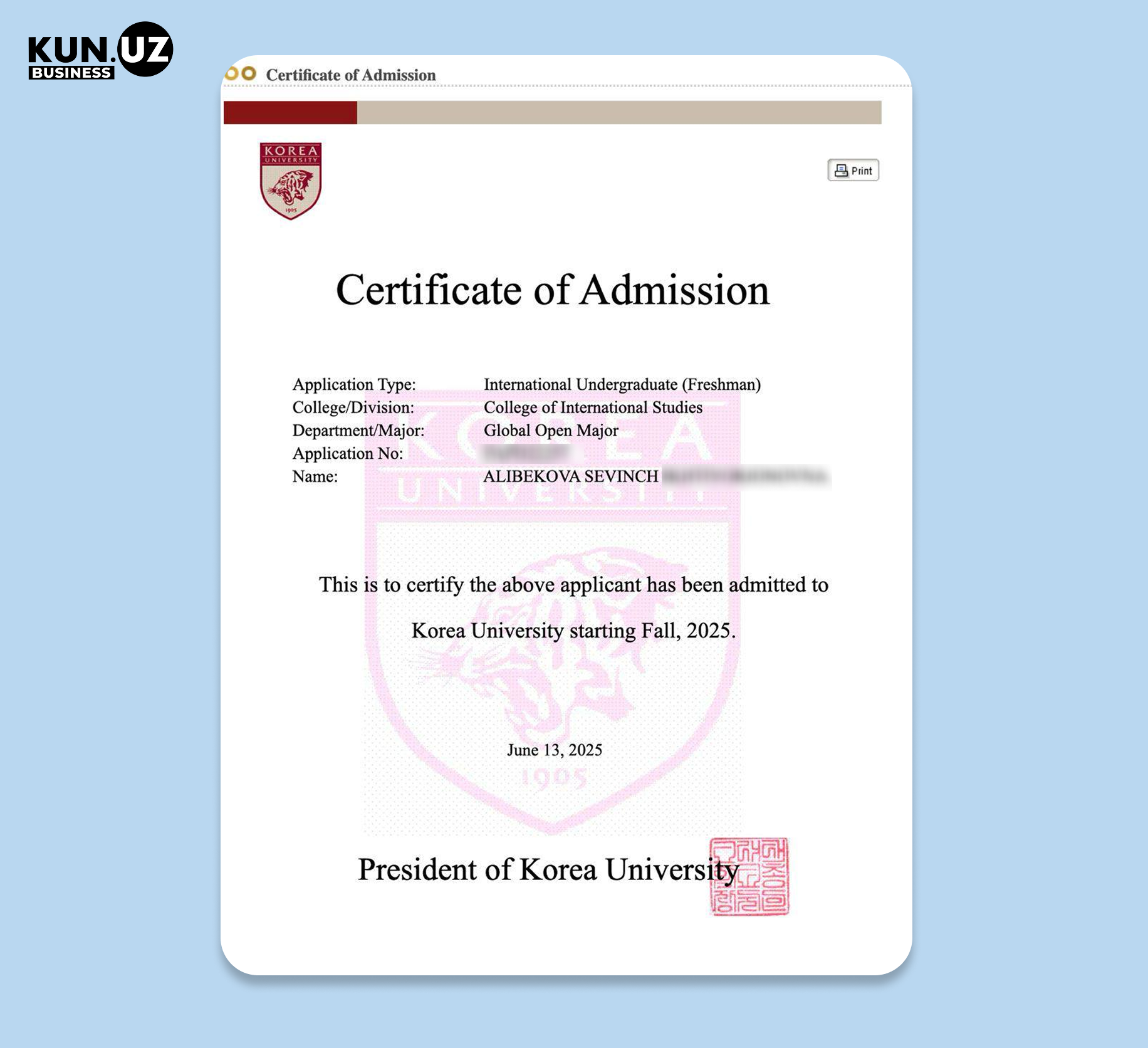
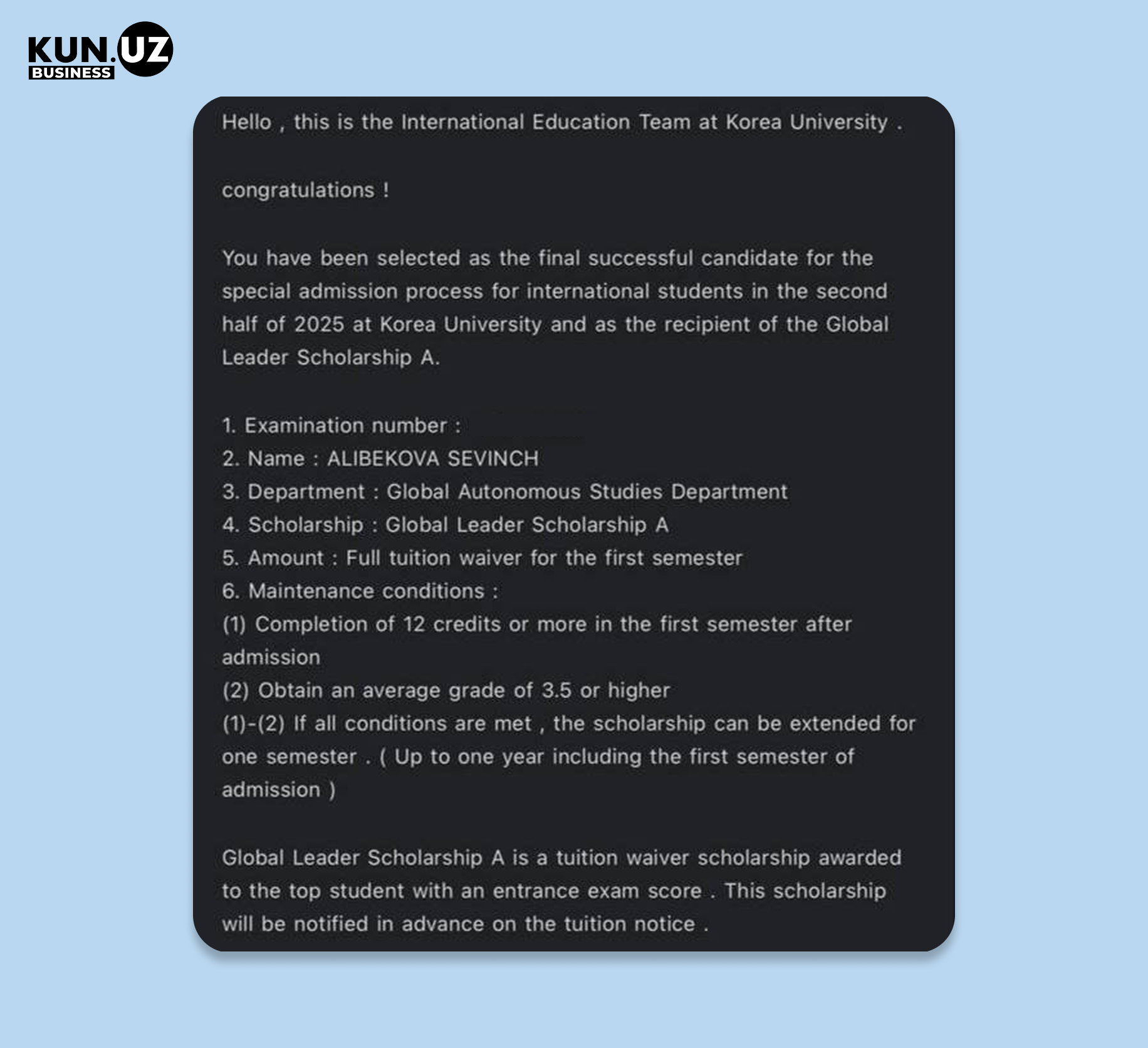
I found out that I had been awarded a full scholarship at the same time as I received my admission letter. It fully covers the cost of tuition at Korea University, so I do not have to pay for my studies.
Kun.uz
I did not submit a separate scholarship application. Korea University automatically considers all international applicants for scholarships and independently decides who will receive funding.
The scholarship is not guaranteed permanently; it must be renewed every semester. The requirements are at least 12 credits per semester and a GPA of at least 3.5. If both requirements are not met, the funding will not be renewed. That is why, during the first few years, it is better to focus on your studies rather than taking on a part-time job.
Kun.uz
The university does not disclose the criteria it uses to make this decision. Based on my experience, the entire application matters: school grades, English proficiency, personal statement and extracurricular achievements. So a high IELTS score alone is not enough — it is important to present yourself as a strong candidate.
Without a full scholarship, the Business Administration program costs around 7 million Korean won per semester, or approximately $5,000. That comes to about $10,000 per year, excluding accommodation, food and other everyday expenses.
How much does it cost to live as a student in South Korea
The full scholarship at Korea University covers tuition only. Students have to pay for accommodation, food, transportation, health insurance and everyday expenses themselves. So even before moving, I tried to figure out in advance how much I would need for living expenses.
Expense
Approximate cost
Health insurance
$17–58 per month
Dormitory
from $250–500 per month
Apartment rental
from $400–900 per month + deposit
Food, transportation and personal expenses
$350–400 per month
Food, transportation and personal expenses with an active lifestyle
around $800 per month
Kun.uz
Based on my experience, if you cook at home, use public transportation and don't spend much on entertainment, $350–400 per month is enough for food, transportation and other everyday expenses.
If you often eat at cafés, travel around the country and spend your free time actively, monthly expenses increase to around $800, excluding accommodation.
Kun.uz
The biggest expense is accommodation. At first, many international students choose a dormitory: it is cheaper than renting an apartment and helps them adapt to life in a new country more quickly. If you rent an apartment, you usually need to pay a deposit in addition to the monthly rent, as well as cover utility bills.
Approximate student budget
Accommodation format
Monthly budget
Dormitory + budget lifestyle
from $600–900
Apartment rental + active lifestyle
from $1,200–1,700
Where is it better for a student to live: in a dormitory or an apartment
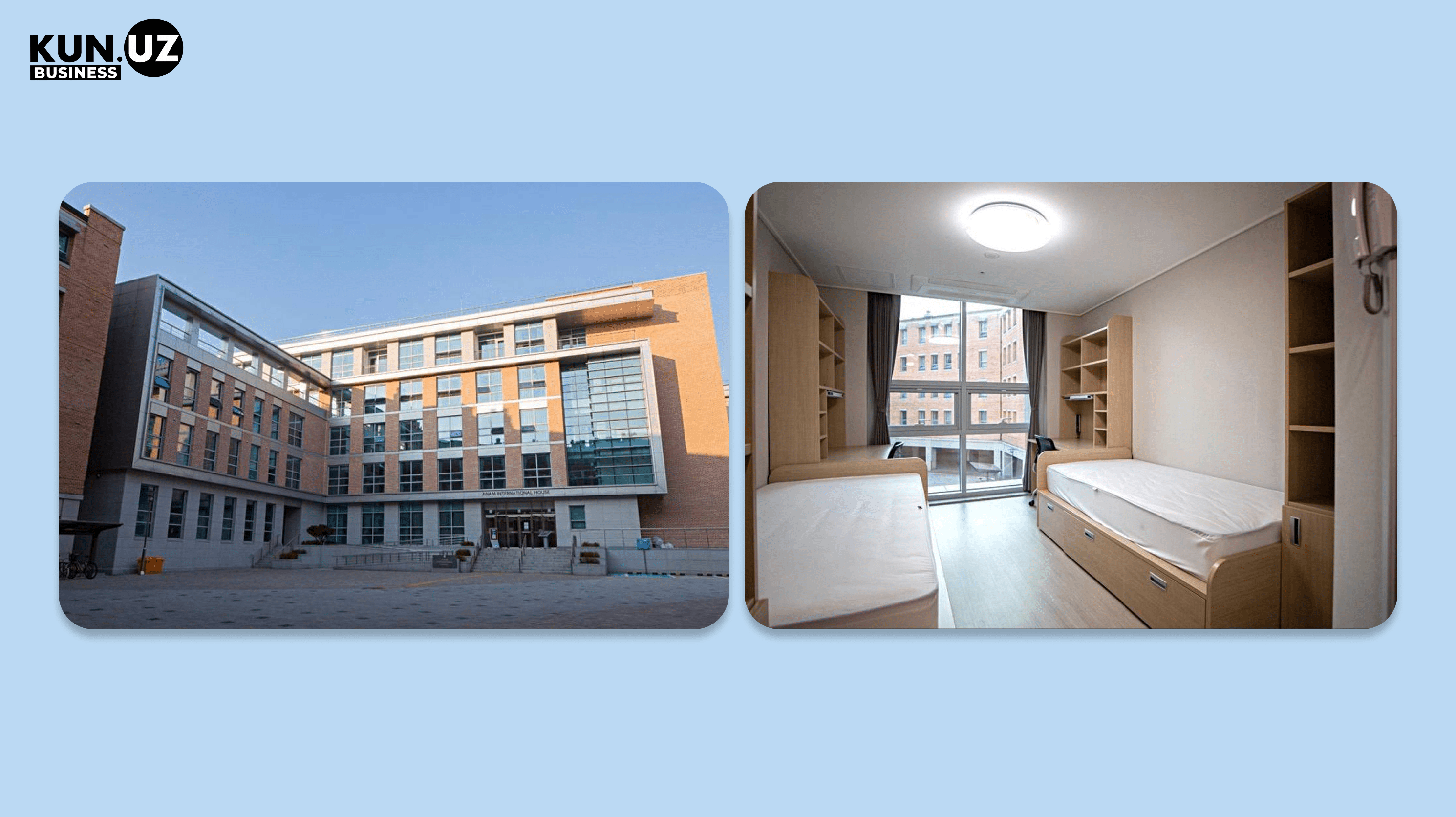
When I first arrived in South Korea, I chose a dormitory. For my first year of study, it turned out to be the most convenient option: the campus was nearby, utilities were already included in the cost, and I hardly had to worry about household matters.
Kun.uz
However, staying in a dormitory throughout your entire degree is not always possible. After the first semester or year, it becomes more difficult to get a room, as many universities prioritize first-year students. As a result, many students eventually move into rental apartments.
Now my friend and I rent an apartment about a three-minute walk from the main Korea University campus. This option provides more privacy and freedom, but it is more expensive. In addition to the monthly rent, we have to pay utilities, and a deposit is usually required when moving in.
Kun.uz
Dormitory or apartment
Dormitory
Apartment
Utilities
Usually included
Paid separately
Deposit
Usually not required
Usually required
Location
On or near campus
You can choose yourself
Comfort
Basic conditions
More personal space
Best for
Students who have just arrived
Students who have already settled in
Looking back, I would choose the dormitory again. It helped me settle into the new country faster, meet other students and get used to studying without worrying about everyday issues. Once you understand how life in Korea works, finding an apartment and dealing with practical matters becomes much easier.
Studying at Korea University: what to expect
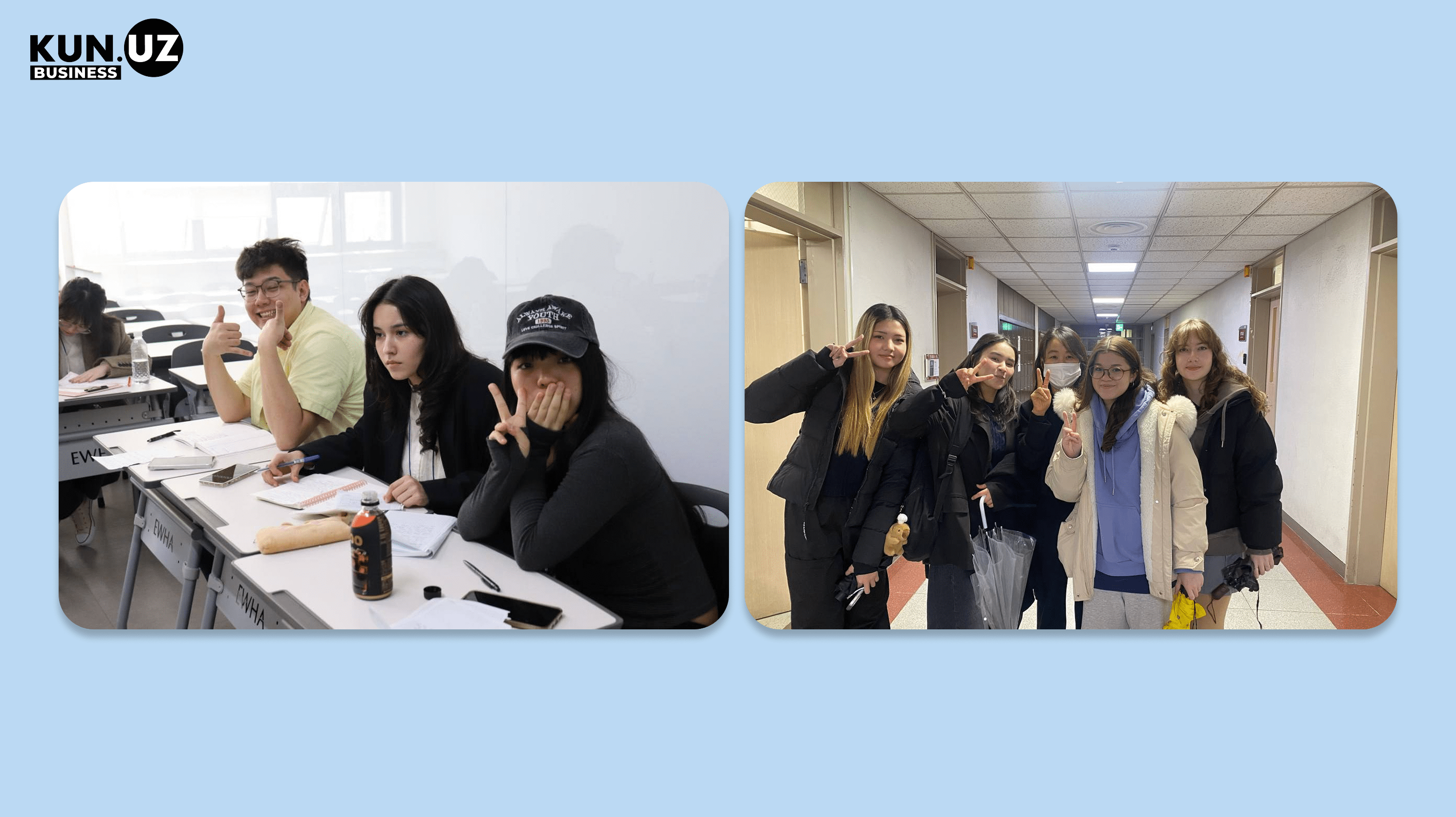
At Korea University, students are not given a fixed class schedule for the semester. I choose my own courses, professors, class times and number of credits. The learning format is also different: in addition to lectures, almost every course includes group projects, presentations and collaborative assignments. Simply attending classes is not enough — students are expected to participate actively and work as part of a team.
Kun.uz
The grading system takes into account not only exams but also attendance, homework, class participation and projects throughout the semester. Professors treat international students the same way as local students and are always willing to help.
Kun.uz
Since each student creates their own schedule, the group of classmates changes every semester. Over the course of my studies, I have had the chance to meet people from many different countries.
What studying at Korea University looks like
Uzbekistan
South Korea
Fixed class schedule
Students choose their own courses, professors and class times
Main focus on lectures and exams
Much of the coursework involves projects, presentations and teamwork
Final grade largely depends on exams
Attendance, assignments, projects and class participation are all taken into account
Permanent academic group
Classmates change depending on the courses students choose
Can you work while studying
International students in South Korea can work legally, but they need permission from their university and the immigration authorities and must follow the limits on working hours.
In practice, finding a job without Korean language skills can be difficult. English is enough for studying, but most student jobs: in cafés, shops and the service industry, require at least basic Korean.
During the first few years, I would recommend focusing on your studies. The scholarship requires a GPA of at least 3.5 and a minimum of 12 credits per semester, so a job should not interfere with your academic performance. It is better to first get used to your studies and your new life in Korea and only then think about earning money.
What surprised me most after moving to South Korea
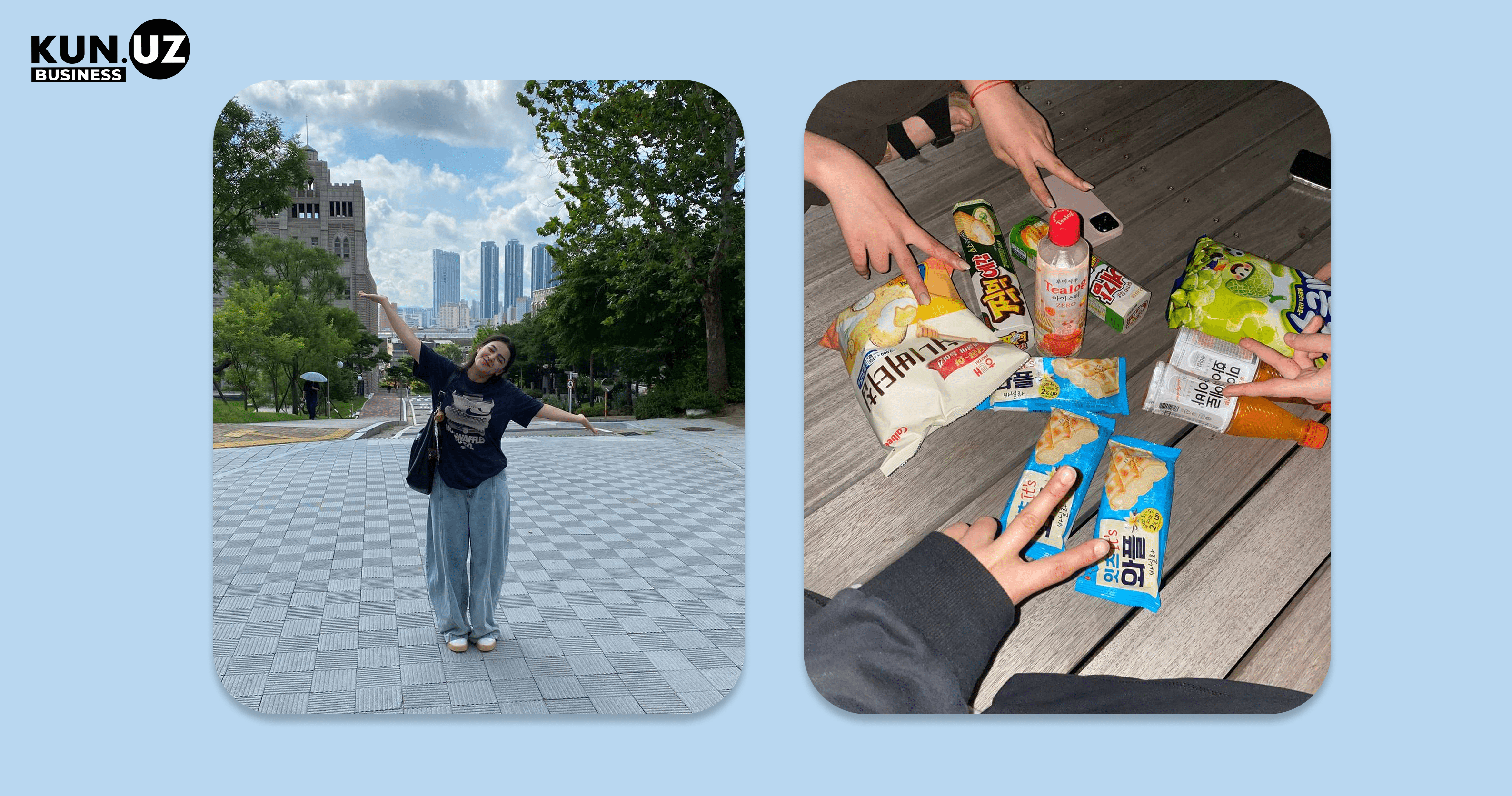
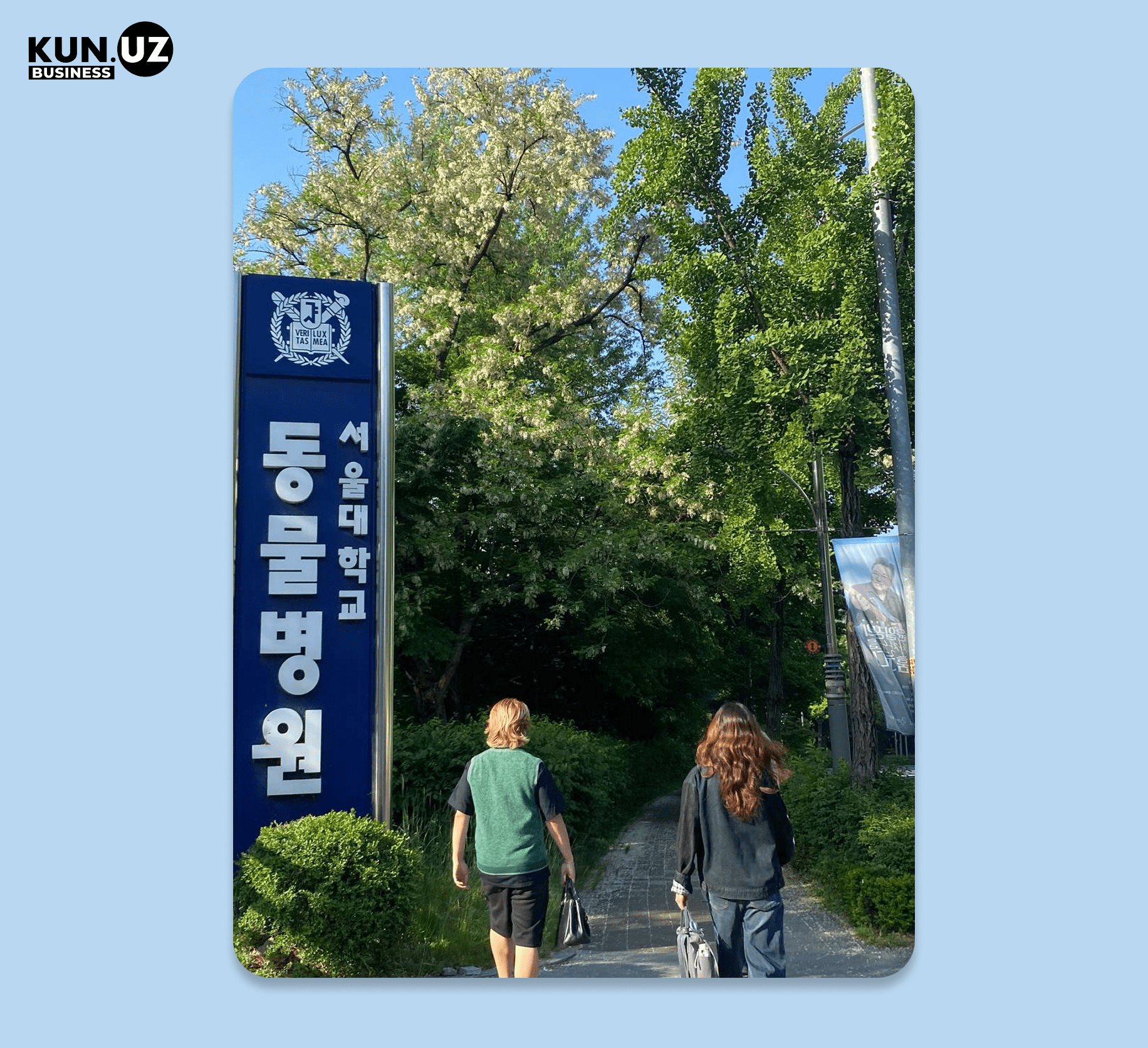
The campus has much more than just libraries and cafés. I found out during my first week that there are nap rooms where students can rest between classes, as well as separate rooms for watching movies and listening to music. The university is designed so that students can spend the entire day on campus without needing to go anywhere else.
Kun.uz
Student life turned out to be much more vibrant than I expected. Every spring, the university holds a major festival featuring well-known Korean artists, with free or heavily discounted admission for students. Another major event of the year is the rivalry between Korea University and Yonsei University. For several days, the campus turns into a huge celebration, with thousands of students cheering for their teams and singing university songs. I never imagined that university competitions could be on such a large scale.
Kun.uz
During the first semester, every international student is assigned a mentor who helps with academics, navigating the campus and everyday issues. This made my first few months much easier: instead of figuring everything out on my own, I could simply ask someone for help.
I was also impressed by the public transportation system. Getting around South Korea by subway and bus is very convenient. Bus stops have heaters in winter and air conditioning in summer. These are the kinds of details you notice and appreciate once you arrive — everything feels remarkably well thought out.
Advice for students considering studying in South Korea
If you are thinking about applying to a university in South Korea, here are four pieces of advice based on my personal experience.
Start preparing as early as possible. The earlier you work on your English, grades and extracurricular activities, the stronger your application will be.
Learn how to cook before you move. It may sound unexpected, but being able to cook for yourself saves money and means you won't have to rely on cafés and restaurants during your first few months.
Start speaking Korean as soon as you arrive, even if you make mistakes. That's what I did, and it helped me adapt, make friends and feel confident much faster than if I had waited until my Korean was better.
South Korea is a good choice for people who are open to new experiences and willing to embrace a different culture. If you constantly compare everything with life back home and are not willing to step outside your comfort zone, adapting will be harder. South Korea and Uzbekistan are very different, and that's one of the country's biggest advantages.
I would love to see more students from Uzbekistan at Korea University. Their number is growing every year, which is very encouraging. I would especially like to see more Uzbek women pursuing a quality education and developing themselves.