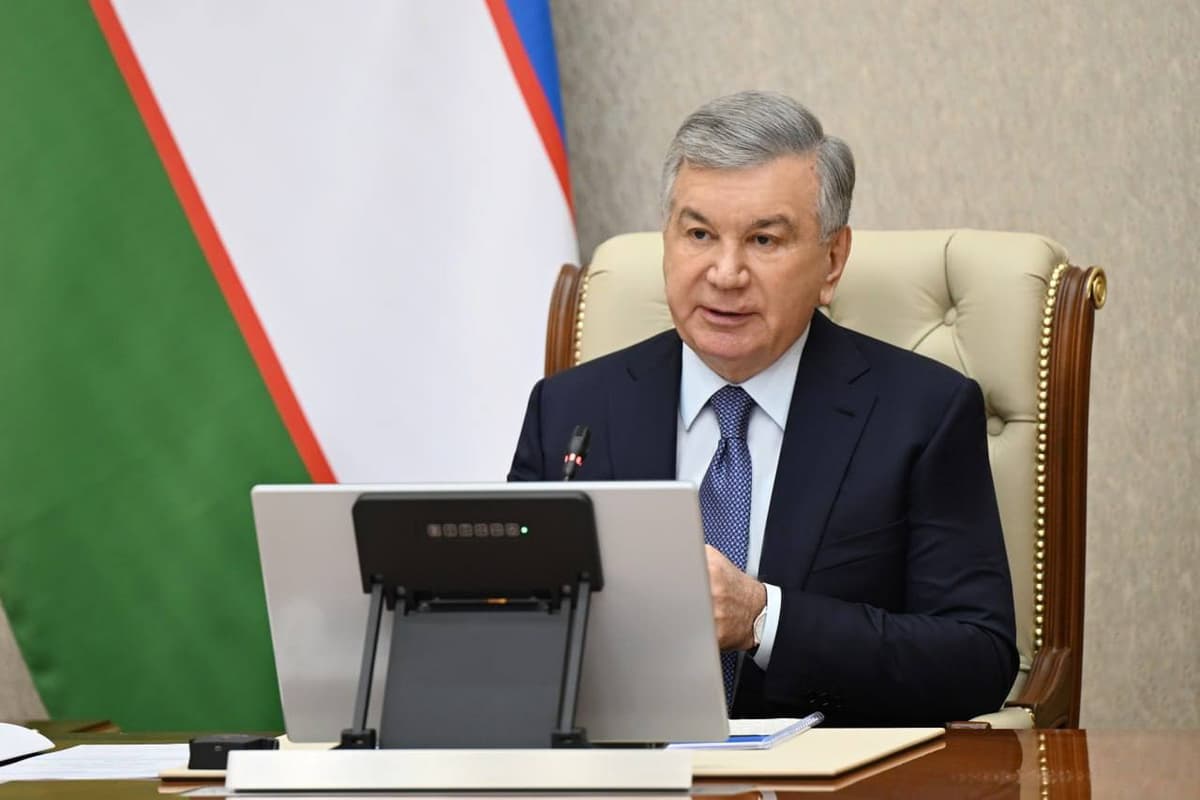
“Transition to democracy is not easy” – Interview with James Robinson
|03:39 / 28.03.202311,01022 min
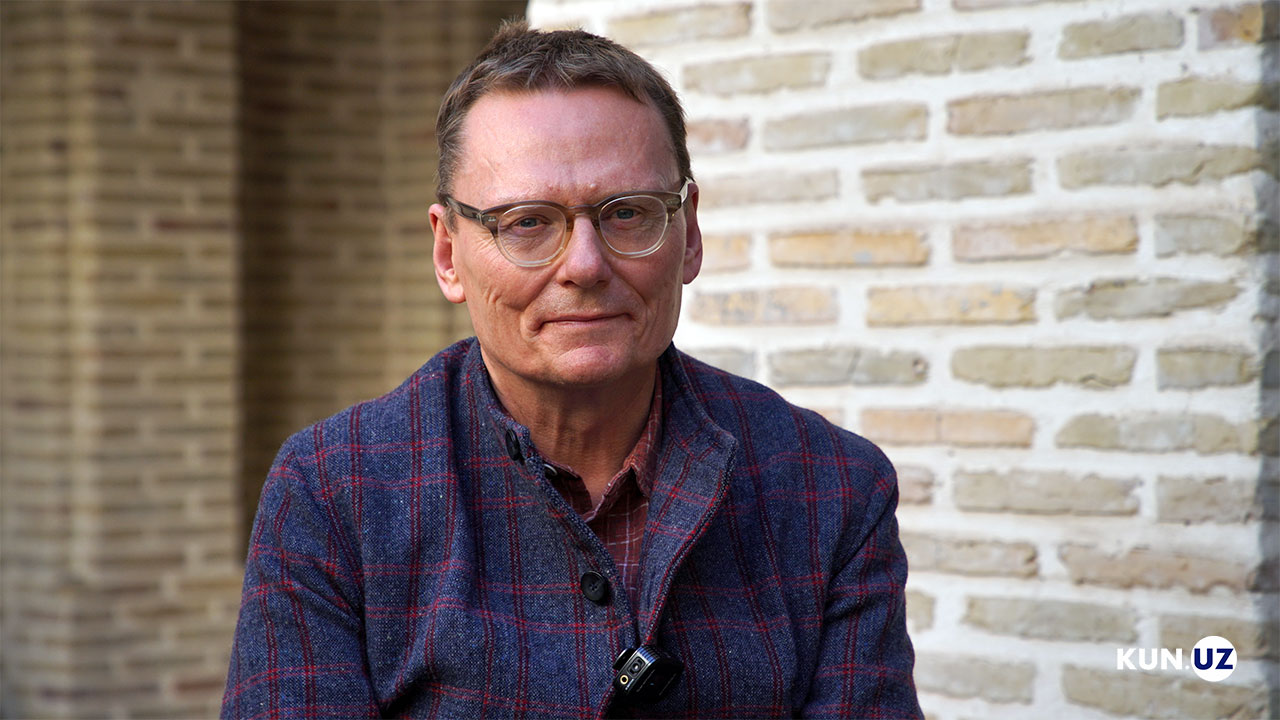
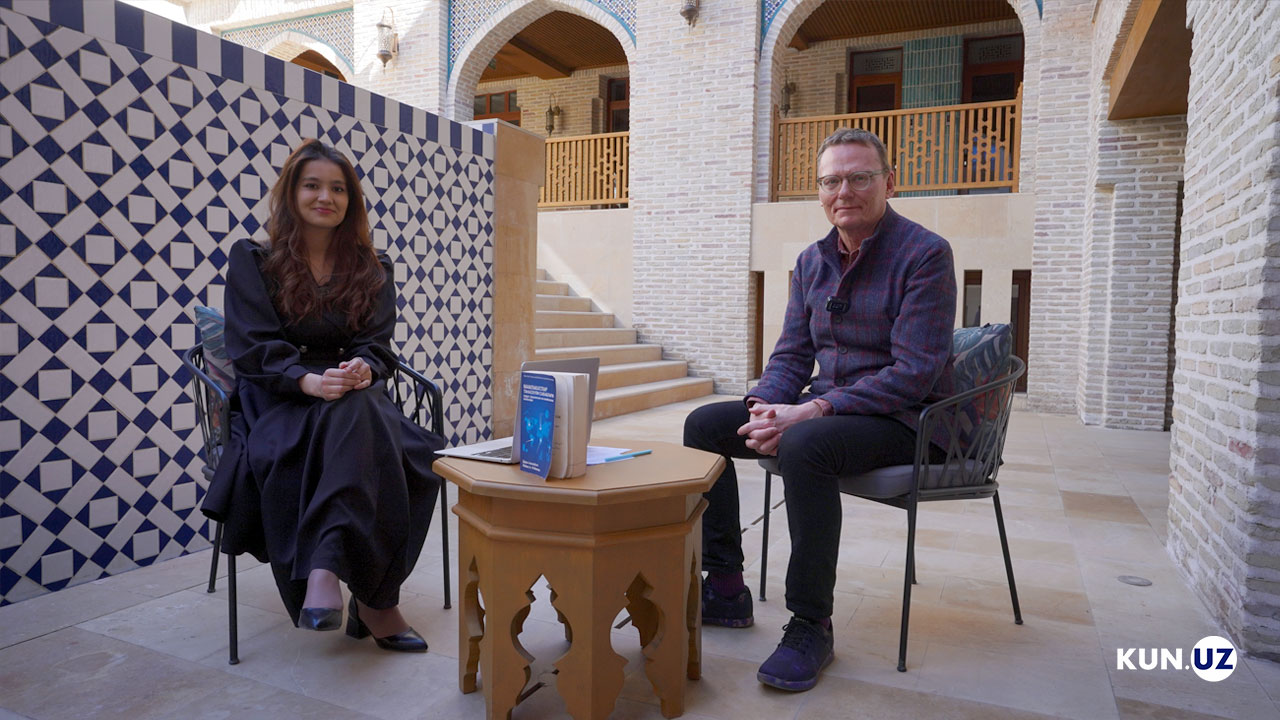
In an interview with Kun.uz, the well-known economist who came to Uzbekistan, co-author of the book “Why nations fail?”, James Robinson talked about the construction of inclusive institutions in authoritarian countries, the tough development of countries after colonialism, the “mistakes” made consciously, and answered the questions about the so-called section “king of cotton” – Uzbekistan in his book.
James Robinson is a British economist and political scientist, professor at the Harris School of Public Policy at the University of Chicago.
The book “Why nations fail?”, co-authored by James Robinson and Professor Daron Acemoglu, was published in Uzbek in 2021 and aroused the interest of readers.
In the book, the authors analyze the scientific-economic reasons why some countries maintain violence and stability, while others do not develop despite trying to reform. It also mentions Uzbekistan.
On March 17, James Robinson met with students, scientists, leaders of social opinion, representatives of finance and economy and business circles in Tashkent. Kun.uz reporter interviewed the scientist who traveled to Bukhara before the meeting.
- Mr. Robinson, welcome to Uzbekistan! Thank you for being with us.
- Thank you, I am happy to be here.
- In the book “Why nations fail?” together with Daron Acemoglu, you scientifically substantiated the fact that the poverty of countries is not due to any cultural, geographical or other factors, but due to extractive and inclusive institutions. What are extractive and inclusive institutions and how do they contribute to development?
- I think there are two layers here: economic and political. We talked about economic development. Economic institutions are very important. These are rules that direct people’s talents in different directions, creating incentives and opportunities in society. The difference between inclusive economic institutions and extractive economic institutions is that inclusive economic institutions are institutions that create broad incentives and opportunities. In this, all people in the country have the same incentive, the playing conditions are the same for everyone, the laws work, and the opportunities are good. Extractive institutions are the opposite. Not everyone has motivation and opportunity, but some people have it.
The main argument of the book is that, in a sense, economic institutions are the result of the political process. So, states have economic institutions, because the political system determines it. The reason a country has inclusive economic institutions is not because it has the best economists, but because it has inclusive political institutions.
Related topics
We emphasize two things: first, people need a strong state that regulates society, collects taxes, provides people with goods, and maintains order. But the state should be forced to work for the benefit of society. Therefore, political power should be distributed among the population. Thus, if one of these two things fails, extractive political institutions emerge in society. Here we focus on: the political foundations of inclusive economic institutions and how inclusive economic institutions can lead to prosperity.
- The book makes an interesting point: decision-makers in a poor country do not make wrong decisions because of ignorance, but they do so knowingly. But if we look at the poor countries, we can see them among the poor countries because of the poor quality of education. Couldn’t decision-makers be the product of poor education?
- Investing in education is clearly critical to economic success and economic development. But for us it is the result of the process. Investments in education can be made by both the public and private sectors. The private sector is the people who invest in education if there is a return on investment in education or if there is a possibility of some benefit from education. This largely depends on the institutional context.
Public sector investment in education depends on whether policymakers have an incentive to invest in the future of people in the country. It depends on whether the institutions are inclusive. I don’t think inclusive institutions are a very important outcome of investment in education. In fact, it is not a decisive factor in the decision-making process that leads to good or bad results. It’s really made up by institutions. I don’t think it's because of this... Most countries with executive institutions have highly educated leaders. Like most dictators in Africa, they were educated in France, England, Harvard or elsewhere. I can say from my experience that this is not a big problem.
- Understandable. In one of your interviews, you were asked why all the poor countries are concentrated in the south if you don’t recognize demographic, cultural and other factors. You said that this situation is related to the political processes that took place in them, that is, to the institutions of the colonial period. A similar trend can be seen in the countries of Central Asia – why do former colonial states struggle to build inclusive institutions?
- I will give you an example. You’re just saying that I don’t think geography, demographics, etc. are important factors in prosperity – yes, I think that’s true. I think culture is a very big concept. When it comes to culture, people are very important in it. One important thing to note is that when we talk about institutions, we also talk about rules. These are unofficial rules. That is, not norms written on paper, such as a constitution or law. There may be informal institutions and social norms that influence people’s behavior.
When the book talks about the culture factor, we focus on religious differences or different national histories. Was the US successful because its population was English and Protestant, or did Latin America fail because it was colonized by Spain and Catholic? We try to challenge these kinds of debates, but there are many kinds of cultural debates, and some of them, I think, may be more important.
I think you know that colonialism has been a huge source of extractive institutions, extractive political and economic institutions all over the world. The Spanish did it in America. The British did it in Africa, and Russia did it all over Central Asia. In my opinion, one of the reasons for the large number of economic problems in Central Asia is the inheritance of extractive institutions from the Soviet Union period. The Soviet Union had highly extractive economic and political institutions.
I believe that since 1990, all regions of Central Asia have been struggling to get out of this situation, some are doing better than others. For example, I gave a lecture about my book in Kyrgyzstan, where they have been very successful in creating inclusive political institutions. Elsewhere, for example in Kazakhstan, little progress was made due to coordination with the Soviet regime. In my opinion, building inclusive institutions is very difficult, it definitely takes time and experience. People need to be aware of what is possible and the goals they should strive for change.
This transition period is very difficult. The book consists of two parts. A major part of it is devoted to history, and this history can explain how institutions persist and change. But think back to our discussion of Latin America and North America. Latin America had extractive institutions during the colonial period that ended 200 years ago, and they never got out of it. Thus, it shows how difficult it is to create inclusive institutions.
Once an extractive society is created, many of the mechanisms that perpetuate it remain, even after colonialism ends. That’s why I think it’s very difficult to change this process.
- Before I read the book, I heard that it also talks about Uzbekistan. When I looked for that part in the table of contents, I saw the part called “King of cotton” and I said “yes, this is about Uzbekistan”. Can you tell us about the history of the creation of this particular chapter, the process?
- Yes, we have this chapter... Most of the book is historical and we try to understand why some parts of the world have inclusive institutions and others don’t. We focus on Britain, America, etc. We have written about the fact that we are traveling around the world in various poor countries, and mainly these countries are very different in terms of their institutions and culture, their position in the world, and their history. It can be North Korea, Sierra Leone in West Africa, Colombia in Latin America or Argentina, Uzbekistan in Central Asia. But what they have in common is that they are poor countries and the reason for their poverty is that they have extractive institutions.
Of course, the details of these institutions are very different. The details of extractive institutions in West Africa or Latin America differ from those of extractive institutions in Kazakhstan. But it is linguistically useful. Language helps you see the common ground of different situations. All the details are important, but sometimes you have to step back from the details and look at what these communities all have in common.
We presented the example of forced labor in cotton harvesting in Uzbekistan as a classic example of an extractive institution. So, children have to leave school to go pick cotton. We used this example to explain why there are extractive institutions in Uzbekistan.
- Yes, I was among the children who were sent to pick cotton and I remember it as the worst process of my life.
- Then you know what I’m talking about better than I do.
- In countries like Uzbekistan, the government is concerned about the formation of inclusive institutions. According to the political thinking formed in the elite, giving the society full freedoms can derail the social situation and cause political anarchy. So how can we pave the way for inclusive institution building without derailing sustainability?
- I am not sure that this opinion is correct. For example, it is an absolute fact that democracies are more stable than dictatorships. If you look at the variability of national income, it is much higher in countries with extractive institutions than in democracies.
The transition from extractive institutions to inclusive institutions is difficult. There is a lot of uncertainty and unintended consequences. But I don’t think there’s any substitute for having a prosperous society.
World history shows that there is no direct path to true sustainable prosperity. So, there is no other alternative.
There are other reasons for this. Let’s say, you could just forget about economics and ask what kind of society do you want to live in? Or what kind of society do you think is fair to live in? What is the legal way to form a society? We can forget the economy and just talk. I think we come to the same conclusion.
I think the threat of instability is what autocratic regimes use to protect themselves from openness and public participation, consultation and accountability to the people. I don’t think there’s any reason why liability or anything else should cause instability.
- How to direct authoritarian governments to political reforms? Especially when it is difficult to convince the government about reforms, and the people’s instruments of influence on the government are limited?
- That is why there are many poor countries in the world. The reason there are so many poor countries in the world is that there is always an incentive to create extractive institutions, and it is very difficult for people to do anything about it. It is very difficult for people to challenge these extractive institutions and change something.
Authoritarian regimes do not decide to change of their own accord. Transformation only happens when they are forced to change. If we take China as an example, the reason Deng Xiaoping implemented economic reforms was not because he really wanted to. This is utter nonsense. The reason Xiaoping did the reforms was that he fought for power with the “Gang of Four” (political faction) and Chairman Mao’s widow.
What did the “Gang of Four” and Mao’s widow offer to the Chinese people? They proposed more of a cultural revolution, a totalitarian model. In fact, Dan Xiaopin had to suggest something else. What did he suggest? He proposed a radical alternative, that is, transition to a market economy, abandoning state control of people and people’s activities.
He didn’t do it out of generosity. It was a political conflict, a strategy in it. I think this is one of the main themes of our book.
If you ask me how democracy came about, or how inclusive institutions were built in Britain over a long period of time, we’re talking about people suffering from extractive institutions fighting for power and demanding their power, their rights, their government's accountability, their demand that it work in the interests of society rather than its own narrow interests. As you can see, such things can be very difficult to organize and change.
At the beginning of the book, we touched on the “Arab Spring”. If you think about what happened because of the “Arab Spring”, I want to remind you a little bit: the transition is very difficult, you see how to strengthen new, more inclusive institutions. The potential for backsliding always remains.
In the book, we called the situation when one elite replaced another elite, which happened in Egypt, “the iron law of oligarchy”. A new military dictator has emerged, but the logic of the system is very similar to the situation before the “Arab Spring”. We have a general view of it as a grand coalition, but we have not been able to properly assess the complexity of the transition period. This situation also applies to the population of other countries of the world in this situation.
- During the book discussion, some Uzbek readers now ask the authors, “Why do some countries go into recession again and again?” in the sense that they say that there should be a continuation of the book. Although this sounds like a joke, it seems to be based on the idea of why some countries do not learn from history and make mistakes over and over again. How do you feel about this idea?
- I don’t think it’s about not learning from history. We emphasize the vicious circle in which extractive institutions tend to reproduce themselves. Because of this, the repetition of bad economic policies can lead to bad economic results. I don’t think it’s because people don’t learn from their mistakes. It’s just like system logic. Bad politics inevitably comes from extractive institutions. Sometimes they are very unstable. For example, Argentina is now almost at the level of hyperinflation. That means over 100% inflation. This is a recurring pattern. Extractive institutions relentlessly replicate this unsustainable macroeconomic policy. Then comes the crisis, institutions rebuild themselves. A clear model can be suggested as to why this leads to such unstable politics.
I think extractive institutions have all the mechanisms to strengthen themselves. It is difficult to change them. How they appear depends to a large extent on certain contexts and conditions. For example, in most places there is no forced labor in the cotton fields. This is not the case in Argentina, but extractive institutions take a very different form. They tax agricultural exports or print money and use this to patronize their supporters. To a large extent, they can insure themselves against the negative effects of inflation, so you end up with hyperinflation.