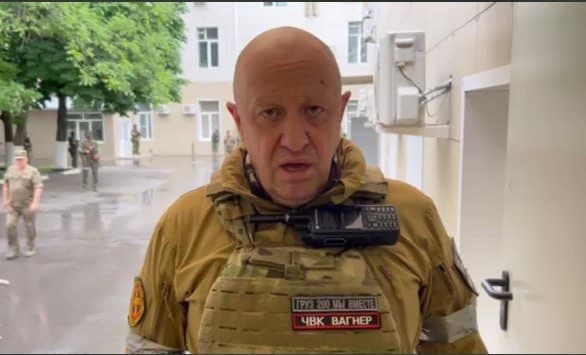
On June 23, Prigozhin unleashed a new tirade against the Russian military and then marched his troops into the Russian city of Rostov-on-Don, CNN writes citing its sources.
Russian President Vladimir Putin called Wagner’s actions “treason” and has vowed to punish those behind the “armed uprising”.
How did it all start?
The dramatic turn of events began on Friday when Prigozhin openly accused Russia’s military of attacking a Wagner camp and killing a “huge amount” of his men. He vowed to retaliate with force, insinuating that his forces would “destroy” any resistance, including roadblocks and aircraft.
“There are 25,000 of us and we are going to find out why there is such chaos in the country,” he said.
Prigozhin later rowed back on his threat, saying his criticism of the Russian military leadership was a “march of justice” and not a coup – but by that point, he appears to have already crossed a line with the Kremlin.
The crisis then deepened as Prigozhin declared his fighters had entered Russia’s Rostov region and occupied key military installations within its capital. That city, Rostov-on-Don, is the headquarters for Russia’s southern military command and home to some one million people.
Prigozhin released a video saying his forces would blockade Rostov-on-Don unless Defense Minister Sergei Shoigu and Russia’s top general Valery Gerasimov come to meet him.
Prigozhin has spent months railing against Shoigu and Gerasimov who he blames for Moscow’s faltering invasion of Ukraine.
Kremlin’s response
Hours later Putin made an address to the nation that illustrated the depth of the crisis he now confronts.
“Those who carry deliberately on a path of treason, preparing an armed rebellion when you were preparing terrorist attacks, will be punished,” Putin said.
The Russian President said, “Any internal turmoil is a deadly threat to our statehood for us as a nation; it is a blow to Russia for our people and our actions to protect our homeland. Such a threat will face a severe response,” he added.
Russia’s Defense Ministry denied attacking Wagner’s troops, calling the claim “informational propaganda.”
And the Federal Security Service (FSB), Russia’s internal security force, also opened a criminal case against Prigozhin, accusing him of calling for “an armed rebellion.”