
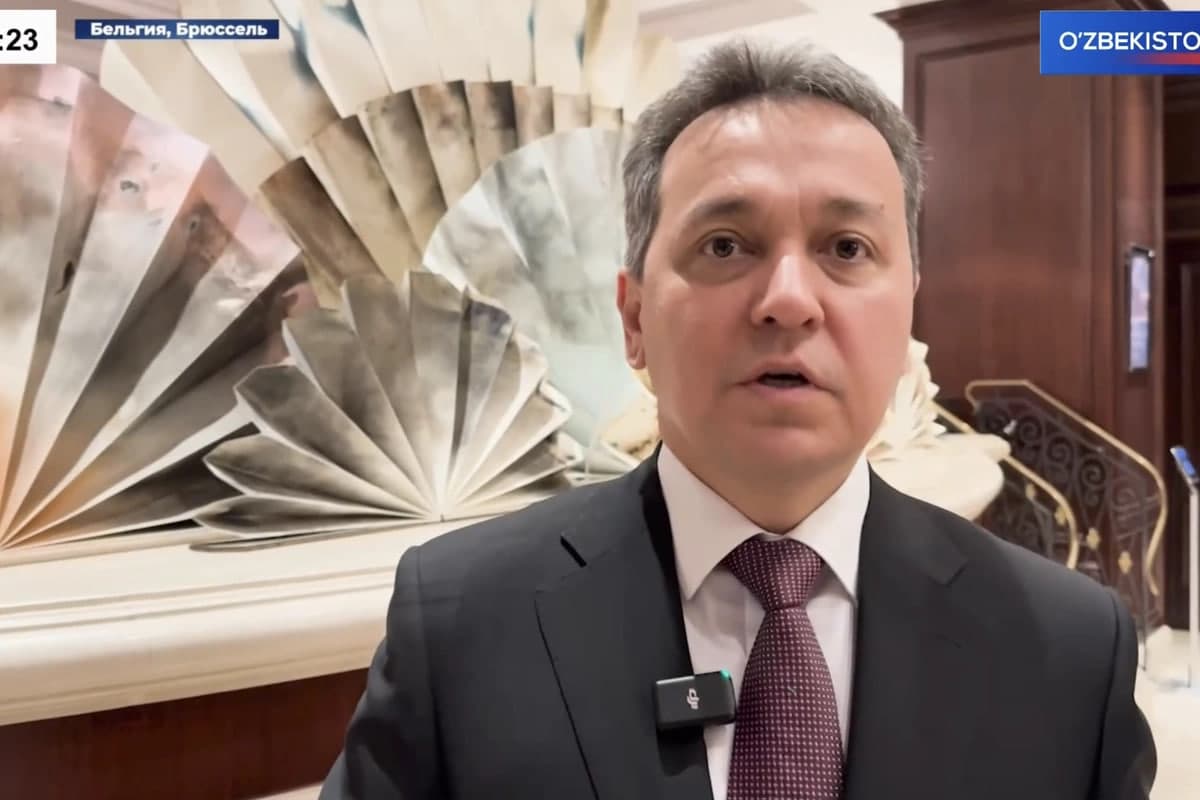
Uzbekistan signed an agreement under the European satellite internet program for Central Asia with SES, a European multi-orbit satellite communications provider. Shermatov revealed the details in an interview with the Uzbekistan 24 TV channel.
SES will deploy satellite technology and ground terminals to deliver internet connectivity to remote regions of Uzbekistan, Kyrgyzstan, and Tajikistan.
European Commissioner for International Partnerships Jozef Síkela stated in March that the project also offers Uzbekistan “true digital autonomy” through the establishment of a regional satellite gateway within the country.
Shermatov confirmed that Tashkent will serve as the regional satellite internet hub, providing services both within Uzbekistan and to neighboring countries.
“This project envisions the creation of a hub specifically in Uzbekistan, which will also serve other countries in the region… By expanding internet services, Uzbekistan’s export revenues will increase,” the minister said.
Shermatov also noted the growing presence of European IT companies in Uzbekistan.
“Two years ago, there were around 50 companies with European capital operating in Uzbekistan. Now there are 161 – a threefold increase in just two years,” he stated.
He expressed hope that President Shavkat Mirziyoyev’s official visit to Brussels and the signing of the Enhanced Partnership and Cooperation Agreement (EPCA) will further boost investment in the digital sector.
“I believe this visit will spark greater interest among European companies in Uzbekistan’s IT industry. It will also help create more high-paying jobs for our youth,” Shermatov emphasized.
According to the minister, for European companies to open offices and provide digital services remotely from Uzbekistan, appropriate legislative regulations within the EU are also necessary.
“For these companies to establish offices here and offer services remotely, EU legislation must allow it,” he explained.
Shermatov described the partnership agreement with the EU as a “historic document” that unlocks vast opportunities for the digital economy and European IT business involvement.
“The partnership agreement with the European Union is truly a historic document that opens great prospects for creating high-paying jobs,” he concluded.