How to take the IELTS in Uzbekistan: Experience, prices, preparation, and why it is necessary
|21:25 / 05.11.202511,32430 min
In May this year, I took the IELTS at the IDP centre in Tashkent and scored 7.0. It was my first experience, and it turned out to be more difficult than expected. During my preparation, I realised that the exam is not only about English, but also about planning, discipline and expenses.
At the same time, more and more people in Uzbekistan are deciding to take this test for study, immigration or career purposes. But many still don't know where to start, how to choose a module and what is needed to get a result that is really useful.
In this article, I will explain why IELTS is needed, where you can take it, how much preparation costs, how the exam works, and how to prepare for it without wasting time and money.
The IELTS certificate is valid for two years. Its results are accepted in more than 150 countries around the world.
Why do you need IELTS?
IELTS remains one of the main tools for admission to foreign universities. The certificate is accepted in more than 150 countries around the world, including the United Kingdom, Canada, South Korea, Malaysia, Hungary, Turkey and the UAE.
Many Uzbekistanis take IELTS specifically for the purpose of studying abroad — to enrol in bachelor's or master's programmes or to participate in scholarship programmes. For many students, IELTS is the key to participating in international scholarship programmes.
The most popular of these are Chevening (United Kingdom), Erasmus+ (European Union), Fulbright (United States) and MEXT (Japan). These programmes cover the costs of tuition, accommodation and travel, and the admissions committee requires a valid IELTS certificate or other international English language exam.
The Academic Module is required for academic purposes: it assesses the skills necessary for studying — the ability to write essays, analyse texts and understand lecture materials.
Related topics
Example:
Universities in Europe and Asia usually accept students with a score of 6.0, while master's and doctoral programmes often require 6.5–7.0 and above.
IELTS for study
Knowledge of English and an IELTS certificate are in demand not only abroad. More and more opportunities are appearing within the country, from studying at international universities to participating in professional development programmes.
The IELTS certificate is increasingly needed within the country:
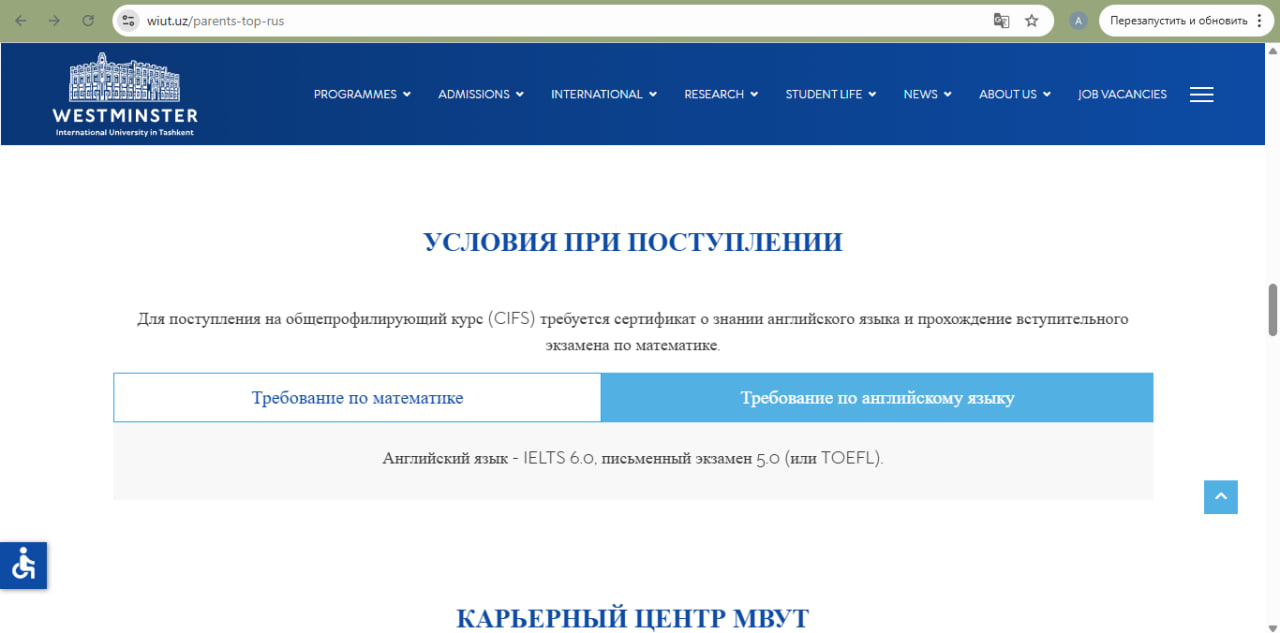
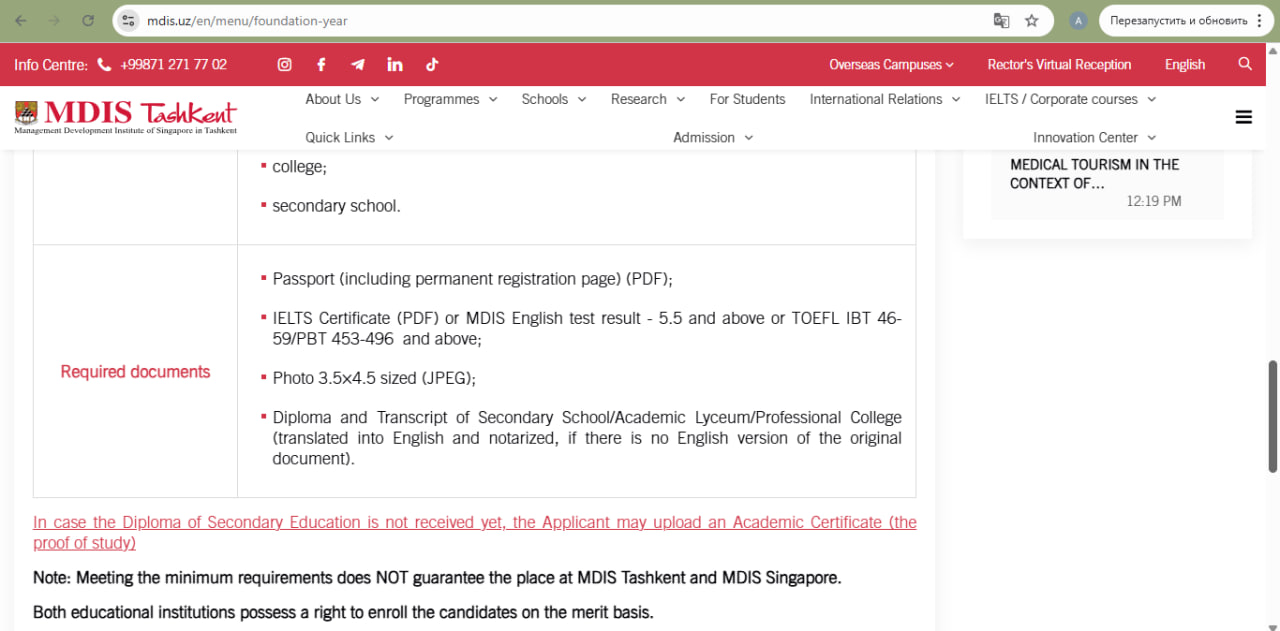
for admission to higher education institutions with international programmes (WIUT, MDIS, TEAM, Amity, Akfa University);
To enrol at WIUT or Tashkent University of Management and Development, you need a minimum of 6.0, and for a master's degree — 6.5.
to participate in government grants and internships;
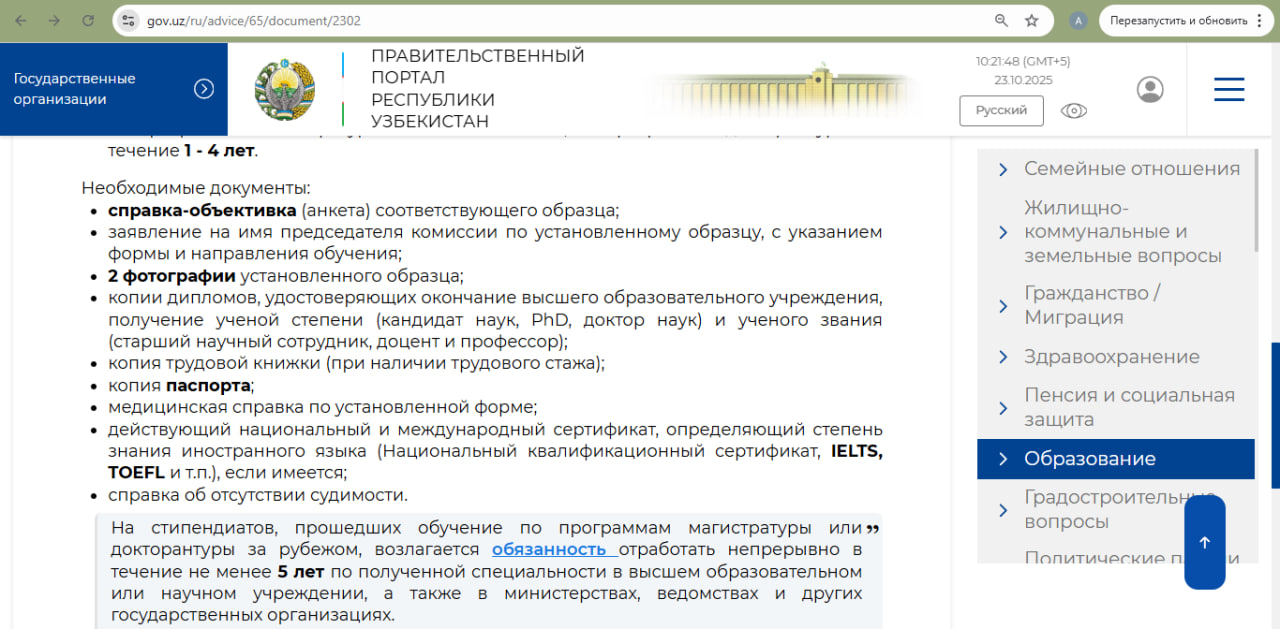
To participate in the El-Yurt Umidi state programme, you must have a valid IELTS certificate or another international English language exam certificate.
When applying to universities, applicants who have a state-approved certificate of level B2 (from 5.5 to 6.5) and above in a foreign language are given preference. More details here - Kun.uz
IELTS is required not only for studying abroad, but also for immigration. Canada, Australia and New Zealand require the General Training module, which tests English proficiency in everyday and professional situations.
Example:
For a work visa to Canada (Express Entry), you need an overall score of 6.0 on the CLB scale, but requirements may vary depending on the province and profession.
More and more professionals in Uzbekistan see IELTS as a step towards developing their professional skills and entering the international labour market. The certificate helps not only with immigration, but also with employment in foreign organisations and companies working with foreign partners.
Can I get a refund for IELTS?
In addition, the state supports English language learning. Uzbekistan has a programme to reimburse the cost of the IELTS exam if the participant scores 7.0 or higher.
Upon approval, the compensation is transferred to the participant's account via the Xazna app, a state platform for electronic payments. The process usually takes two to three weeks, depending on the system's workload and the completeness of the documents submitted.
Important: you can only apply once — for the last valid certificate. Compensation does not apply to retakes or partial results.
When registering, you need to choose between the IELTS on computer or IELTS on paper exam format. Both options are assessed on the same scale and take place under the same conditions; the only difference is the way the tasks are completed.
IELTS on computer
The exam is held in the computer rooms of official centres.
Answers are entered using a keyboard, and results are available faster - usually within 3–5 days
The speaking test is always conducted in person with an examiner, as in the paper-based version
This format is convenient for those who type quickly and prefer a modern interface
IELTS on paper
Tasks are completed by hand, answers are written by hand on special forms
Checking takes longer: results are published in approximately 13 days
The paper version is often chosen by those who are used to working with text ‘on paper’ and make fewer typos when writing
Important: Only the IELTS on computer format is currently available in Uzbekistan, but the structure and assessment criteria are identical to the paper version. More details here: Kun.uz
Centres are located in the cities of Tashkent, Samarkand, Bukhara, Andijan, Fergana, etc.
IELTS exam cost
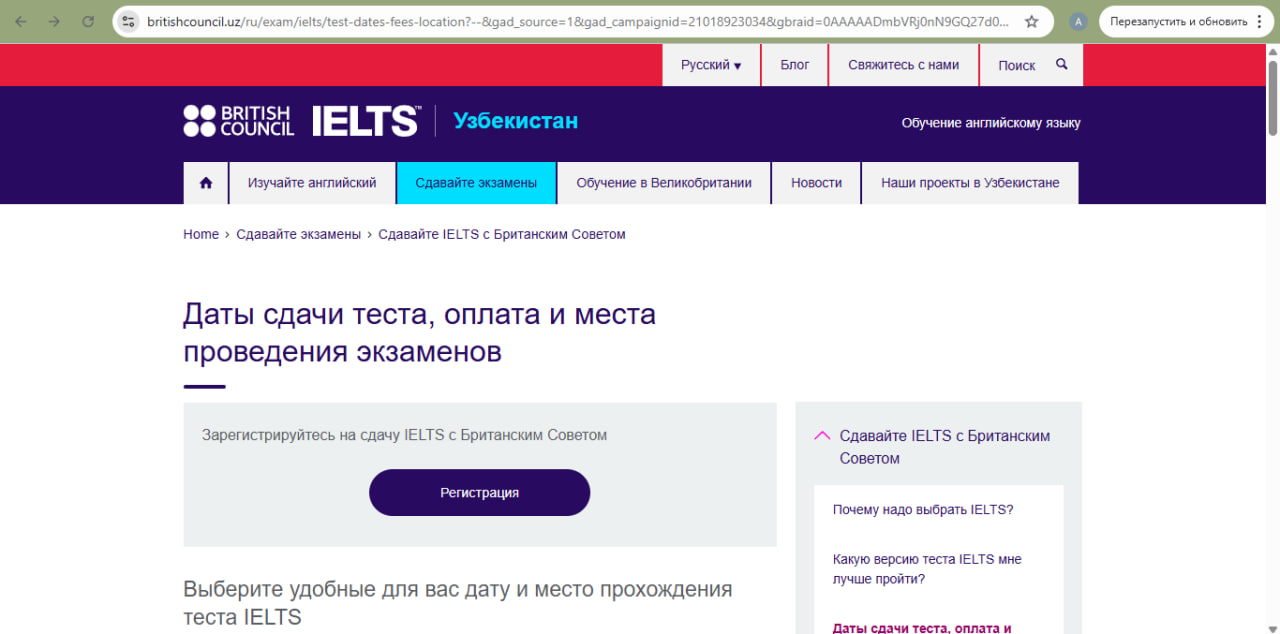
According to the British Council, the exam fee (Academic or General Training) is 2,639,000 UZS.
How to register and pay British Council and IDP
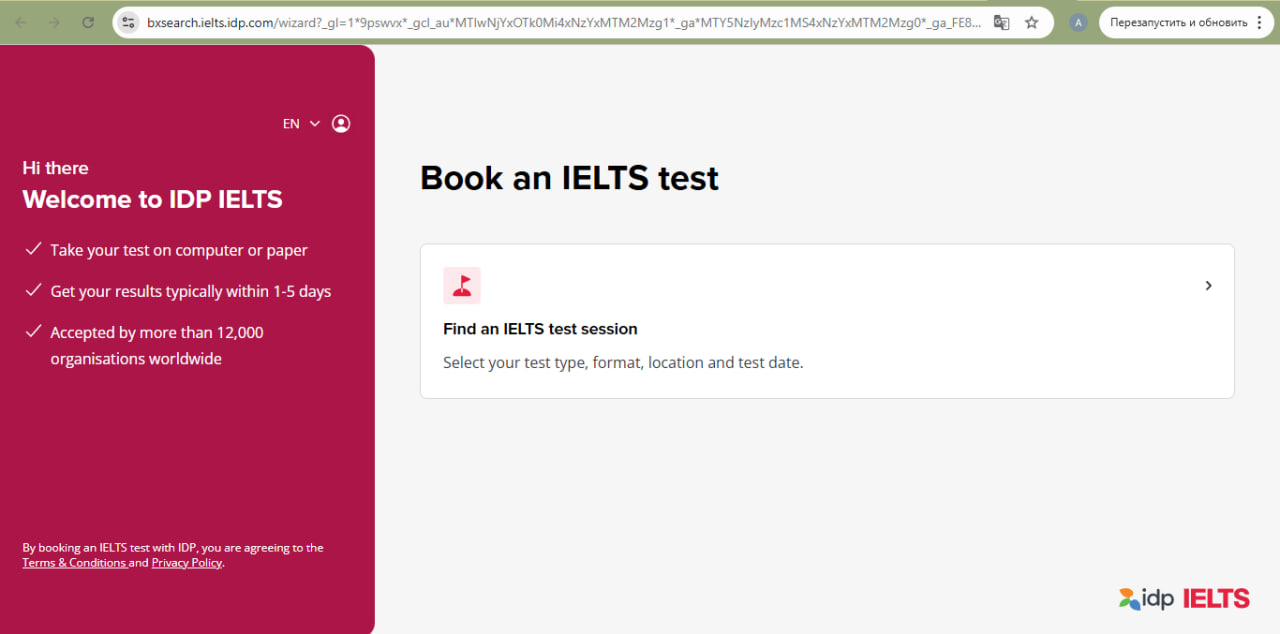
Exam registration takes place online on the IDP Uzbekistan or British Council Uzbekistan websites.
Before you begin, make sure you have your passport and bank card handy for payment.
1. Module selection
Academic — for university admission, studying abroad and academic purposes
General Training — for immigration, employment and vocational training programmes
Difference between General Training and Academic reading assessment
Both modules include four parts (Listening, Reading, Writing, Speaking), but the tasks in Reading and Writing are slightly different.
2. Exam format
Only IELTS on computer is available in Uzbekistan.
The exam is held at official IDP and British Council centres, and results are available in 3–5 days.
3. Choosing a city and date
Select a city on the registration form (Tashkent, Samarkand or other centres, if they are temporarily open).
The system will show the available dates and times for the exam.
Popular dates, especially weekends, fill up quickly, so it is best to book 3–4 weeks in advance.
4. Payment
Payment is made online during registration, by bank card (UZCARD, HUMO or international Visa/MasterCard).
After successful payment, you will receive a confirmation email with the date, time and address of the centre
Registration is not considered complete without payment
5. Confirmation
A reminder will be sent by email and SMS 1–2 days before the exam
On the day of the exam, you must bring your passport; without it, you will not be able to participate
What do you need to know before registering for IELTS?
It is best to choose the exam format and date 1–2 months in advance, as popular locations fill up quickly, especially on weekends and before university application deadlines.
The IELTS certificate is valid for 2 years from the date of the exam, so when choosing a date, it is important to consider the deadlines for submitting documents to universities or grant programmes.
On the day of the exam, you must arrive at the centre in advance, approximately 30 minutes before the start, in order to calmly complete registration and document verification. You must have your passport with you, without which you will not be able to take the exam.
Tip: choose an exam date that gives you at least three months to prepare. This is usually enough time to improve your score by at least one point.
How is the exam conducted and how should one prepare for it?
The exam consists of four parts: Listening, Reading, Writing, and Speaking.
IELTS assesses not only your knowledge of English, but also your ability to work with the test format. Even with a good level of language proficiency, your result may be lower than expected if you do not know how to manage your time or what the tasks look like.
In Reading and Writing, it is important to be able to quickly navigate the structure of the text and identify key details. In Listening, you need to concentrate on the details because the recording is only played once. And in Speaking, it is not so much about speaking perfectly as it is about constructing your answer confidently and demonstrating logical speech.
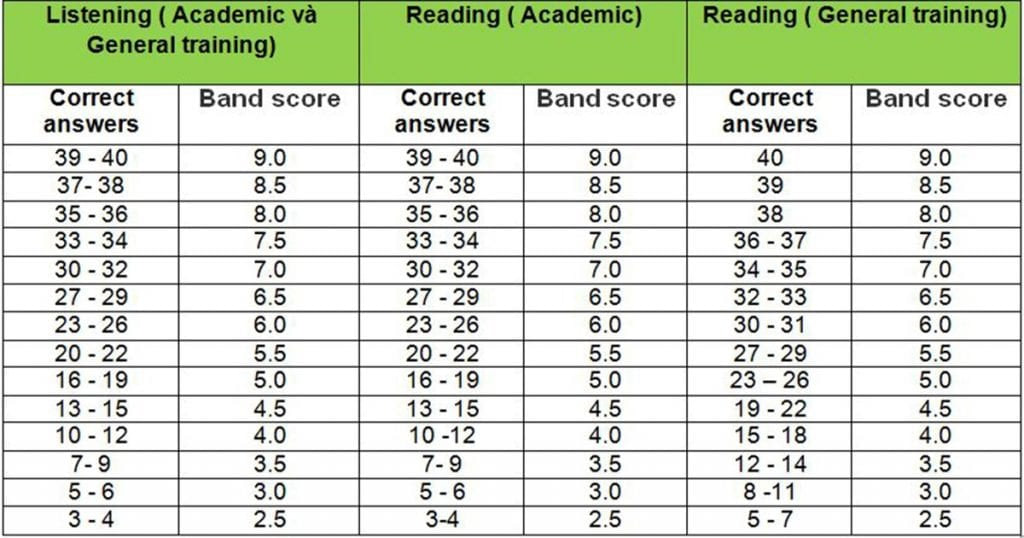
All sections are assessed on a nine-point scale. The final result is the average of the four scores, rounded to the nearest 0.5 points.
Exam structure
The exam consists of four sections, each of which tests a separate skill and lasts approximately 2.5-3 hours:
Listening - 40 questions, 30 minutes
Reading - 3 texts, 40 questions, 60 minutes
Writing - 2 tasks, 60 minutes
Speaking - oral interview with an examiner (10-15 minutes), may take place on the same day or the day after the written exam
Listening
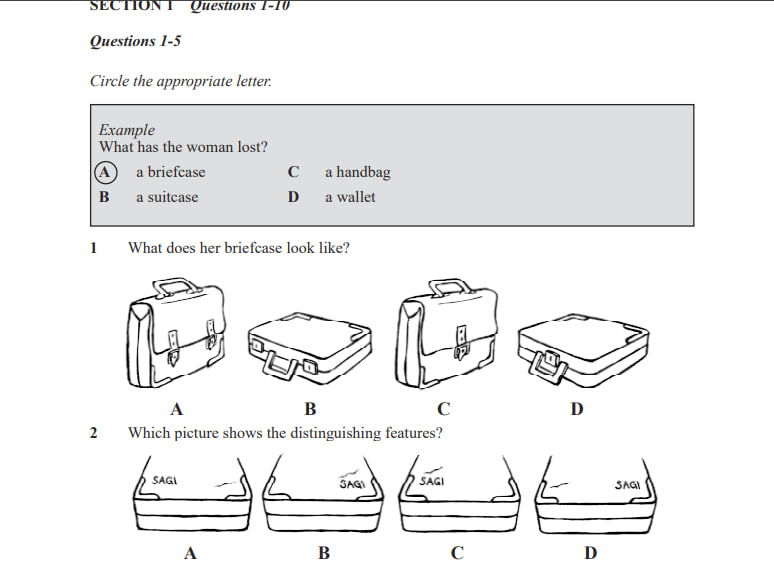
At first glance, the Listening section seems simple, but in practice it requires maximum concentration: you need to listen to the recording and write down your answers at the same time, without the possibility of listening again.
Work with sample recordings on ielts.org, where you can download real examples.
Pay attention to spelling: if a word is spelled incorrectly, the answer is considered incorrect, even if you understood the meaning of the task correctly.
Example of the first IELTS listening task
From my experience:
I found it helpful to write down names and numbers as I heard them while watching films in English. This exercise develops your attention span and ability to quickly record information you hear - a skill that is especially important for the Listening section.
During the exam, the audio recording is played only once, so it is important not only to understand the general meaning, but also to catch specific details - numbers, addresses, surnames, phrases. There are no ‘second chances’ in Listening: if you miss something, you cannot correct your answer.
Regular practice helps your brain to ‘grasp’ English speech automatically. Short videos, podcasts or news items are suitable for this - the main thing is to listen actively, with a pen in your hand. You can write down keywords, dates and names, then check yourself against the subtitles.
Reading
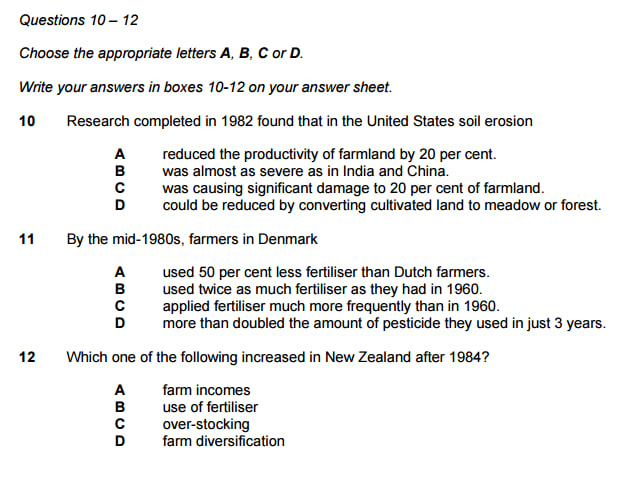
Here, it is important not to understand the entire text, but to be able to quickly find the necessary information. The tasks test not only comprehension, but also the ability to work with the text under time pressure, identify keywords, notice details, and correlate them with questions.
One of the most common mistakes is trying to translate every sentence. This takes time and prevents you from seeing the structure of the text.
Tips:
Use the ‘scanning’ method. Don't try to understand every sentence; look for keywords, dates, names, and terms in the text that match the questions. This helps you quickly find the right fragment and save time.
Manage your time. You are given about 20 minutes for each task. Try not to get stuck on difficult questions: skip them and come back to them at the end. The main thing is to answer all 40 questions, even if you are unsure about some of them.
Study the types of tasks. IELTS includes True/False/Not Given, Matching Headings, Gap Fill and other formats. Understanding their logic helps you choose a strategy in advance: where to look for the answer, how much information you need and how not to get confused by similar wording.
For many, this is the most difficult part of the exam. Here, it is important not only to write correctly, but also to structure your thoughts so that the text is logical and convincing.
Tips:
Master the structure of an essay. Learn the template in advance: Introduction – Body – Conclusion. In the first paragraph, state the topic and your position, give two main arguments with examples, and briefly summarise in the conclusion. A clear structure helps the examiner see the logic of the text.
Pay attention to grammar and wording. Errors in agreement, articles, and tenses lower your score. If you are unsure about a complex construction, rephrase it in a simpler way. IELTS does not evaluate the ‘beauty of phrases,’ but rather accuracy and clarity.
Practise time management. Task 1 (describing a diagram or letter) takes about 20 minutes, and Task 2 (essay) takes 40 minutes. During the exam, it is important not only to write, but also to have time to reread the text to correct minor errors.
From my experience:
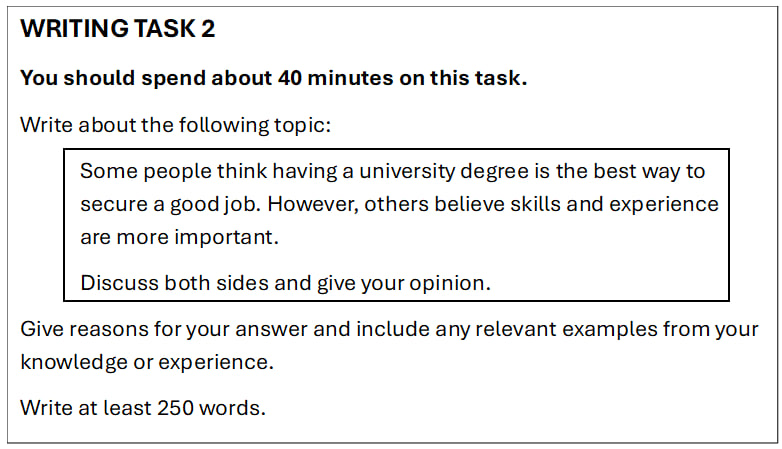
I wrote one essay every morning, setting a timer for 40 minutes. This helped me get used to the time limit and develop automatic responses: as soon as you see the topic, you immediately think about the structure and arguments.
Example of the second task in Writing IELTS
Speaking
The interview lasts 10–15 minutes and consists of three stages: short questions about yourself, a monologue based on a card, and a dialogue on an abstract topic. The examiner does not evaluate perfect pronunciation, but rather fluency, logic, and the ability to use different grammatical forms.
Tips:
Speak confidently, but don't rush. The examiner does not evaluate your speaking speed; it is important that you construct your answers logically and without long pauses for thought.
Pauses are not a mistake. It is better to pause briefly than to fill the silence with words like ‘um’ or ‘you know.’ Such interjections create an impression of uncertainty.
Use simple but accurate expressions. Try to show the range of your vocabulary, but do not complicate your sentences. It is better to speak simply and correctly than to speak complexly but with mistakes.
From my experience:
In the Speaking section, I was asked a question about photographs: when was the last time I had my picture taken, who took it, and on what occasion. I used the Past – Present – Future strategy: first, I described where and when it was, then how I feel about the photos now and why such moments are important to me.
This approach helps you build a logical answer, stay on track, and demonstrate your command of different grammatical forms. It can be applied to almost any topic, from ‘favourite place’ to ‘thing you can't live without’.
Preparing for IELTS is not only about learning English, but also about practising strategies. The exam assesses not only knowledge, but also the ability to solve tasks in a specific format, so it is important to approach the process systematically and build a study schedule.
Tips:
Start with a practice test. It will help you determine your current level and understand which sections require more attention. You can take a free practice exam on the IELTS.org or British Council websites — the format is completely consistent with the real test.
Set a goal. The difference between 6.5 for study and 7.0 for immigration seems small, but in practice it means dozens of extra hours of practice. A goal helps you choose the right course, tutor and pace of study.
Keep a preparation diary. Write down which tasks are difficult and note your progress. By reviewing your notes, you can see what types of mistakes you keep making, which will help you improve faster.
Use online resources. There are many free channels on YouTube where former examiners explain the format and give real examples. Try IELTS Liz, E2 English, and AcademicEnglishHelp, which have practical videos for each section.
If your budget allows, find a tutor. They will help you avoid common mistakes and adjust your strategy once you are above Intermediate level.
From my experience:
I started preparing about two months in advance. The first week, I studied for an hour a day, then increased the time to three hours. After a month, I noticed that I began to understand not only the words, but also the format of the tasks: how to quickly move between sections, where to find the necessary information, and how to manage my time.
When you get to know the structure of the exam, English is perceived differently, no longer as a lesson, but as a system in which everything is subject to logic and attention to detail.
When are the results released and how do you get your certificate?
After the exam, the most exciting part is waiting for the results to come in. The good news is that in Uzbekistan, the process of obtaining a certificate is well organised and predictable.
Verification times
The speed depends on the chosen exam format:
IELTS on computer — results are available 3–5 days after the exam
IELTS on paper — verification takes 13 calendar days
You can check the status on the official websites:
IDP Uzbekistan → ielts.idp.com/uzbekistan/results
British Council → britishcouncil.uz/en/exam/ielts/results
Important:
Sometimes the website may be updated at night, and results are published as they become available throughout the day.
How to obtain a paper certificate?
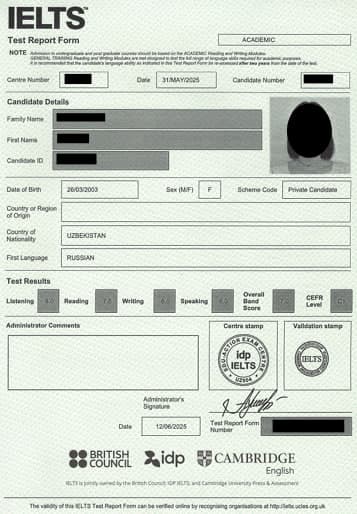
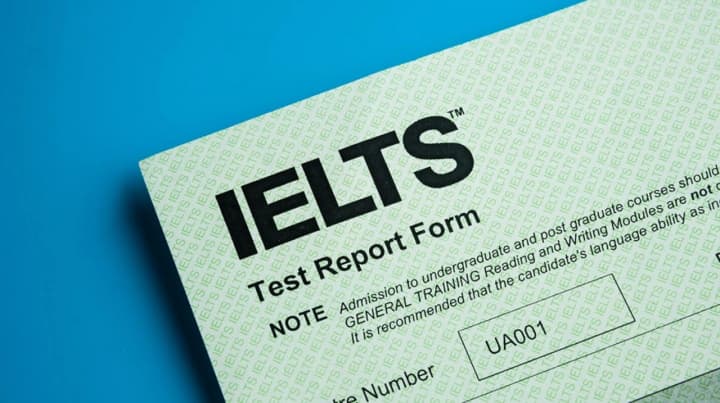
The paper IELTS certificate (Test Report Form, TRF) is issued at the same centre where you took the exam.
IDP Uzbekistan — the certificate can be obtained in person at the office.
British Council Uzbekistan — issued at the centre or by post.
From my experience:
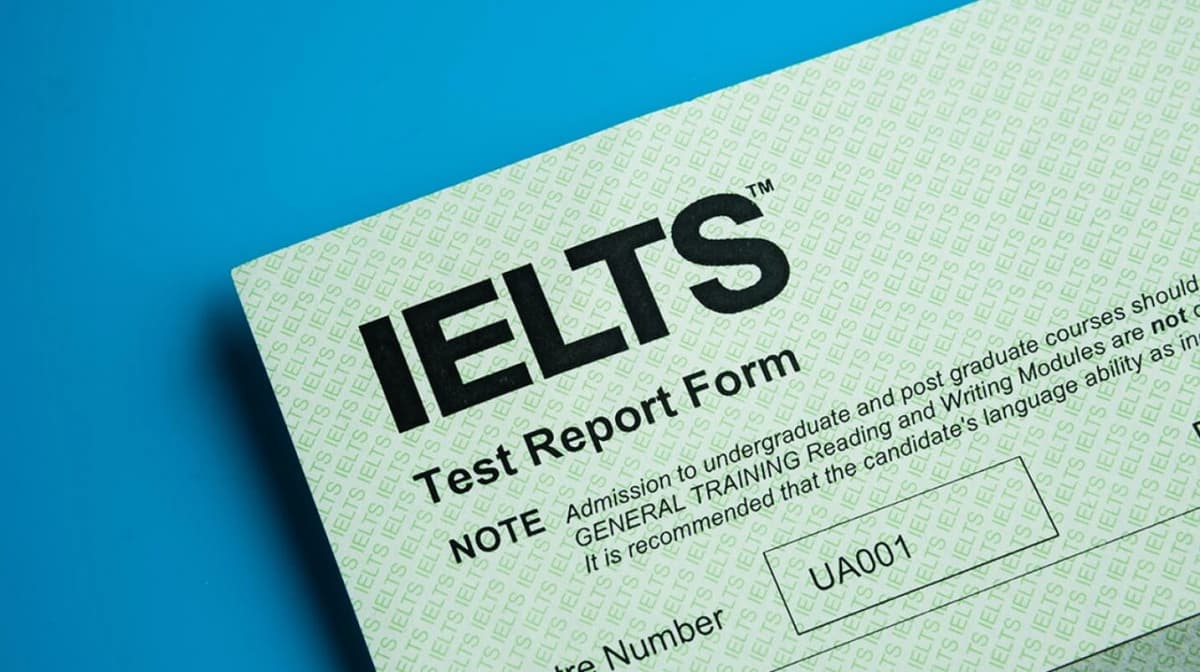
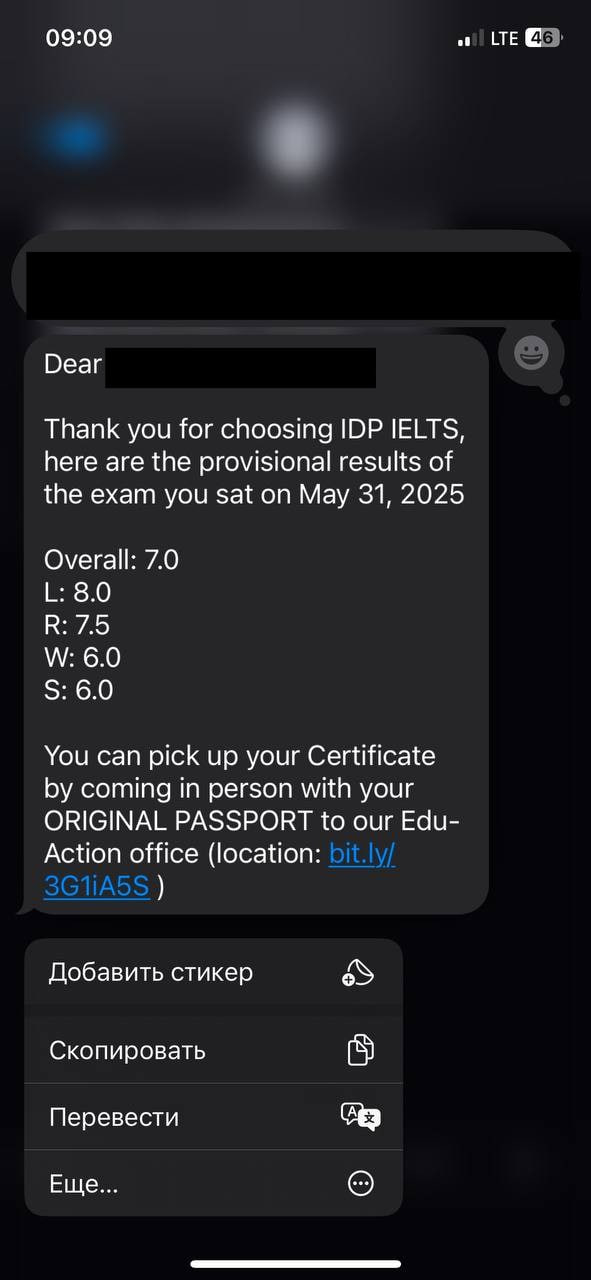
I took the paper-based IELTS exam at IDP Uzbekistan. Thirteen days after the exam, I received an email and SMS notification that my results were ready. The email contained a link to the official website where I could check my results for all sections. My overall score was 7.0.
The paper certificate was issued at the IDP office the day after the results were published. To receive it, you need to come in person with your passport. The process took less than five minutes.
How long is the certificate valid for?
The IELTS certificate is valid for two years from the date of the exam. After this period, it cannot be renewed; you will need to retake the test.
What if you disagree with your result?
Sometimes candidates believe that their score is too low, especially in the Writing or Speaking sections. In such cases, you can submit a request for a review of your score — Enquiry on Results (EOR).
How it works:
The application is submitted through IDP Uzbekistan or the British Council, online or at the test centre.
The review is conducted by an independent examiner who is not affiliated with your centre.
If the score does change, the amount paid will be refunded.
The review period is up to six weeks from the date of application.
Tip:
Before submitting an appeal, soberly assess the likelihood of an error. If only one section is in doubt and the difference is small — about 0.5 points — there is a chance of an increase, but the result cannot be guaranteed.
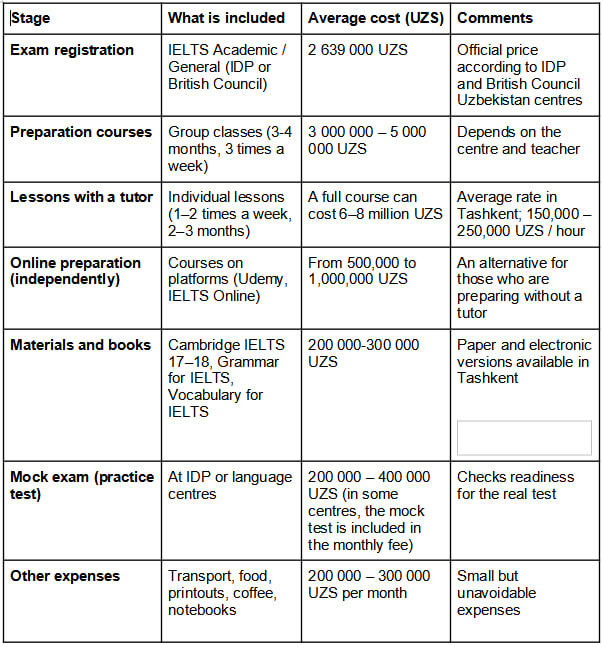
How much will you need to prepare for and take the IELTS in Uzbekistan?
After choosing the format and date of the exam, the main practical question arises: how much will it cost to prepare for and take the IELTS in Uzbekistan?
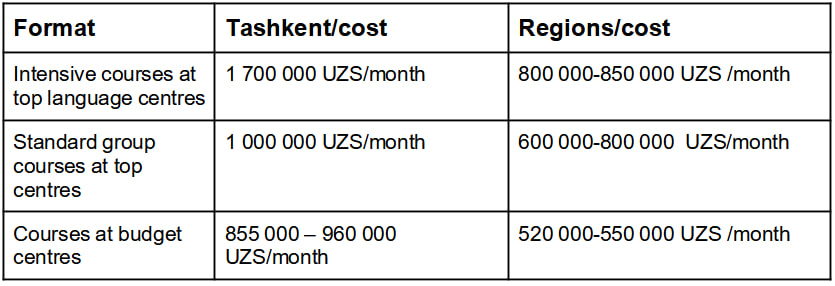
Data is provided as of 2025. Prices may vary depending on the city and training centre.
It is worth noting that standard English language courses are less expensive than specialised IELTS preparation programmes, as they are designed to improve general language proficiency rather than focus on the exam format.
Summary
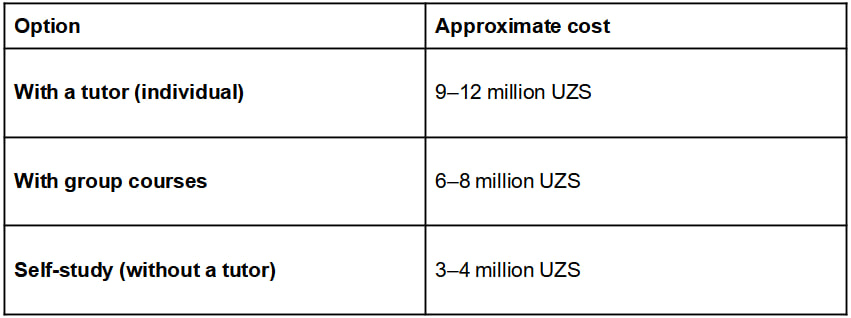
Prices for tutors and courses depend on the level of the teacher, the number of lessons and the region. Before choosing, it is worth comparing offers and checking prices directly with language centres. The minimum cost of self-study and taking the exam is approximately 3 million UZS, and a full programme with a tutor is up to 12 million UZS. But even the most expensive courses do not guarantee high results. Everything depends on the regularity of classes, personal motivation and how much time you are willing to devote to practice. A tutor can guide you, but no one will do the main work for you.
If the result is lower than expected, you can always retake the exam. Each new experience helps you better understand the format and improve your score.
What should you remember?
You can take the IELTS at IDP or the British Council Uzbekistan
The certificate is valid for 2 years
Format: Academic — for study, General — for work and immigration
7.0 and above is the level at which you can apply for a refund through my.gov.uz
Checking results: on computer — 3–5 days, on paper — 13 days
The certificate is issued at the centre or sent by post
Preparation = strategy: don't cram, learn to solve problems in the format
Don't be afraid to retake the test, progress is visible from the second attempt