




Additional features
-
Night mode

Financial literacy explained: Why managing your money matters as much as earning it
Imagine a situation all too common for the working majority, those without the safety net of inherited wealth. You receive your salary, only to realize a few days later that it has disappeared. You wait for the next payday, promising yourself to save next time while dreaming of financial independence.
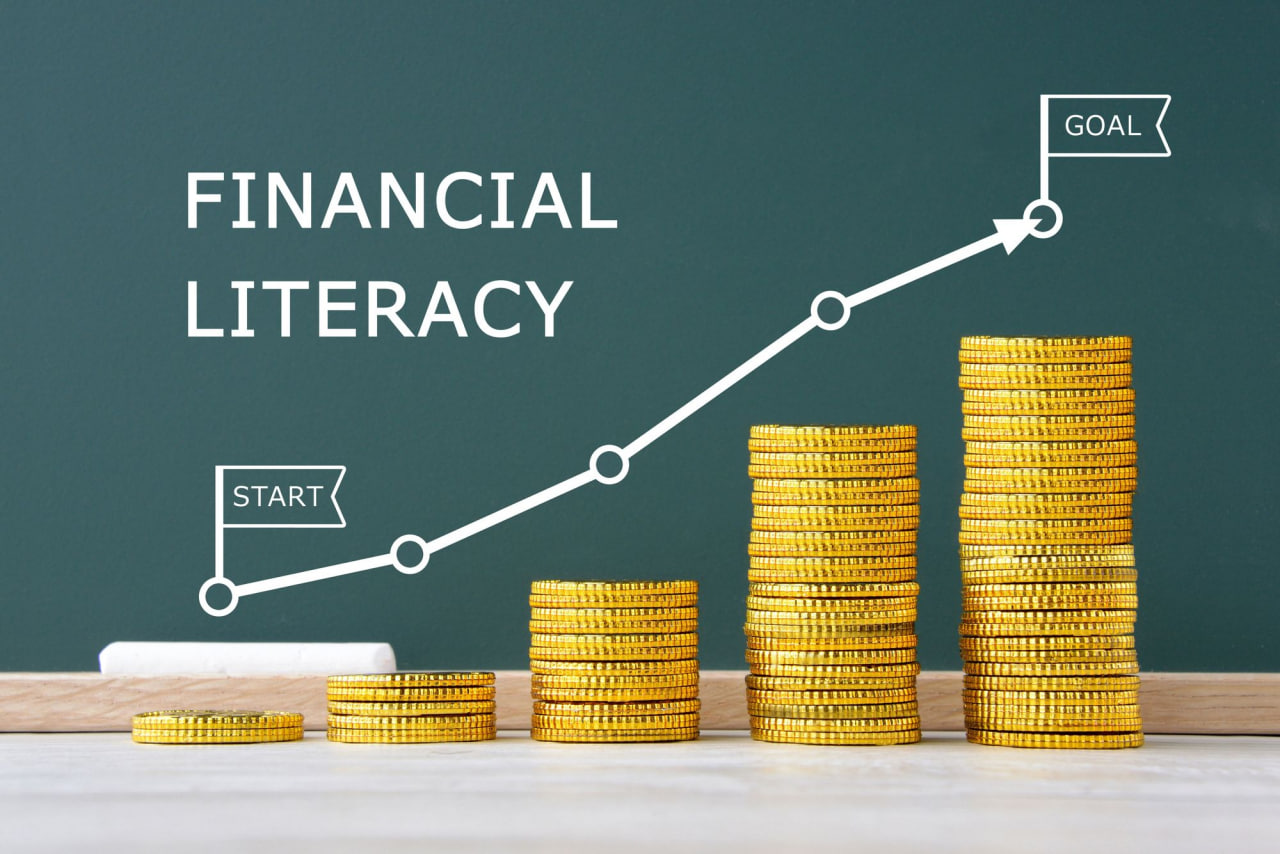
Financial stability, however, does not happen on its own. It is shaped by one’s attitude toward money. While economic crises and unforeseen events are beyond our control, our decision power – the ability to manage what we already have – is a skill that can be learned and applied deliberately. Much like physical or emotional well-being, financial health is a fundamental pillar that supports every aspect of life.
Financial literacy is often framed as investing or wealth accumulation, but in reality, it begins much earlier. At its core, it is about understanding trade-offs and making deliberate financial decisions based on clear numbers rather than assumptions. In other words, it is about building stability before pursuing growth.
What is your financial situation?
Financial literacy starts with knowing where you stand. Before thinking about investing, saving, or long-term planning, individuals must clearly understand their current financial position.
You do not need a degree in finance to develop financial literacy. Anyone can learn the basic skills required to manage money responsibly. Numerous resources are available to help individuals understand finances and improve their relationship with money. At a minimum, three key figures, calculated monthly or annually, significantly improve financial awareness:
- Net income – total income received after taxes, including salary, side income, and dividends
- Total expenses – all spending over the period
- Income surplus or deficit – the difference between income and expenses
A yearly review provides a more accurate picture than a monthly one because annual calculations capture irregular expenses such as insurance renewals, repairs, or seasonal spending that are often overlooked in short-term budgeting.
A negative balance indicates an income deficit – spending exceeds earnings. Over time, this erodes savings and increases reliance on debt. A positive balance, by contrast, represents financial capacity: the margin that allows saving, investing, and long-term planning.
Income and expenses reflect cash flow. Beyond this lies net worth, which includes assets (property, savings, investments, and other valuables) and liabilities (mortgages, consumer loans, and other debts). Income sustains lifestyle, but net worth determines financial freedom. Every financial decision either increases assets or liabilities. The primary objective of financial literacy is learning how to manage both in a way that supports long-term independence.
It is also important to note that not all debt is equal. Some forms, such as education loans or borrowing used to acquire income-generating assets, can increase earning potential. Others, including short-term consumer loans or payday loans, often slow financial progress. Effective debt management begins with listing all debts, interest rates, minimum payments, and repayment terms.
What are your financial goals?
A structured approach to goal-setting involves working backward by answering three questions:
- What is the goal?
- How much will it cost?
- When is the money needed?
Even rough estimates are enough to begin. Online calculators or basic financial modeling tools can provide reasonable projections, turning abstract ambitions into measurable targets.
Practical steps and frameworks
The “financial autopsy”
To understand your real spending habits, you must see them clearly. For one month, do not change your behavior – simply track it. Use an app or a notebook and record every single UZS you spend.
In most cases, it is not large expenses such as rent or utilities that damage a budget, but “death by a thousand cuts” – daily coffee, impulse snacks, and forgotten subscriptions.
At the end of the month, categorize your spending and compare how much went to needs (housing, food, transportation) versus wants (entertainment, dining out, non-essential purchases).
The “pay yourself first” rule
One of the most common mistakes is trying to save whatever remains at the end of the month – usually nothing. Instead, reverse the process. As soon as your salary arrives, transfer at least 5–10% to a separate account that you do not touch. If possible, automate this transfer through your banking app.
The 50/30/20 framework
This simple structure helps organize spending:
- 50% for needs – rent, groceries, transportation, utilities
- 30% for wants – dining out, hobbies, subscriptions, shopping
- 20% for future you – savings and debt repayment
If you live in a high-cost area, your needs may consume 60–70% of income. That is acceptable. The objective is not perfection but conscious adjustment – reducing “wants” to ensure consistent investment in your future.
Emotional spending vs. intentional spending
Many people spend money as a reward after a difficult workday. While it feels justified, this pattern often becomes a trap that prolongs financial dependence.
The 72-hour rule: For any non-essential purchase, wait 72 hours before buying. In many cases, the impulse fades.
Calculate the labor cost: If you earn UZS 50,000 per hour and want to buy shoes costing UZS 1,000,000, ask yourself whether they are worth 20 hours of your working life.
You have UZS 10 million. What is the smartest way to use it?
Promising to “do better next month” rarely works because next month never feels different from today. Sustainable progress requires systems, not willpower.
Let us consider a hypothetical scenario using the framework above, assuming a monthly income of UZS 10 million.
Immediate transfers – pay yourself first
- Savings/emergency fund: 10% – UZS 1,000,000
- Keep this in an account separate from daily spending
- Set up an automatic monthly transfer
Expense allocation: The adjusted 50/30/20 framework
If you earn UZS 10,000,000 per month, a simple budgeting approach is to allocate:
- 50% – UZS 5,000,000 for essentials such as rent, groceries, transportation, and utilities
- 30% – UZS 3,000,000 for wants, including dining out, hobbies, subscriptions, shopping, and everyday treats like coffee and snacks
- 20% – UZS 2,000,000 for your future – savings, debt repayment, and investments
If rent or other essential expenses exceed 50%, the adjustment should come from the “wants” category, not from savings. Protecting the contribution to “Future You” is critical for long-term stability.
Pay particular attention to small, recurring expenses. Daily snacks, coffee, and forgotten subscriptions often add up to UZS 500,000–700,000 per month without being noticed.
Financial autopsy and tracking
To regain control, track all spending for one full month using an app, a notebook, or a simple Google Sheet. Categorize each expense as Needs, Wants, or Future You. This process reveals “money leaks” and highlights expenses that can be reduced or eliminated.
A basic tracking table may include the following columns:
- Date
- Category
- Item
- Cost
- Need / Want
- Notes
This exercise alone often produces immediate savings, even before any lifestyle changes are made.
Controlling emotional spending
Emotional spending is one of the most common obstacles to financial progress. A few practical tools help counter it:
- The 72-hour rule: Wait three days before making any non-essential purchase. In many cases, the urge disappears.
- The labor cost check: If your hourly income is approximately UZS 50,000, then a UZS 250,000 purchase equals five hours of work. Ask yourself whether it is worth that time.
- Replace shopping as a reward with non-financial alternatives such as hobbies, social activities, or physical exercise.
Intentional spending does not mean deprivation. It means aligning spending with values rather than impulses.
Small amounts, big results
Investment does not need to start with large sums. Even UZS 500,000–1,000,000 per month can grow significantly over 5–10 years due to compounding.
For example, if you save UZS 2,000,000 per month for short-term goals:
- Per year: UZS 2,000,000 × 12 = UZS 24,000,000
- Over two years: UZS 24,000,000 × 2 = UZS 48,000,000
Within two years, you could accumulate UZS 48 million for an emergency fund or planned purchases, assuming consistency and discipline.
Savings can be accelerated further by using appropriate financial instruments rather than keeping funds idle.
How to do it in Uzbekistan
A practical approach may include the following steps:
- Open a dedicated savings account and automate monthly transfers immediately after salary is received.
- Low-risk options: Use term deposits or government bonds offered by local banks.
- Medium-risk options: Invest through licensed brokers in Uzbekistan in local equities or mutual funds. Diversification is essential to manage risk.
- Track progress: Review balances and returns monthly to ensure alignment with your goals.
Saving UZS 2,000,000 per month and placing it in high-yield deposits (up to 22%) can increase returns by 5–10% compared with basic savings over two years, while simultaneously building an emergency fund and long-term capital.
Over longer periods, regular monthly deposits can grow into a substantially larger sum, with interest alone exceeding one-third of the total contributions. The real power lies in compounding, which accelerates noticeably after the first year.
Best results are achieved by using replenishable deposits, reinvesting interest, and regularly renewing high-rate terms to protect savings from inflation.
Building long-term financial resilience
Financial resilience begins with a basic safety buffer that protects against unexpected expenses and prevents reliance on high-interest debt. Once liquidity is secured, saving and investing should proceed in parallel, balancing short-term protection with long-term growth.
Investment strategies must evolve with life stage and risk tolerance, relying on diversification and periodic adjustment rather than rigid assumptions. Major decisions – such as housing or vehicle purchases – require careful evaluation of total lifetime costs, not outdated financial norms.
Ultimately, financial literacy is not a one-time achievement but an ongoing process rooted in clarity, adaptability, and mindset. Treating income as a tool for freedom, prioritizing saving and investing first, and spending intentionally rather than impulsively are the foundations of lasting financial independence.
Aziza Normurodova
Related News

19:08 / 16.07.2026
Tashkent International Financial Center: Uzbekistan is taking its place on the global financial map

21:40 / 15.07.2026
Central Bank survey finds 61% of borrowers struggle to repay debts on time
15:15 / 15.07.2026
Competition Committee fines more than 20 banks and MFIs over advertising violations

12:34 / 15.07.2026