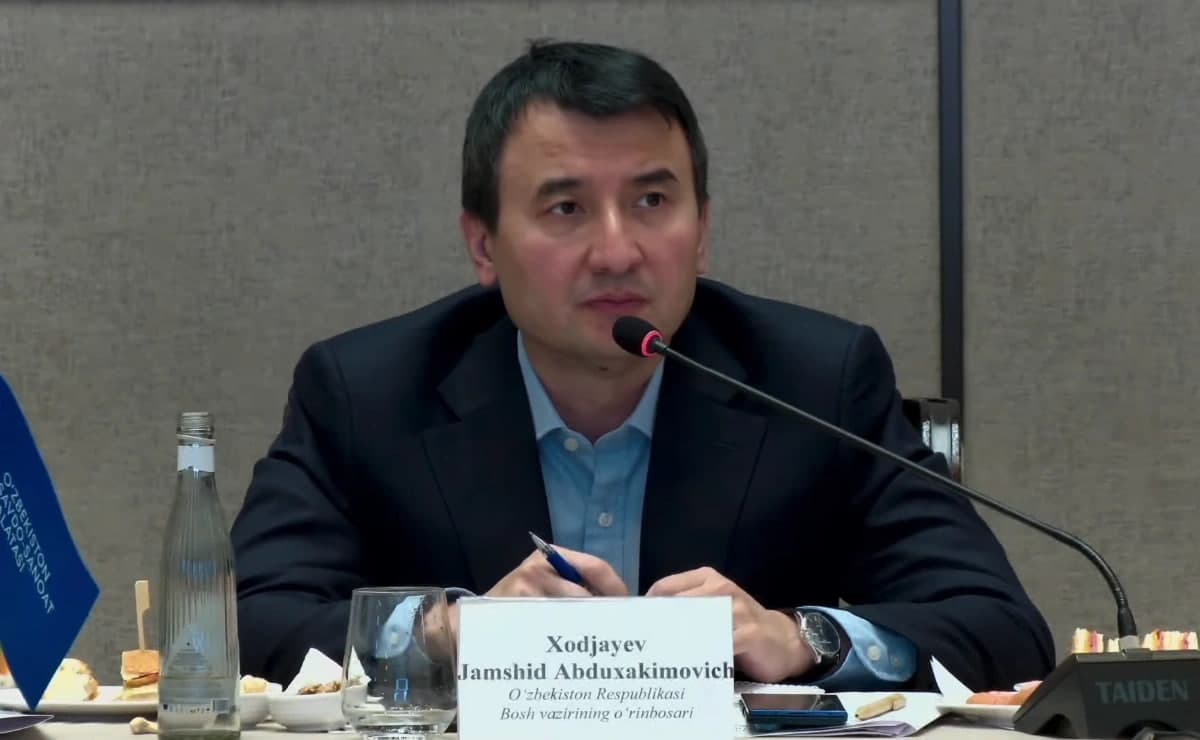
The issue was raised on January 17 during a meeting between entrepreneurs, ambassadors, and government officials, where Deputy Prime Minister Jamshid Khodjaev commented on complaints from exporters supplying construction materials to Tajikistan.
According to the commercial director of Knauf, Uzbek products exported to Tajikistan are being cleared under a “reserve” customs scheme despite the submission of a full set of documents. As a result, the final cost of the products rises by around 15 percent, undermining their competitiveness.
“We have problems with Tajikistan. Even when all documentation is provided, our goods are processed under a reserve customs procedure. This increases the price of our products on that market by 15 percent,” he said.
Knauf also reported difficulties in Turkmenistan, where visa issues complicate the introduction and promotion of new innovative products. The company further highlighted high logistics costs as a major obstacle to entering markets in the Caucasus, noting that expensive transport corridors make exports economically unviable.
Ilyos Rakhimov, acting chairman of the board of the Uzsanoatqurilishbank association, said Uzbek construction material producers exported to 70 countries last year. He noted growing demand for government support in reducing import duties and securing mutual recognition of certificates with countries such as Morocco, Tunisia, Egypt, Algeria, Saudi Arabia, Qatar, and Mongolia.
“From a logistics perspective, these markets are more than 4,000 km away. If the issue of duties is resolved, our producers will be able to compete there without risk. They have the necessary potential, particularly in aluminum profiles and composite panels,” Rakhimov said.
Responding to the concerns, Khodjaev instructed relevant ministries and agencies to address the issues raised. Logistics and transportation matters were assigned to First Deputy Transport Minister Mamanbiy Omarov, while preferential trade issues were referred to Deputy Investment, Industry and Trade Minister Ilzat Kasymov. Ambassadors were urged to actively press for the removal of barriers as part of their export-related performance targets.
Turning specifically to the Caucasus route, Khodjaev questioned how the Transport Ministry planned to ensure stability and reduce logistics costs for exporters.
The deputy prime minister did not rule out reciprocal measures against Tajikistan if the restrictions persist. Seeking clarification, he asked officials to specify the scale of the additional charges imposed by the Tajik side.