



Additional features
-
Night mode

President Mirziyoyev orders 10–20 percent cost cuts at strategic state enterprises
President Shavkat Mirziyoyev has instructed the heads of 19 strategic state-owned enterprises to reduce production costs by 10–20 percent without cutting output, following an external assessment that identified significant efficiency reserves.
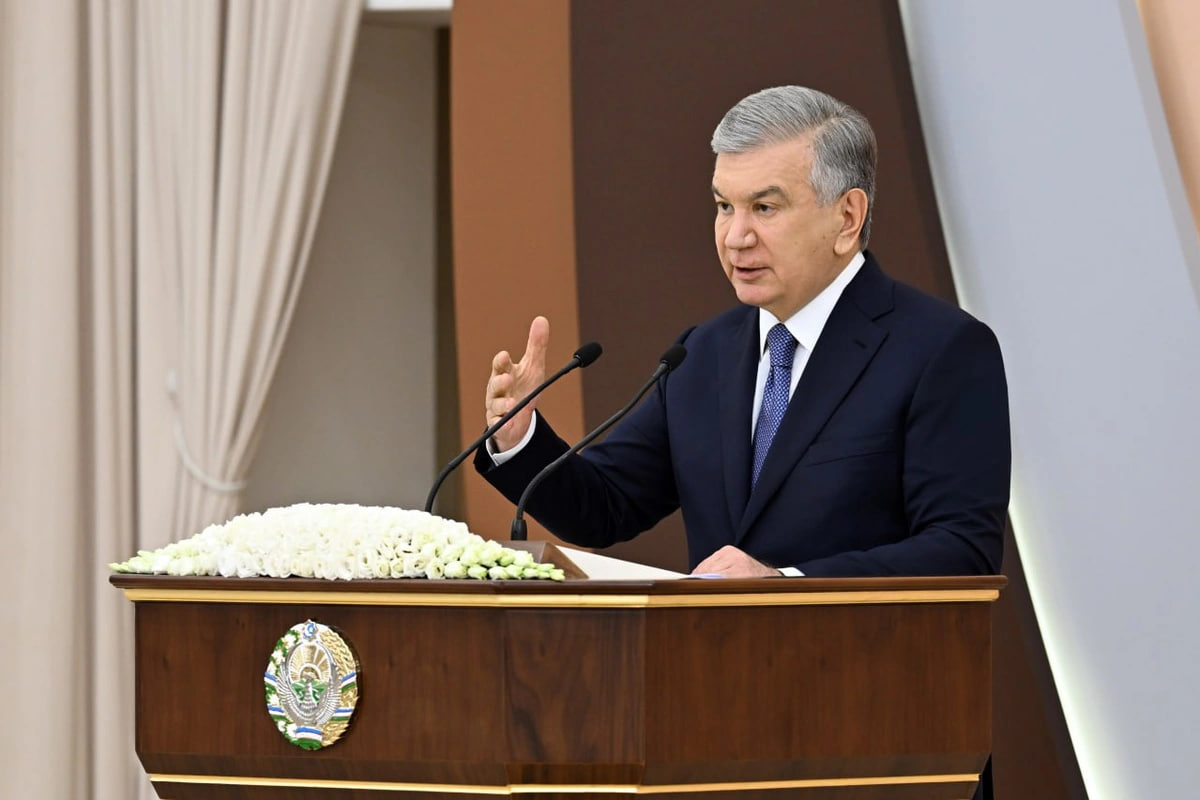
The directive was announced at a meeting held on February 13. The president emphasized that cost reductions must be achieved by lowering the unit cost of production rather than by scaling back manufacturing volumes or postponing expenditures.
Last year, Uzbekistan established the National Investment Fund, transferring its management to the international company Franklin Templeton. Over the course of the year, the firm conducted an in-depth analysis of strategic enterprises.
According to the findings, a number of companies lack sufficient corporate governance culture. At the same time, experts concluded that there are substantial internal reserves to reduce costs and increase profitability.
Based on these conclusions, the president instructed company executives to strengthen procurement systems, improve logistics, accelerate digitalization, and enhance energy efficiency. These measures are expected to reduce product costs by 10–20 percent.
“The savings plan must be ensured not by reducing production or postponing certain expenses, but by cutting the unit cost of output,” Mirziyoyev said.
Strategic enterprises are also expected to be connected to the Unified Treasury information system. To eliminate inefficient spending, all procurement transactions will be classified into red, yellow, and green categories based on risk analysis.
Earlier, by a presidential decree dated November 19, 2025, state-owned enterprises were tasked with implementing measures to reduce production costs and improve operational efficiency.
Several mandatory reform areas have been introduced. These include quarterly spending reviews and the adoption of zero-based budgeting, under which budgets are reassessed from scratch based on the priority of each expenditure area.
Additional measures include:
- optimizing material and technical supply costs through joint procurement of similar goods and resources;
- outsourcing auxiliary functions;
- implementing lean production practices;
- automating processes and introducing artificial intelligence technologies;
- transitioning to International Financial Reporting Standards;
- conducting energy audits and improving energy efficiency;
- optimizing staffing structures and headcount;
- strengthening internal control and compliance systems.
Enterprises have been given one month to develop and approve their own cost-reduction programs.
A Republican Commission has been established to coordinate the reforms. It will monitor implementation, assist in developing optimization programs, identify internal reserves, analyze corporate debt burdens, and report quarterly to the Presidential Administration.
The commission is also expected to propose a reduction of up to 10 percent in managerial staff at state companies and organize a joint procurement system.
State-owned enterprises have been instructed to suspend sponsorship activities, except in cases provided for by presidential decisions.
By December 1, 2025, key performance indicators for 2026 were to be developed for enterprise leaders. Once approved, shareholder expectations for each company will be clearly defined.
From July 1, 2026, deputy heads of enterprises that fail to implement ERP systems or achieve targeted cost-reduction indicators will be dismissed.
Beginning March 1, 2026, the Unified Treasury system will be introduced in strategic enterprises managed by UzAssets. All revenues and expenditures will be processed centrally through this platform.
The list of strategic companies includes major entities in industry, services, and the banking sector, among them Navoi Mining and Metallurgical Company, Almalyk Mining and Metallurgical Complex, Uzmetkombinat, Uzbekneftegaz, Uzbekcoal, Hududgaztaminot, UzAuto Motors, Uzkimyosanoat, Navoiyazot, Uzbekhydroenergo, Thermal Power Plants, Uztransgaz, and UzGasTrade.
The National Investment Fund portfolio includes significant stakes in several large enterprises. While the number initially stood at 18 companies, it has since been reduced to 15. These include Navoiyazot with a 25 percent stake, Regional Electric Networks with 40 percent, Uzsuvtaminot with 25 percent, Hududgaztaminot with 40 percent, Sanoatqurilishbank with 30 percent, Xalq Bank with 30 percent, and Uzbekistan Airways with 25 percent, among others.

Related News
12:29 / 16.07.2026
Uzbekistan's Muruntau ranks second among world's largest gold mines
18:41 / 14.07.2026
Government proposes changes to pension calculations and funded pension savings
16:15 / 14.07.2026
President Mirziyoyev meets Tuscany delegation, discusses trade, investment, and cultural ties
12:21 / 13.07.2026