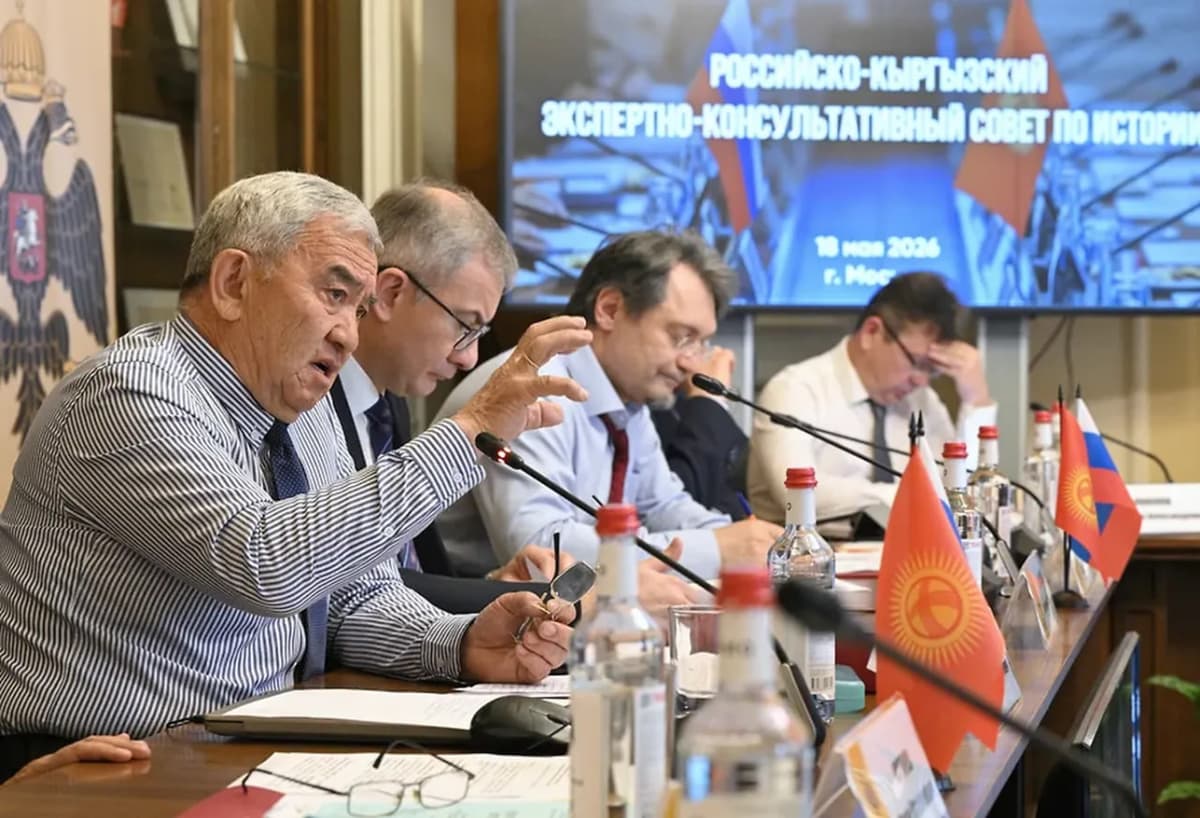
During a recent meeting between Russian and Kyrgyz historians in Moscow, the Russian side requested the removal of the phrase "Russian colonization" from Kyrgyzstan's history textbooks. Speaking on Kun.uz’s Geopolitics program, political analysts emphasized that manipulating the historical past is a defining characteristic of classic colonialism.
Kamoliddin Rabbimov noted that this is not an isolated incident. A similar situation occurred in 2025 regarding Tajikistan. At the time, certain Russian politicians and scholars questioned why Tajikistan, a close ally whose citizens earn billions of dollars in Russia to send home, portrays Russia as a negative imperial power in its school curriculum.
The focus on countries like Kyrgyzstan and Tajikistan, rather than Uzbekistan or Kazakhstan, points to a deliberate political strategy. By targeting nations where it holds greater leverage, Moscow is testing the waters and sending a clear signal to the rest of the region.
Rabbimov also drew a parallel with historical media representations, citing the Soviet-era series "Fiery Roads" about the life of Hamza Hakimzade Niyazi. In the film, Tsarist Russia is depicted as an imperialist, invading force, while the Soviet regime presents itself as a liberator. Today, the Russian leadership is attempting to merge these two eras into a single historical narrative, essentially demanding that neither period be labeled as an invasion.
Ironically, Russia frequently accuses Western powers like France and Great Britain of colonialism, criticizing their past actions in Africa, Asia, and Latin America. Yet, when it comes to its own history, Moscow refuses to acknowledge its identity as a classic colonizer.
Anvar Yuldashev highlighted several geopolitical and ideological motives behind Russia’s desperation to avoid the colonial label. The term "colonialism" carries heavily negative connotations associated with conquest and subjugation, creating a highly unfavorable image of Russia across Central Asia.
To escape this stigma, official and semi-official circles in Moscow have proposed softer alternatives, such as "administrative management." Yuldashev explained that because the Russian Federation is home to numerous ethnic minorities, openly admitting to past colonialism could fuel independence sentiments within its own borders, prompting internal subjects to realize they remain colonized today. Therefore, Moscow’s push to rewrite textbooks is a calculated effort to control public perception both abroad and at home.