The funding includes a $100 million concessional credit from the International Development Association (IDA) to launch the Transforming Public Education for Economic Growth Program, locally known as BILIM. The initiative will also receive a $5 million grant from the International Finance Facility for Education (IFFEd), marking the inaugural partnership between the IFFEd and the World Bank.
Public schools across Uzbekistan face intensifying pressure driven by rapid demographic growth and internal migration. Nationwide enrollment is projected to exceed 7.6 million, creating a continuous demand to construct approximately 300 new schools annually.
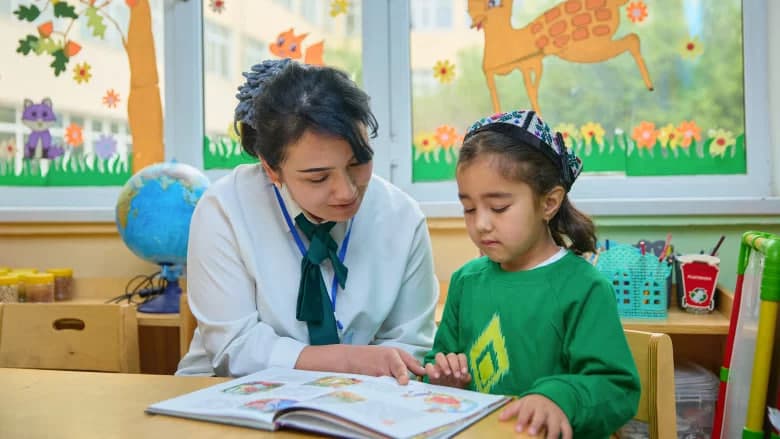
While Uzbekistan has achieved significant progress in expanding educational access, with primary school enrollment exceeding 99 percent, foundational competencies in reading and mathematics still trail international benchmarks. Addressing these gaps requires substantial enhancements in everyday teaching practices and professional development.
"Strengthening foundational skills in primary school, including reading, mathematics, and socio-emotional skills, is central to further building Uzbekistan’s human capital base and advancing its development," said Najy Benhassine, World Bank Division Director for Central Asia. He emphasized that these skills are essential for preparing children for a rapidly changing job market and driving the innovation necessary for the country's broader economic growth.
The total cost of the BILIM program stands at $378 million. The Government of Uzbekistan is providing the bulk of the funding with a $273 million allocation, complemented by the $100 million IDA concessional loan and the $5 million IFFEd grant. Jointly implemented by the Ministry of Preschool and School Education and the Ministry of Economy and Finance, the project targets institutions in the Bukhara, Kashkadarya, Navoi, Surkhandarya, and Khorezm regions, alongside the Republic of Karakalpakstan. These target territories represent roughly 45 percent of all schools in Uzbekistan and currently cope with the most pronounced infrastructure shortages and learning challenges.
Scheduled to run through 2030, the BILIM program focuses on three main objectives. First, it will modernize pedagogical and managerial training for 50,000 primary school teachers, directors, and administrators. Second, it will upgrade physical infrastructure through school expansions and new construction to add 27,000 primary school seats. Finally, the program aims to systematically raise student achievement by improving education data collection, enabling authorities to use data-driven planning for better resource distribution.