BUSINESS | 13:01 / 08.07.2026
31
4 min read

Namangan emerges as Uzbekistan’s fastest-growing and most densely populated city

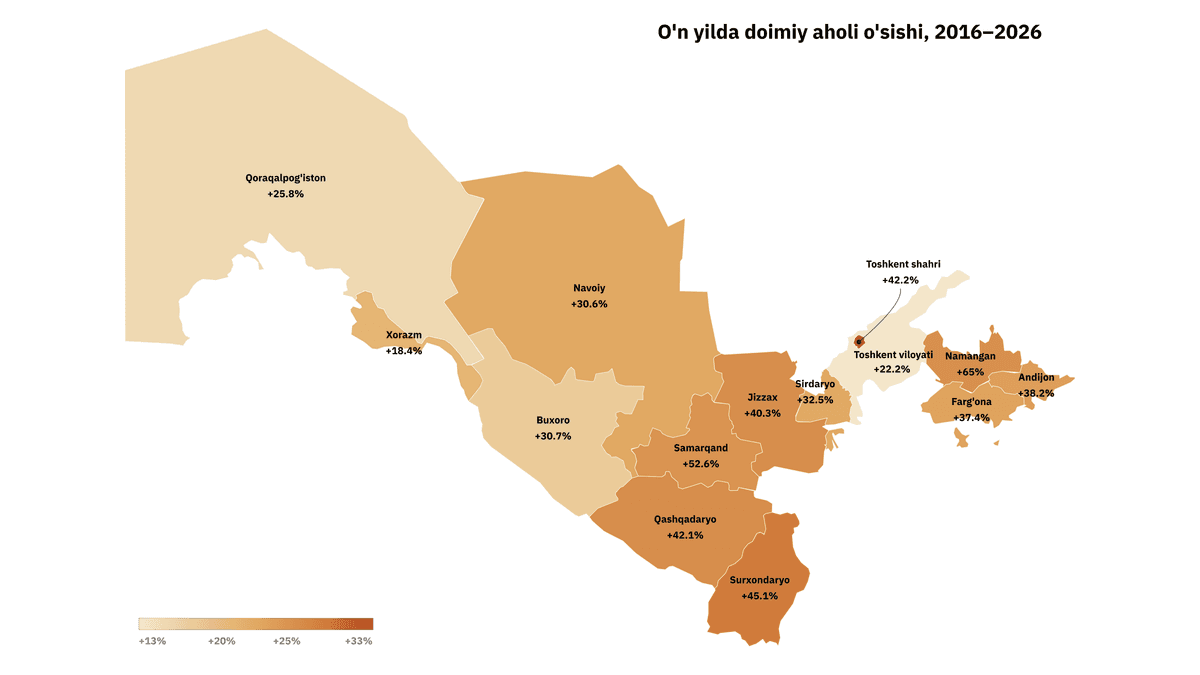
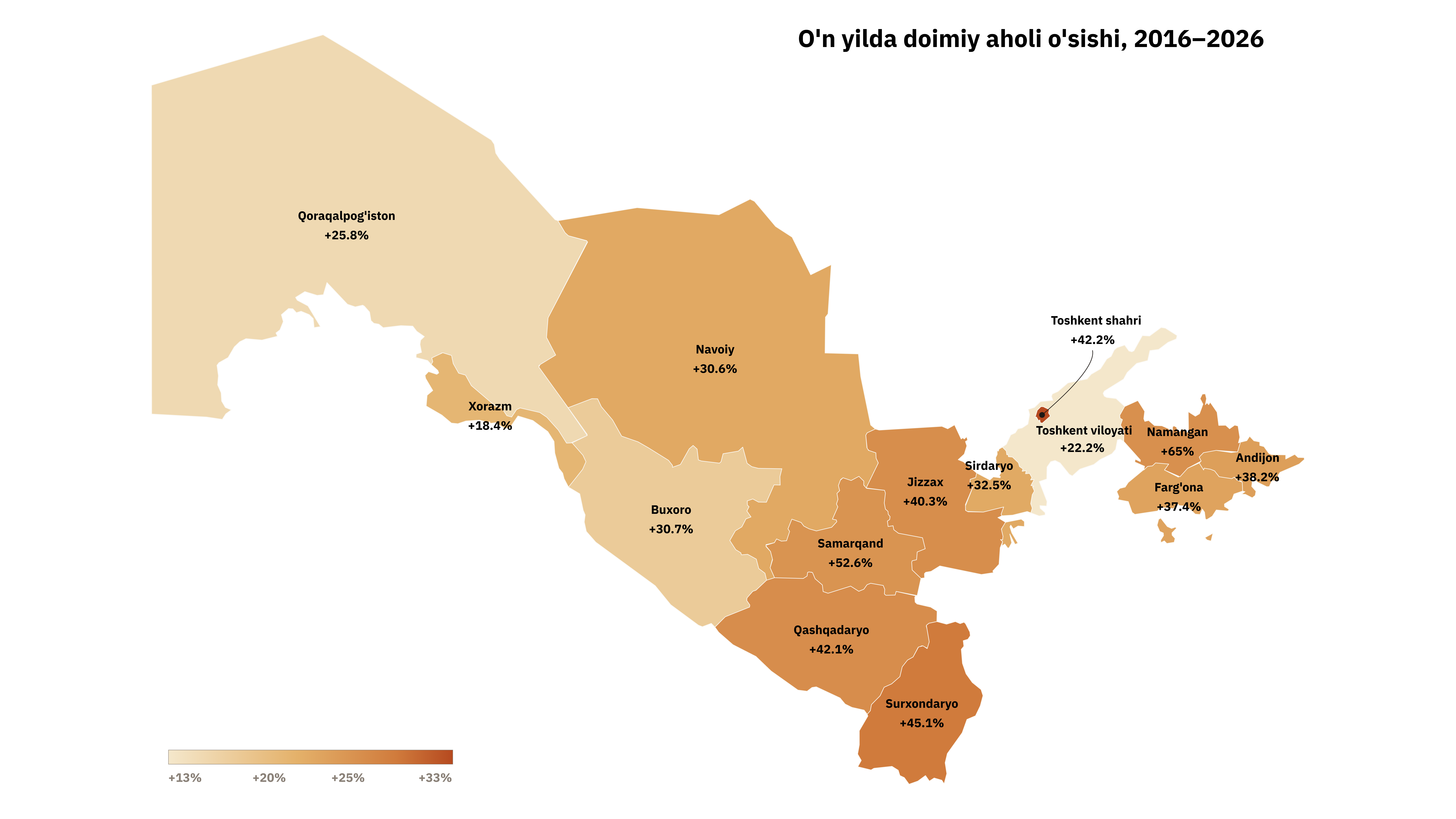
Between 2010 and 2026, Namangan’s population increased by 65% to 728,000, while its population density reached 8,289 residents per square kilometer. No other city in Uzbekistan recorded higher figures on either measure.Over the same period, Uzbekistan’s population grew from 28.0 million to 38.2 million people. Yet urban growth was far from uniform. While some cities expanded by more than 60%, others grew by as little as 12%. Population density varies even more dramatically, ranging from 1,058 to 8,289 residents per square kilometer.

The fastest-growing cities

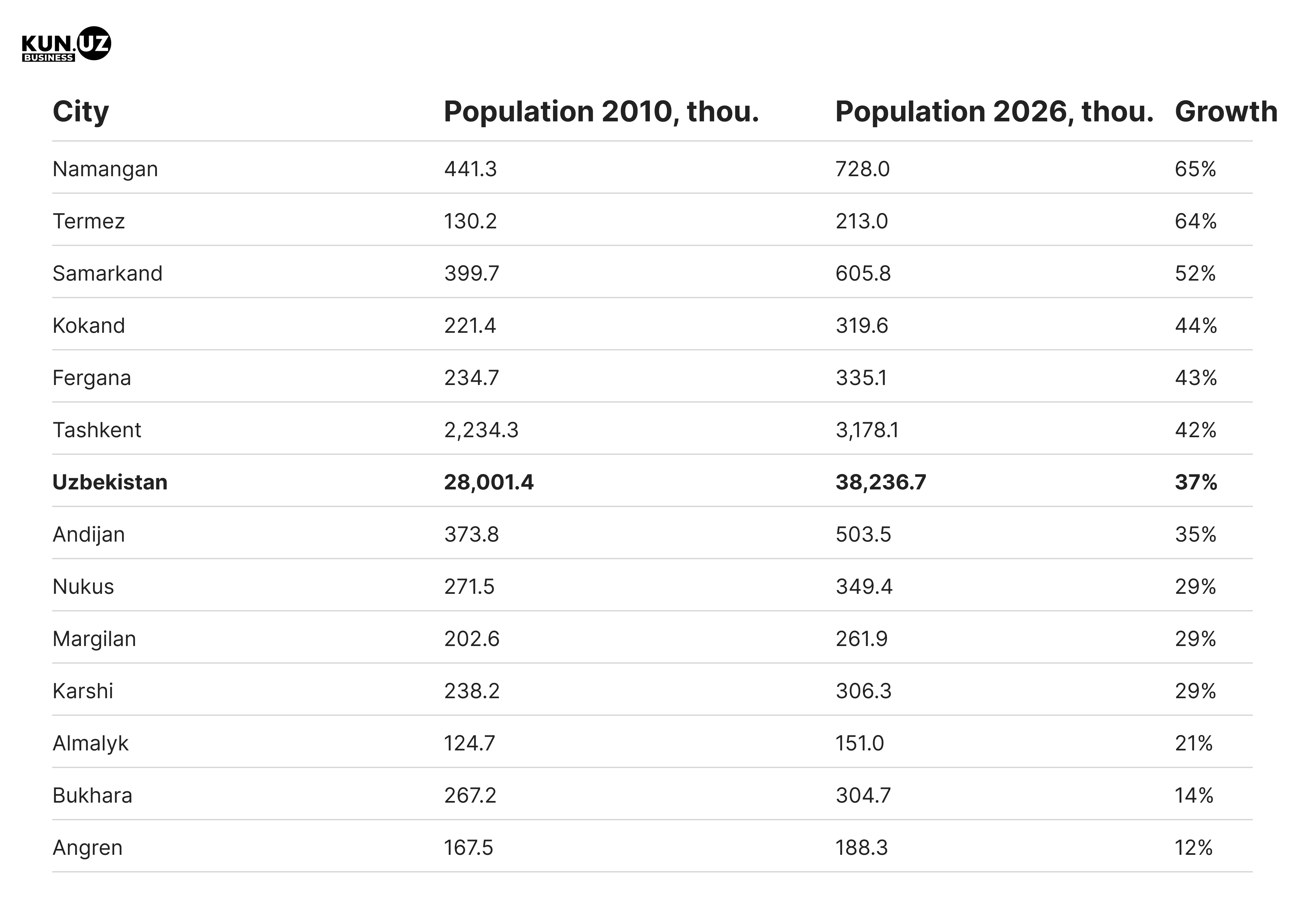
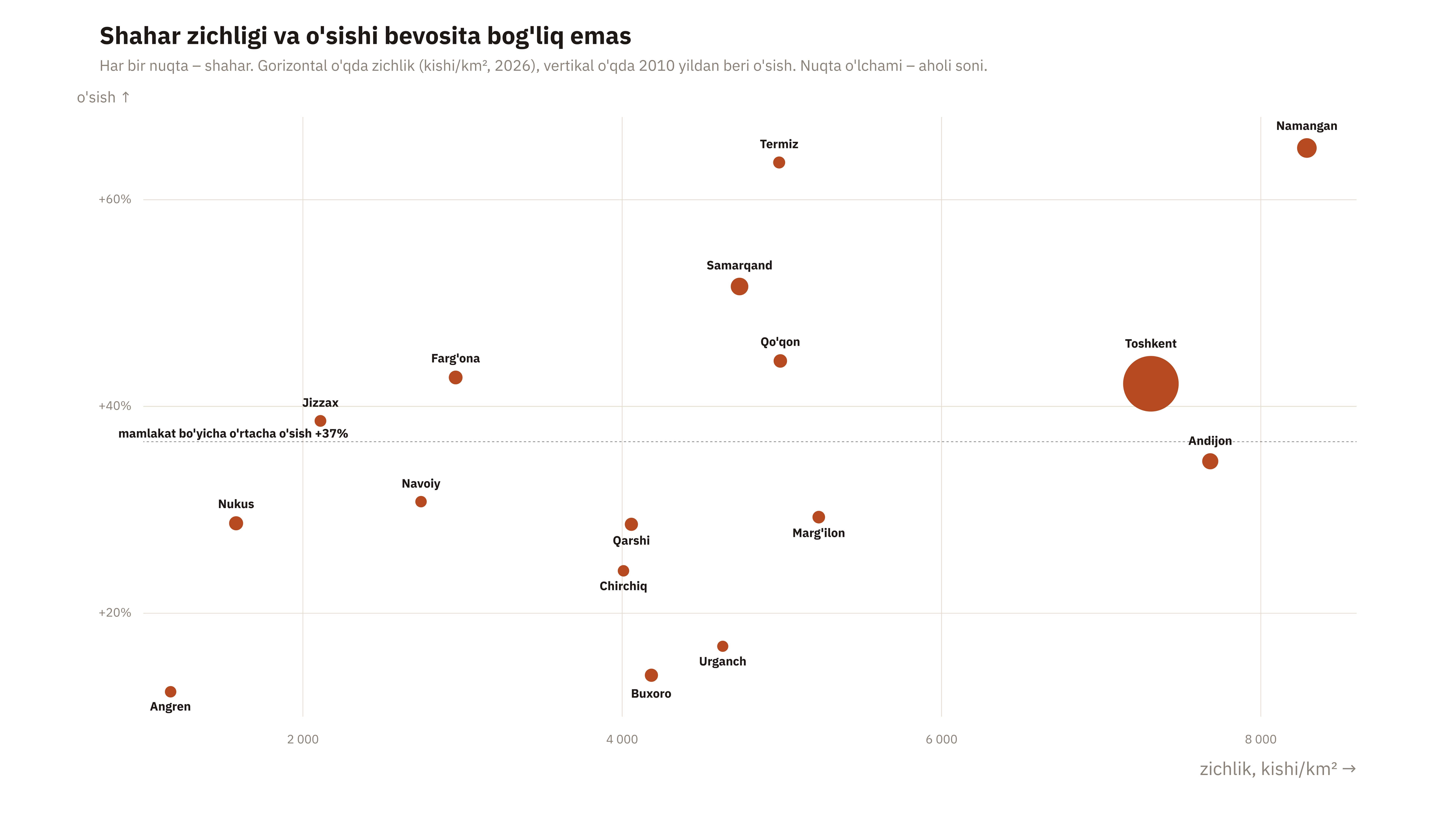
Since 2010, Namangan has grown by 65%, followed by Termez (64%), Samarkand (52%), Kokand (44%), Fergana (43%), and Tashkent (42%). All six outpaced the national average population growth rate of 37%.

The figures are based on data from the National Statistics Committee of Uzbekistan as of January 1, 2026.
52b426b0-abb6-48db-ab9c-b7819e1ef26f (1)
Kun.uz

Growth in Andijan (35%), Karshi (29%), Margilan (29%), and Nukus (29%) remained below the national average. At the bottom of the ranking were Bukhara, which grew by 14%, and Angren, which expanded by just 12%.
Frame (5)

Namangan ranks first among cities that already held city status in 2010. Cities that received city status later, including Shahrisabz, Khiva, and Yangiyul, were excluded from the comparison because their apparent growth reflects administrative reclassification rather than actual population increases.

Part of the growth recorded in several cities was driven by changes to administrative boundaries. Namangan is a notable example. In 2016, sections of neighboring districts with a combined population of around 96,000 people were incorporated into the city. In 2020, the new Davlatabad district was created within Namangan, adding another 140,000 residents. As a result, Namangan’s 65% increase reflects not only demographic growth but also territorial expansion.

Population density

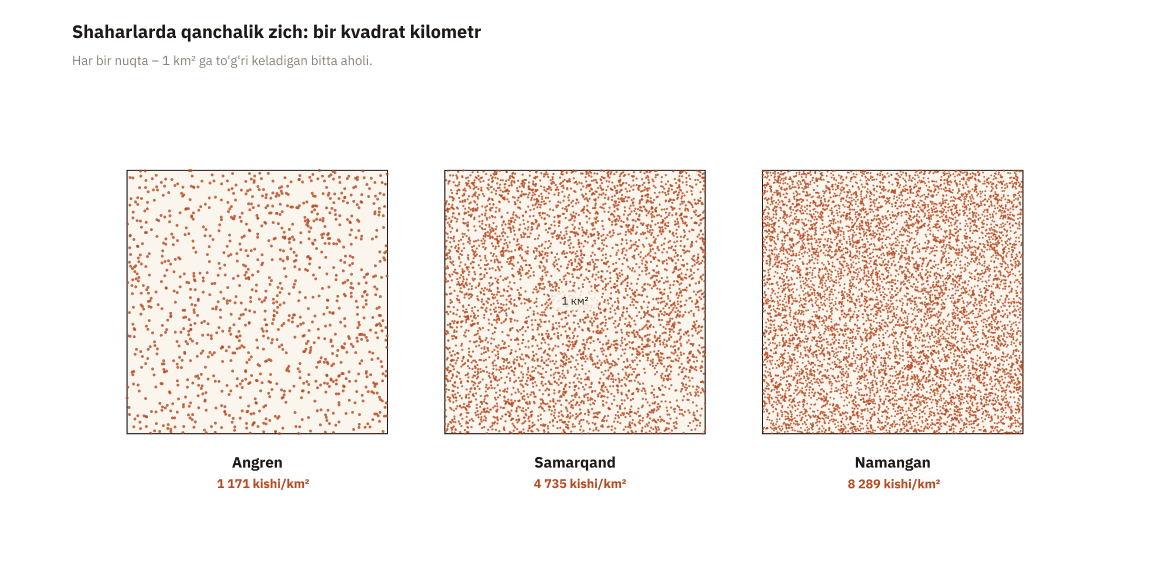
The country’s two most densely populated cities are both located in the Fergana Valley: Namangan with 8,289 residents per square kilometer and Andijan with 7,683. Tashkent ranks third with 7,312 residents per square kilometer.

At the opposite end of the spectrum are former industrial centers. Angren has a density of 1,171 residents per square kilometer, while Almalyk has just 1,058.
4c0b9491-c10b-4671-a122-d21a6ef4f8f9
Kun.uz

157365ab-7193-47ad-8ace-bceff8bd724e

Population density is determined not only by the number of residents but also by the physical size of a city. Compact urban development tends to produce higher density, while more spacious urban layouts remain relatively less crowded even with similar population levels.

Former industrial cities saw the slowest growth

Angren, Almalyk, and Bukhara recorded the weakest population growth over the period.

The data show no clear relationship between density and growth. Rapidly growing cities can be both densely populated and relatively spacious. Namangan, with a density of 8,289 residents per square kilometer, and Termez, with 4,983, posted almost identical growth rates of 65% and 64%, respectively.

Sources and methodology

Growth rates were calculated using population data from January 1, 2010, and January 1, 2026.

The comparison includes only cities that already existed in their current status in 2010. Because administrative boundaries changed during the period, part of the recorded growth in some cities reflects territorial expansion rather than purely demographic factors.

Data for 2025–2026 are preliminary and may be revised following the results of Uzbekistan’s upcoming population census.

Асал Равшанова
Author Асал Равшанова
Follow Kun.uz news on Google News
+ Subscribe

Related News