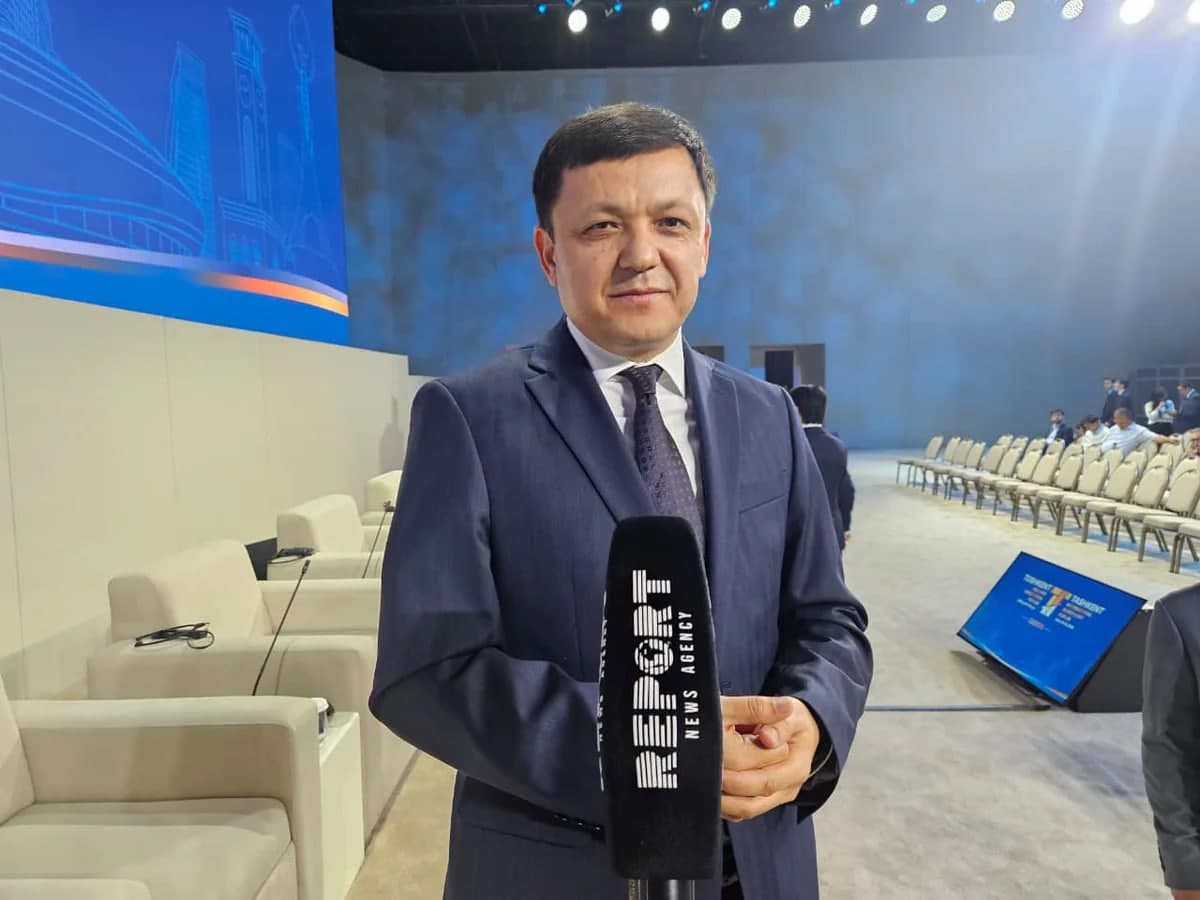
Sanjar Nosirov, Deputy Chairman of the Central Bank of Uzbekistan, shared his insights during a panel session at the Tashkent International Investment Forum (TIIF–2026).
According to Nosirov, the strategic development of Islamic financial services in the country is structured across three distinct phases. Introducing Sharia-compliant operations within the microfinance sector marks the initial stage. Moving forward, the regulator intends to implement measures explicitly focused on developing comprehensive Islamic banking and the broader capital market.
Currently, 12 microfinance organizations (MFOs) across Uzbekistan offer Islamic products such as mudarabah, murabaha, musharakah, and ijarah. This reflects an increase from 2025, when eight MFOs provided these alternatives with a combined annual portfolio of UZS 21 billion.
The sector has accelerated sharply this year, with local MFOs extending UZS 22 billion in Islamic financing during the first five months of 2026 alone. Murabaha, a cost-plus installment sale, represents the largest share of this total at 63%, followed by mudarabah at 17% and musharakah at 14%. Nosirov also highlighted a specialized MFO operating entirely on mudarabah principles, which has successfully extended financing to more than 300 women entrepreneurs.
Central Bank data indicates that during the first quarter of the year, Uzbek MFOs allocated UZS 11.2 billion through Islamic finance instruments – an eightfold surge compared to the same period in 2025. Out of this quarterly allocation, murabaha contracts accounted for UZS 7.7 billion (69%), while mudarabah services took up UZS 2.1 billion.
Corporate entities secured nearly half of these first-quarter funds, drawing UZS 5.2 billion. Individual entrepreneurs received UZS 3.1 billion, and physical individuals accounted for UZS 2.9 billion. Most of these transactions were concentrated in Tashkent.
The regulatory groundwork began in April 2022 when President Shavkat Mirziyoyev signed a law on non-bank credit organizations that legally permitted MFOs to engage in Islamic financing. Two years later, the Central Bank approved specific regulations governing how MFOs offer these services, establishing frameworks for mudarabah, murabaha, musharakah, ijarah, and salam.
The long-term vision involves a broader banking rollout. In October 2025, Central Bank Deputy Chairman Abrorkhodja Turdaliev noted that the country expects up to 10 Islamic banks to open by 2030, alongside the launch of dedicated Islamic windows at three state-owned commercial banks. The regulator views Islamic finance as an alternative pipeline to draw capital from the informal or shadow economy directly into the formal banking system.