SOCIETY | 18:43
173
8 min read

Higher pensions, tougher rules for utility debtors and more: What's changing in Uzbekistan from July 1

A series of significant amendments and new regulatory frameworks will come into force across Uzbekistan starting July 1, 2026. These updates encompass social welfare adjustments, community governance reforms, youth employment initiatives, cultural subsidies, anti-corruption measures, and utility management overhauls.

Social welfare and pension increases

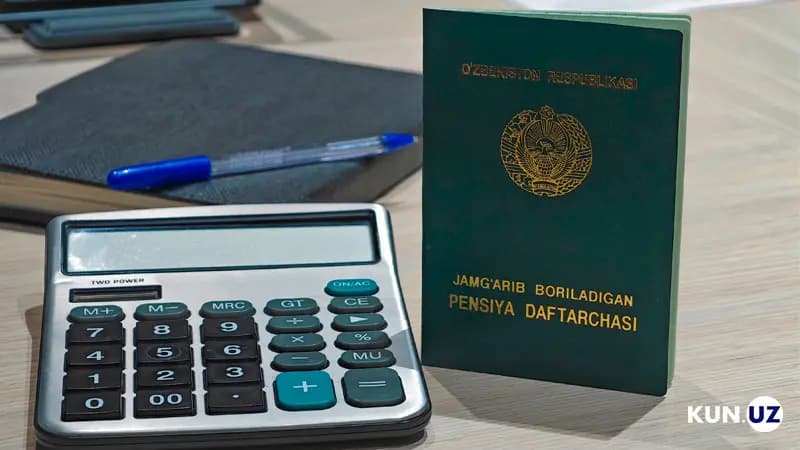
In accordance with a presidential decree, pensions, allowances, and material assistance for families registered in the Social Register will see a 7 percent increase. Under the updated framework, the minimum age-related pension is established at UZS 983,000 per month, while the minimum disability pension is set at UZS 1,083,000 per month.

Monthly child allowances for registered families will be distributed based on the number of children: UZS 386,000 for the youngest child under 3 years old, UZS 295,000 for one child aged 3 to 18, an additional UZS 177,000 for the second child, and UZS 118,000 for the third and subsequent children. The monthly material assistance for these registered families is fixed at UZS 450,000.

Additionally, the base amount for calculating pensions is set at UZS 504,000 per month. The decree also outlines a subsequent 7 percent salary hike for public sector employees and students receiving stipends starting September 1, 2026, alongside an increase in the minimum wage to UZS 1,360,000 per month and the base calculating amount to UZS 440,000.

Neighborhood governance and the "Mahalla Seven"

A presidential decree aimed at improving local governance grants extended powers to the regional and district branches of the Association of Mahallas of Uzbekistan. These bodies will now actively analyze local issues, establish inter-agency cooperation, and oversee regional programs.

Furthermore, the "Mahalla Seven" framework will assume responsibility for the rehabilitation, vocational training, and employment of citizens who commit minor offenses for the first time, provided the judicial or investigative bodies grant them leniency. Financial incentives will be provided to community officials if their guaranteed individuals refrain from committing crimes for three consecutive years. District heads of the association are also empowered to submit formal notices to local governors regarding any unlawful interference in the duties of community officials.

Expanded opportunities for youth and entrepreneurs

New rules will enhance transparency in the recruitment of young professionals into public service. Interview questions for public sector openings must be published on the respective state agency's official website at least one month in advance, and asking unannounced questions is strictly prohibited. Moreover, entry-level positions requiring no prior work experience will be formally listed, and posts requiring experience will cap the entry requirement at a maximum of two years.

Concurrently, the Youth Affairs Agency is launching the "New Generation of Entrepreneurs" program, which aims to train 20,000 young people in business fundamentals by 2030 through partnerships with local and international experts. The top 1,000 graduates will receive certificates enabling them to apply for soft loans up to 500 times the base calculating amount. These loans will feature a six-month grace period and a three-year term at an interest rate equivalent to half of the Central Bank's main policy rate.

Support for cultural figures

State subsidies will be introduced to ease financial burdens for individuals working in culture, art, and literature. Citizens purchasing national musical instruments will have 30 percent of their costs covered by the state budget.

On the recommendation of creative associations, the state will fund high-tech surgeries for up to 1,000 accomplished cultural professionals who lack standard state-backed medical privileges. It will also cover 50 percent of voluntary medical insurance premiums for up to 2,000 professionals, up to 100 times the base calculating amount, and provide free annual sanatorium care for up to 100 industry veterans with at least a decade of service.

Digital anti-corruption compliance

The "Digital Compliance" software complex will enter a trial phase to facilitate rapid information exchange among anti–corruption clusters. This system will integrate the databases of various state bodies with the Anti–Corruption Agency, using an "E–Komplaens" module to digitalize internal control units.

A National Anti–Corruption Management Certification System will also be gradually rolled out across state organizations through 2030, prioritizing entities that previously received an "unsatisfactory" performance rating. Heads of state organizations and their deputies face the suspension of all performance bonuses if they fail to implement this system within the designated deadlines.

Strict penalties for utility debtors

A notable change in residential management mandates that apartment owners must pay their mandatory building maintenance fees by the 15th of each month. Failure to clear these property management balances will result in the suspension of their automated electricity payment collection until the debt is fully settled.

Collected building maintenance funds will be prioritized to pay for the shared electrical infrastructure of apartment complexes, such as stairwell lighting, elevator operations, and water pumps. Late payments will incur daily penalties of 0.4 percent for legal entities and 0.1 percent for individuals, capped at 50 percent of the total overdue amount per month. Payments must be processed exclusively via bank cards, electronic payment platforms, or bank cash desks.

Diverse regulatory updates

Several other pilot programs and regulatory adjustments will launch simultaneously:

  • Winning lottery draws will be introduced in the Republic of Karakalpakstan and the Khorezm region for citizens who register their retail purchase receipts via the "Soliq" mobile application.

  • A updated appointment system will be introduced for short-term French visa applicants.

  • Privatized state-owned real estate sales in Tashkent, Nukus, and other regional cities must be coordinated with local mayors to specify the future operational profiles of the buildings.

  • Teachers and industrial training masters can receive a 50 percent subsidy (capped at 20 times the base calculating amount) until January 1, 2028, to offset the costs of obtaining recognized national or international professional certifications.

  • Non–governmental medical organizations are authorized to provide state–funded medical services to patients under the state health insurance framework, with treatment costs reimbursed based on unified base rates applied equally to public and private clinics.

  • In Tashkent, a digital system will manage apartment general meetings, voting, management reports, and owner requests through the "Mening uyim" system, with a nationwide rollout planned for 2027.

Дониёр Тухсинов
Prepared by Дониёр Тухсинов
Follow Kun.uz news on Google News
+ Subscribe

Related News