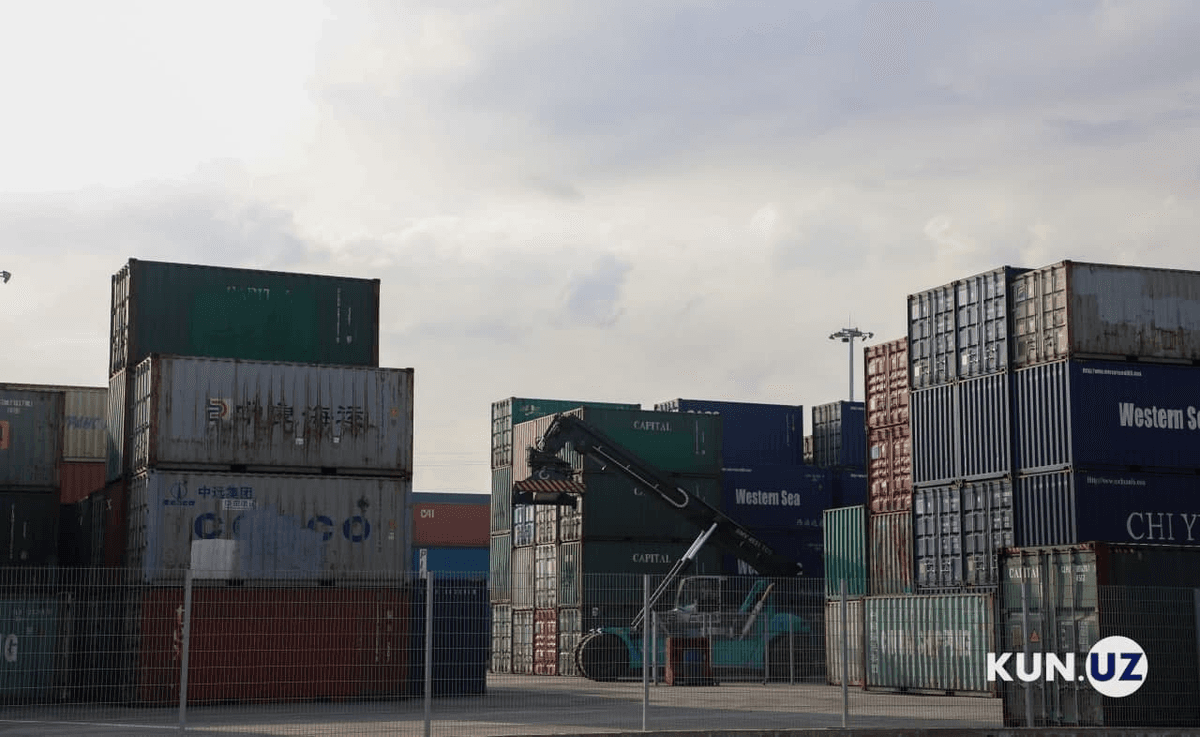
Data from the National Statistics Committee reveals that this growth was entirely driven by a surge in imports, while the country's export volume contracted sharply. Between January and May, national exports fell by 15.5 percent to $12.6 billion, whereas imports jumped by 20.8 percent to $20.1 billion, resulting in a trade deficit of $7.5 billion.
China remains the leading trade partner
China firmly established itself as Uzbekistan’s largest trading partner during the five-month period. Bilateral trade between the two countries reached $7.65 billion, reflecting an increase of $2.20 billion year-on-year. While Uzbekistan exported $1.10 billion worth of goods and services to China, its imports from the country neared $6.50 billion.
Russia secured the second position, with bilateral trade approaching $5.80 billion, a year-on-year expansion of $1.00 billion. Uzbek exports to Russia amounted to $1.90 billion, against $3.90 billion in inbound goods and services from the Russian Federation.
Kazakhstan ranked as the third-largest overall trading partner, with total mutual trade rising by $450 million to reach $2.26 billion. However, looking strictly at export destinations, Afghanistan took the third spot as Uzbekistan dispatched $817.8 million in goods and services to its neighbor. On the import side, Kazakhstan retained its third-place ranking, supplying goods valued at $1.70 billion to the Uzbek market. Overall, imports accounted for the vast majority of trade volume with the country's primary economic partners.
Services and manufactured goods lead exports as gold falls
Services generated the largest share of Uzbekistan’s export revenues between January and May, bringing in $4.60 billion – a 34.9 percent increase that accounted for 36.3 percent of total exports. Tourism drove this segment by bringing in $2.24 billion, followed closely by transport services at $1.66 billion. Telecommunications, computer, and information services yielded $441.8 million.
Conversely, gold exports plummeted by 76.8 percent compared to the first five months of 2025. This year, the precious metal was only sold in April, generating $1.50 billion. In contrast, Uzbekistan exported $6.50 billion worth of gold during the same timeframe last year.
Industrial goods exports rose by 18 percent to $1.90 billion. Textile products led this category at $747.8 million, followed by non-ferrous metals at $721.5 million. Chemical exports surpassed $1.00 billion, growing by 37.6 percent, with inorganic chemicals representing the largest share at $656.9 million.