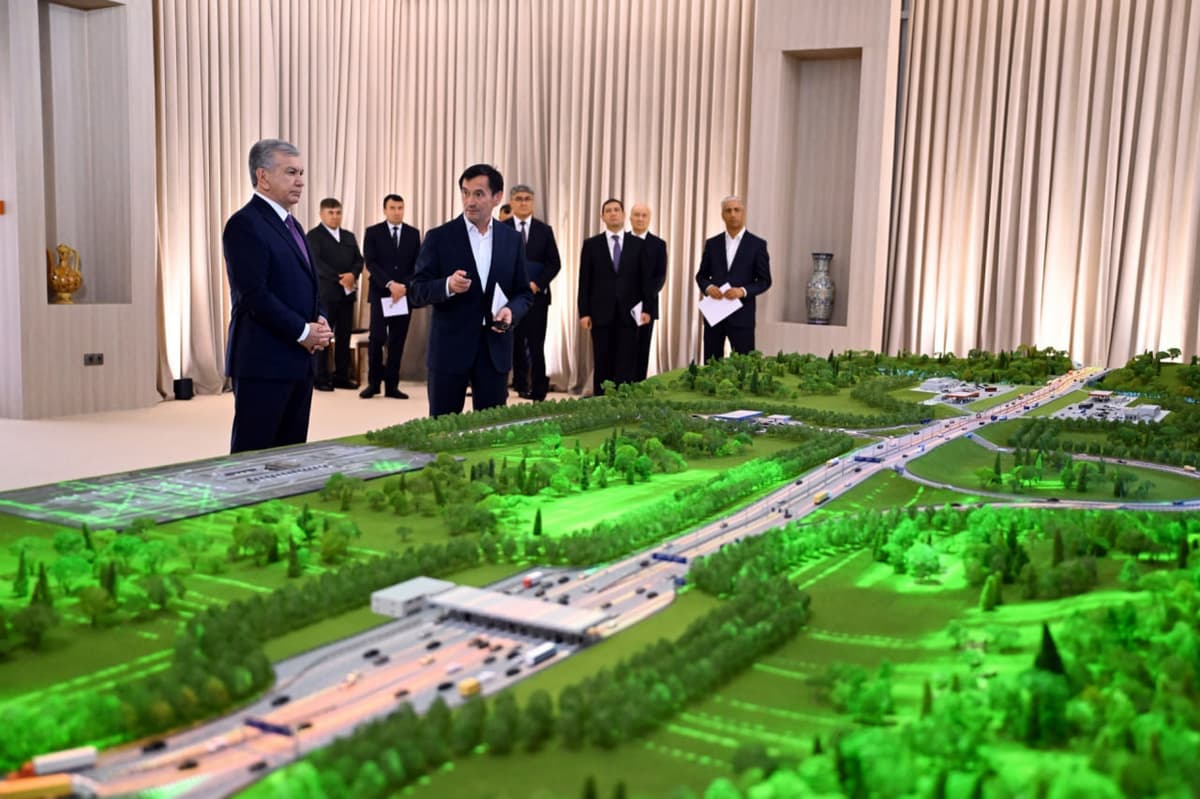
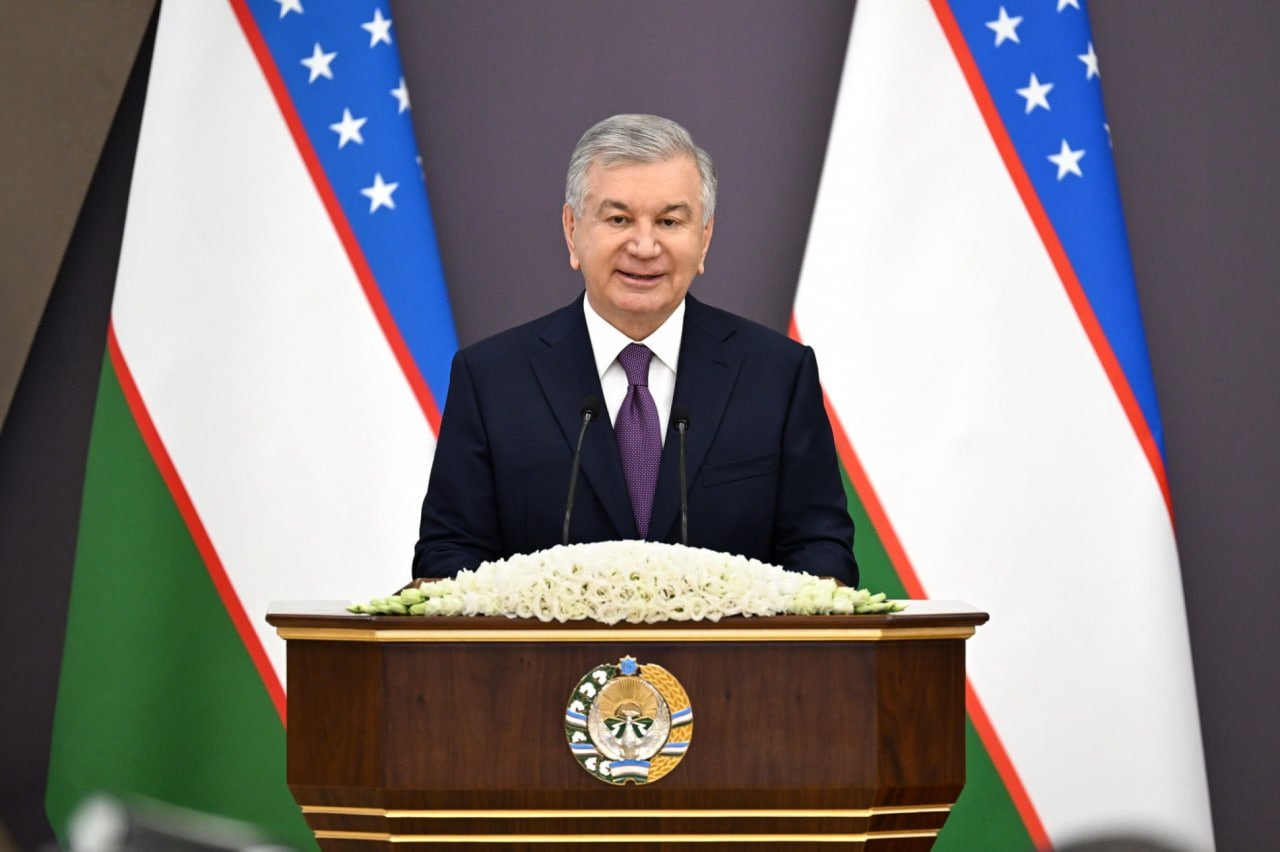
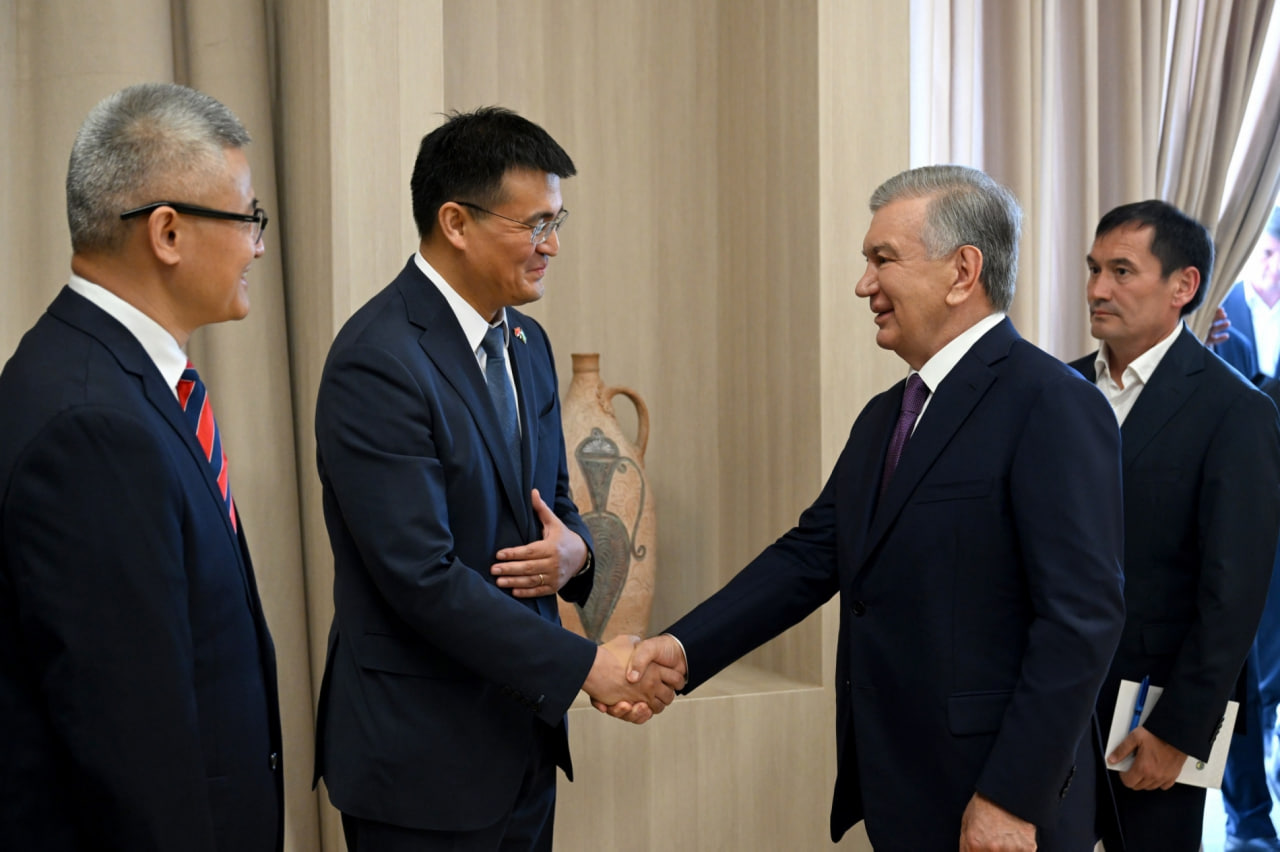
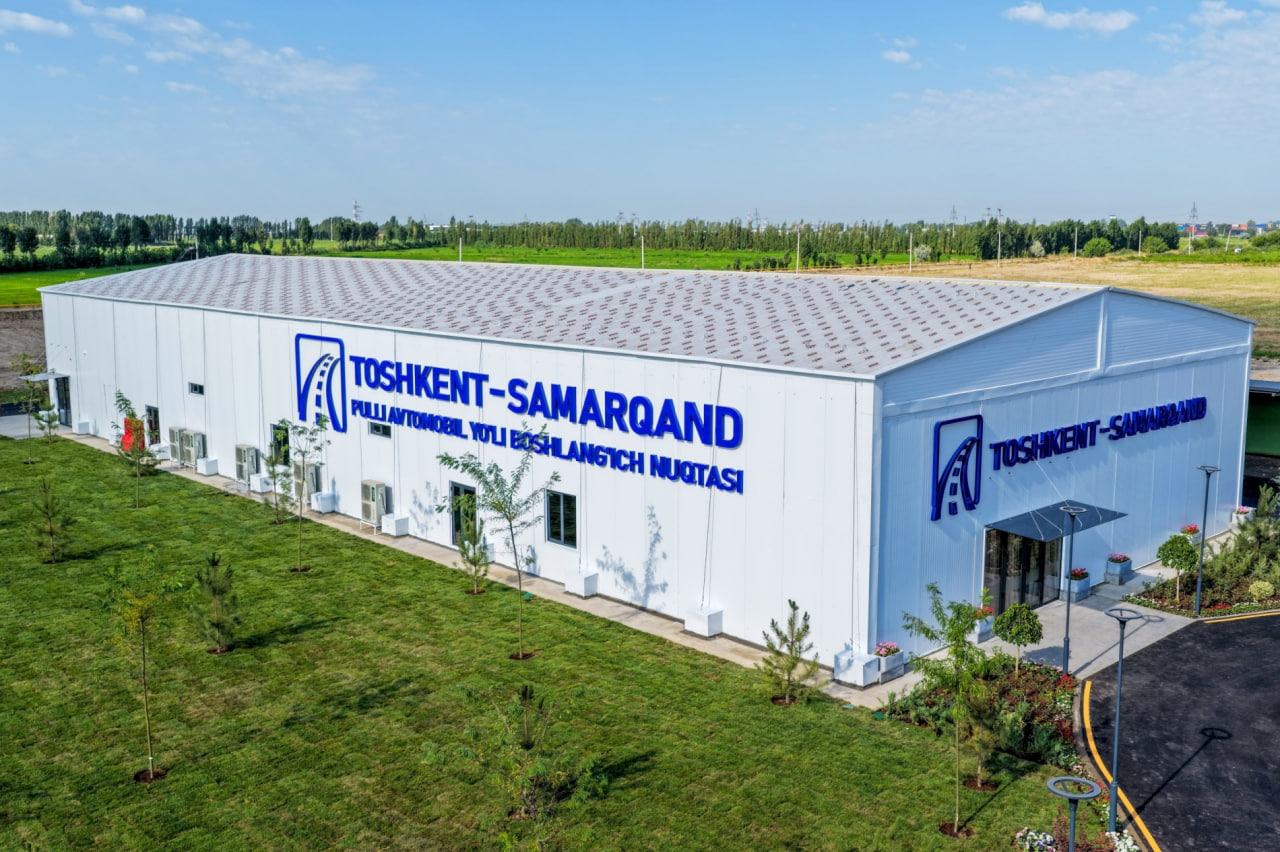
President Shavkat Mirziyoyev attended the groundbreaking ceremony in the Urta Chirchiq district, describing the project as another historic milestone in the development of Uzbekistan's transport infrastructure.
The president noted that Uzbekistan's economy has tripled in recent years and reaffirmed the country's goal of expanding its gross domestic product to $240 billion by 2030.
Strategic transport corridor
According to Mirziyoyev, around 4,000 kilometers of international transit routes pass through Uzbekistan. He said 30% of the country's international highways are already operating at full capacity, while another 25% are overloaded.
Once the China–Kyrgyzstan–Uzbekistan railway and the Trans-Afghan Railway become operational, Uzbekistan is expected to become a key link in the shortest overland corridor connecting the Pacific Ocean with Europe. The new transport routes will also provide access to the Indian Ocean through Pakistani ports and open new trade opportunities with South Asia, a market of nearly 2 billion people.
Government estimates suggest that handling an additional 15–20 million tonnes of international transit cargo annually could generate $400–600 million in revenue, attract $3 billion in investment for logistics centers and terminals, and create at least 50,000 permanent jobs.
Six-lane motorway
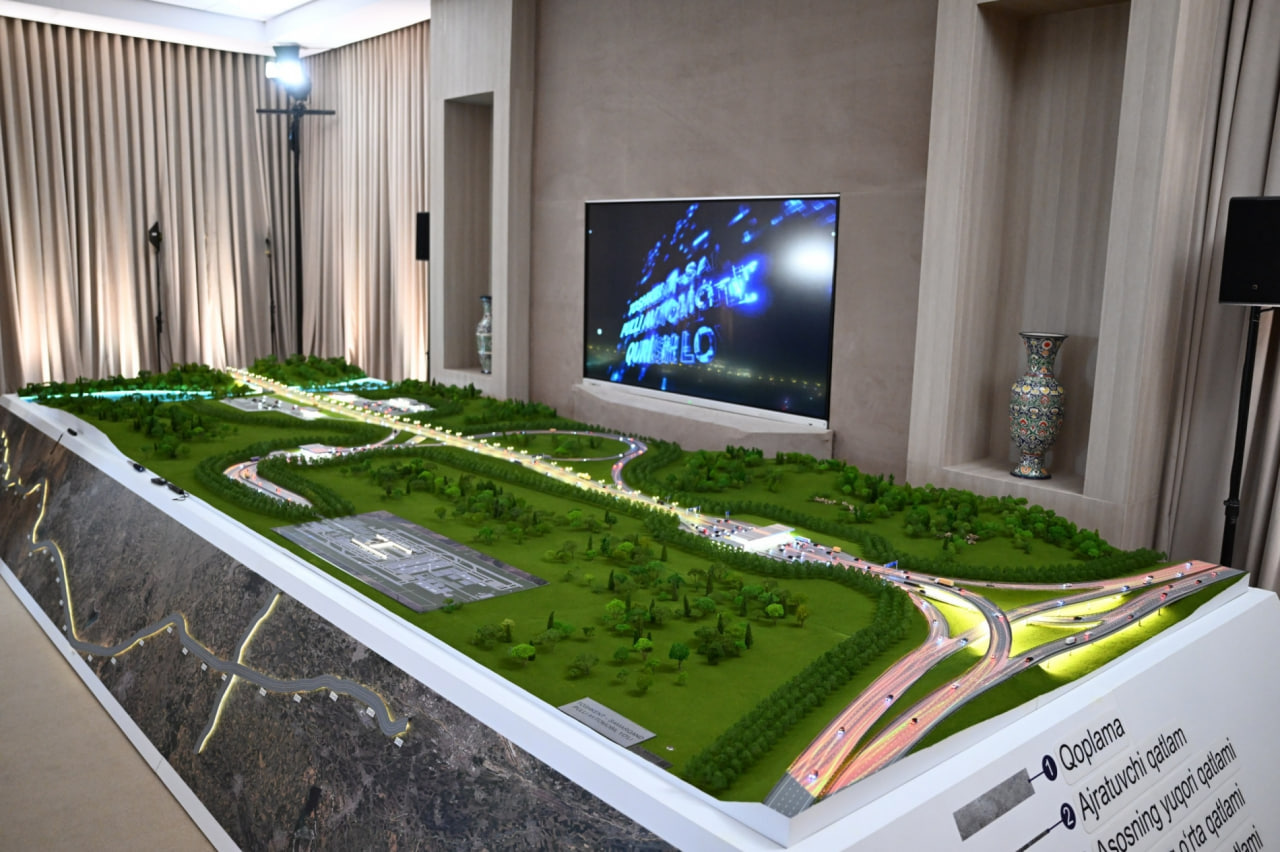
The new highway, estimated to cost nearly $2.2 billion, will stretch 282 kilometers and feature six lanes.
The project includes the construction of 92 bridges, 28 overpasses, and 60 tunnel-type underpasses.
The road will be paved with monolithic concrete designed to withstand heavy vehicles and high-speed traffic. On flat sections, vehicles will be able to travel at speeds of up to 150 km/h. The motorway will also incorporate modern safety systems and digital technologies aimed at significantly reducing traffic accidents.
Once completed, the highway is expected to reduce travel time between Tashkent and Samarkand from five hours to two and a half hours. It will have the capacity to accommodate between 60,000 and 80,000 vehicles per day, while freight transportation costs are projected to decline by 20–24%.
Economic impact
Officials expect the project to stimulate economic activity across the regions it traverses. Citing World Bank analysis, the president said every dollar invested in infrastructure projects of this kind can generate up to five dollars in economic returns.
The motorway is expected to increase the gross regional product of Tashkent city and Syrdarya, Jizzakh, and Samarkand regions by around 3%.
More than 2 million people live in the 13 districts along the route, where the project is expected to create thousands of jobs and new sources of income. Logistics hubs, warehouses, industrial and agro-industrial enterprises, commercial and service facilities, hotels, and tourism infrastructure are also planned along the corridor.
Mirziyoyev added that construction has already begun on the Khiva–Urgench highway, that the international tender for the Tashkent–Andijan highway is nearing completion, and that design work on a new road linking Tashkent with Bostanlyk district is in its final stage.
Speaking at the ceremony, the president said the launch of the project marked the laying of another strong foundation for Uzbekistan's future, economic stability, and public prosperity ahead of the country's 35th Independence Day anniversary. He then placed a commemorative capsule to officially mark the start of construction.