
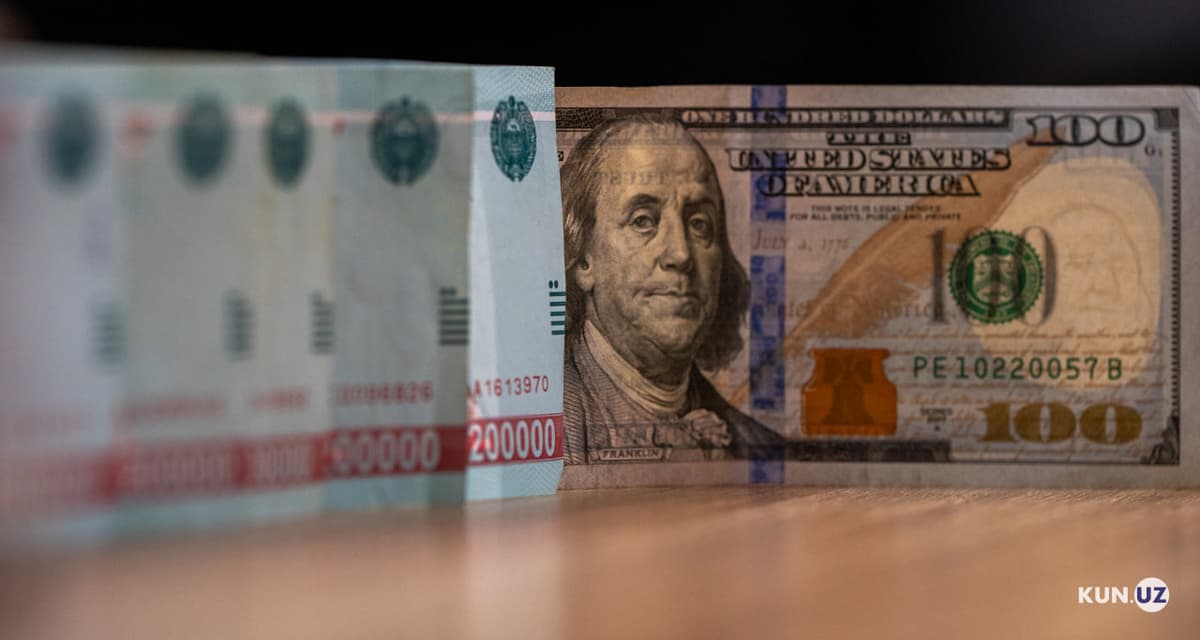
As of January 1, 2026, foreign currency loans accounted for 39% of banks' total loan portfolio, down by nearly four percentage points over the year.
The share of foreign currency deposits also declined, falling from 25% to 21% of total deposits during the same period.
According to the Central Bank, lower loan dollarization reduces risks associated with exchange rate movements. When the national currency depreciates, debt servicing costs on foreign currency loans increase in terms of the UZS, which can weaken borrowers' repayment capacity and contribute to a rise in non-performing loans.
Foreign currency lending and deposits continue to expand
Despite the declining share of foreign currency operations in overall banking portfolios, their actual volume continued to grow.
By the end of 2025, the outstanding balance of foreign currency loans had increased by 11% in U.S. dollar terms, while foreign currency deposits rose by 21%.
Growth also accelerated compared to the previous year. Annual growth in foreign currency lending was 8 percentage points higher than in 2024, while growth in foreign currency deposits accelerated by 19 percentage points.
The Central Bank noted that declining dollarization reflects the shrinking share of foreign currency instruments within rapidly expanding loan and deposit portfolios rather than a reduction in the absolute volume of foreign currency assets and liabilities.
The regulator warned that continued growth in foreign currency lending increases the scale of potential credit risks should the exchange rate move sharply.
Meanwhile, rising foreign currency deposits could heighten liquidity risks. The Central Bank linked this to the possibility that depositors may shift their funds from domestic banks into foreign assets once opportunities for unrestricted overseas investment become available.
Gap between foreign currency assets and liabilities widens
By the end of 2025, the gap between the banking sector's foreign currency assets and liabilities had widened to UZS 4 trillion.
According to the Central Bank, the expanding gap indicates that banks could face larger potential losses if foreign exchange risks materialize.
At the same time, the banking sector's overall foreign exchange position remained within regulatory limits. As of January 1, 2026, the ratio of the net open foreign exchange position to regulatory capital stood at 2.7%.
The regulator said this level indicates that the banking system has sufficient capacity to absorb potential losses arising from foreign exchange risks.
Earlier, Central Bank Chairman Timur Ishmetov cited the economy's continued de-dollarization as one of the positive effects of growing public confidence in the national currency. Since 2018, the share of foreign currency deposits has declined from 41.2% to 20%, while the share of foreign currency loans has fallen from 54.3% to 37.4%.