According to South Korean outlet Pressian, Uzbek workers sign special agreements and guarantee statements with Uzbekistan’s Migration Agency before leaving for South Korea. Critics argue that the documents are one-sided and can leave workers financially tied to their employers.

The most controversial provision reportedly requires workers to pay $2,000 for every month remaining until their return to Uzbekistan if they change jobs without written approval from their employer and the Migration Agency’s representative office in South Korea. There is reportedly no upper limit on the penalty, meaning the amount can continue to accumulate until the worker returns home.

The penalty may also apply when workers leave their jobs involuntarily, including cases involving dismissal or a lack of work, according to the report.

Death at Hyundai shipyard raises concerns

The issue came under renewed scrutiny after a 26-year-old Uzbek worker was killed at a Hyundai Heavy Industries shipyard in Ulsan on July 18, 2026. He was reportedly trapped between lifting equipment and an air hose.

Colleagues said the worker had suffered injuries several times and wanted to transfer to another shipyard because of dangerous working conditions and low wages, but was unable to do so because of the potential penalties.

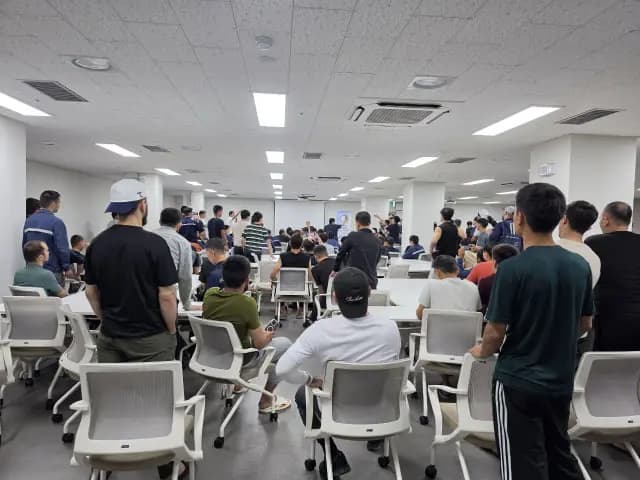
On July 20, Nurmatjon Kamilov, head of the Migration Agency’s representative office in South Korea, met with workers who raised concerns over the system.

“If he had been able to change shipyards, he would not have died,” workers reportedly said.

A representative of a Hyundai Heavy Industries subcontractor said more than 100 Uzbek workers had protested. According to the representative, the agency also demands penalties from workers dismissed by subcontractors, effectively preventing them from leaving their jobs.

The shipbuilding industry is facing a labor shortage, while Uzbekistan and South Korea have been working to train workers for the sector. With support from Hyundai and the Ulsan authorities, an Ulsan Global Workforce Training Center was established in Fergana region as part of a pilot project. Around 380 people had been recruited through the program by June 2026.

Migration agency cites limited grounds for changing jobs

A representative of the Migration Agency said workers are allowed to change jobs if a company suspends operations or if there are medical grounds, such as a spinal disc herniation, provided they submit a medical certificate.

Asked why workers are required to sign the agreements, the representative cited an increase in cases of illegal stays in South Korea.

South Korean lawyer Cho Jung-gyu compared the arrangement with practices previously reported in the Philippine agricultural sector, where 60% of workers’ wages were withheld until they returned home.

In October 2024, South Korea’s National Human Rights Commission determined that withholding wages, confiscating passports and demanding large deposits constituted human trafficking in a case involving migrant workers.

South Korean authorities investigate

Hyundai Heavy Industries said it had not been involved in drafting the penalty statements. The metalworkers’ union, however, criticized the company’s position as illogical, arguing that both Hyundai and the city of Ulsan had benefited from the system.

Following pressure from the Ministry of Gender Equality and Family and human rights organizations, South Korea’s Ministry of Employment and Labor began examining the issue in cooperation with the Uzbek Embassy.

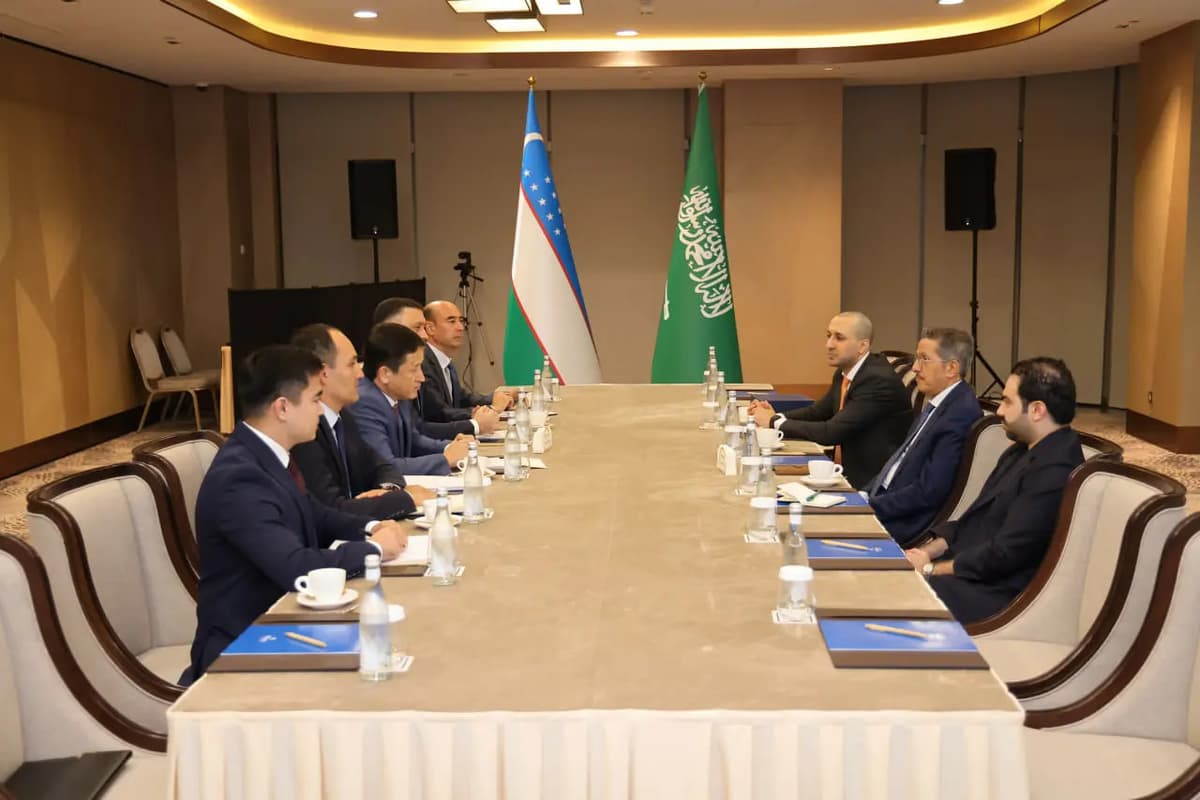
At a meeting on August 6, Uzbekistan’s deputy minister of employment discussed concerns over the fairness of the mechanism with South Korean officials and called for it to be improved as soon as possible.

South Korea’s Ministry of Employment and Labor said it would monitor the situation and take additional measures if necessary. The Ministry of Gender Equality and Family also identified possible signs of human trafficking in the recruitment and entry of Uzbek migrants under E-9 visas.