The draft sets annual targets for domestic air travel at 1.5 million passengers in 2026, 1.7 million in 2027, 1.9 million in 2028 and 2.2 million in 2029, before reaching 2.5 million by 2030.
The document also provides figures showing the expansion of the country's aviation sector in recent years.
Between 2023 and 2025, the number of air routes increased from 167 to 206, while the number of flights rose from 85,000 to 130,000. Passenger traffic handled by the country's airports grew from 10 million to 15.5 million over the same period.
In the first half of 2026, flights operated on 220 routes, including 19 domestic and 201 international destinations.
Uzbekistan's aircraft fleet has also expanded. It stood at 54 aircraft in 2022, before growing by 24 in 2023, eight in 2024 and 21 in 2025. A further seven aircraft were added in the first half of 2026, bringing the total fleet to 114.
According to the draft, 11 international and domestic airports have been reconstructed.
Samarkand International Airport underwent a complete renovation under a public-private partnership and was developed into a tourism hub.
New terminals have been built in Termez, Namangan and Andijan. Airports have also been constructed in Muynak and Zaamin, while an airstrip was established in Sokh district. Airfields in Kokand, Shakhrisabz and Sariasia have been reconstructed.
Construction of a new international airport in Tashkent and a new airport in Bukhara began in the first half of 2026.
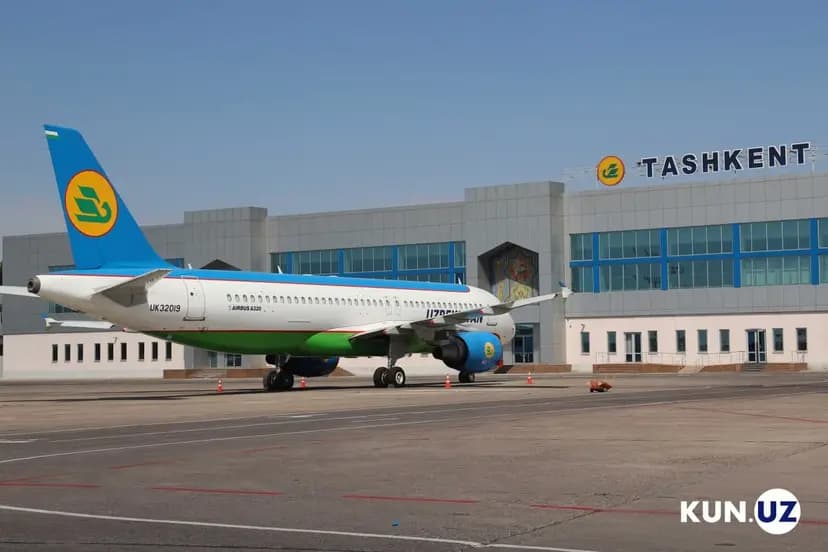
The draft strategy also calls for coordinating domestic flight schedules to improve connections for passengers transferring through Tashkent International Airport.
The Ministry of Transport, Uzbekistan Airports and resident airlines are expected to work together on aligning flight schedules.
The proposals include introducing a single electronic ticket for passengers travelling onward through Tashkent, allowing them to check in through to their final destination and have their baggage transferred without collecting it at the intermediate airport.
The document identifies restrictions affecting air transport and geopolitical factors among the external risks facing the sector.