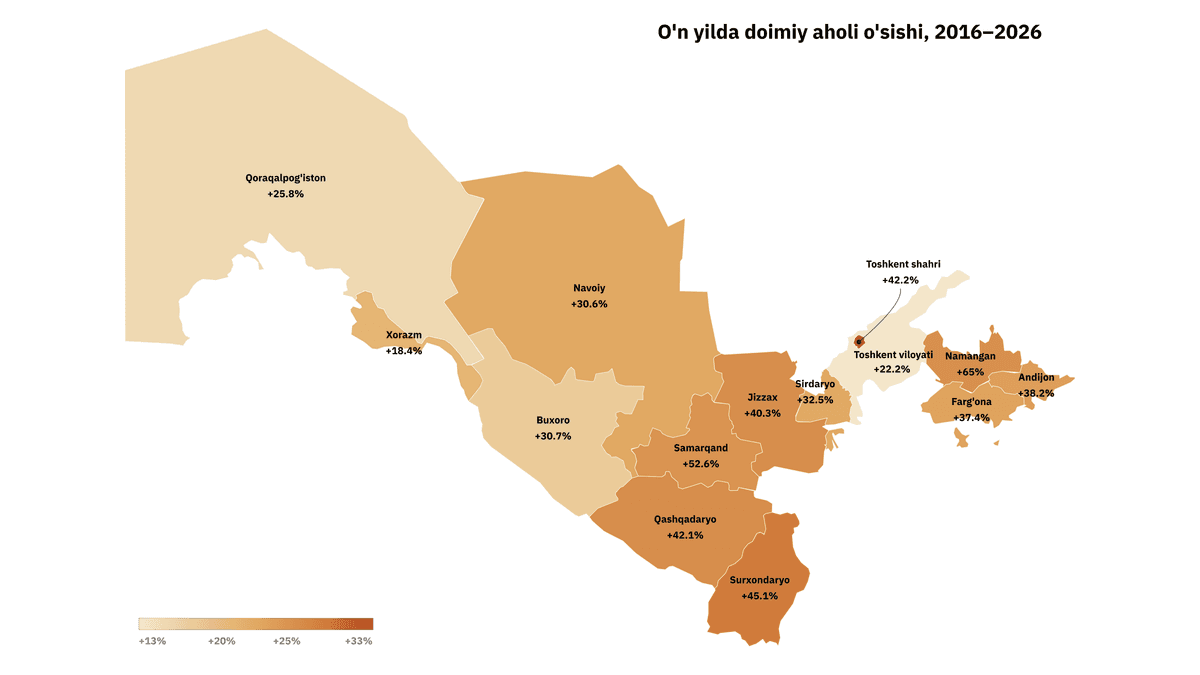
Recent data confirms this ongoing demographic surge in real time. Uzbekistan began 2026 with 38.2 million residents on January 1, and the figure rose to 38,401,654 people by April 7. These figures cement Uzbekistan's position among the top 40 most populous countries in the world.
Rising median age signals a maturing population
The age structure of the population indicates that the country’s demographic profile is gradually maturing. In 2000, the median age in Uzbekistan was just 20 years. By 2024, it had risen to nearly 30 years, and forecasts suggest this aging trend will accelerate, bringing the median age to 35 by 2050.
A breakdown of future age groups highlights significant structural shifts:
The working-age population (aged 15–64) is expected to expand from 23.9 million in 2024 to over 33 million by 2050. Meanwhile, the elderly population will experience a massive spike, growing from 2.2 million in 2024 to more than 6 million by 2050 – a threefold increase.
The projected rise in the median age to 35 by mid-century is closely linked to gradual shifts in fertility rates. During the 1990s, the average fertility rate in Uzbekistan exceeded 4 children per woman. Since then, the rate has decreased noticeably, creating a major shift in the demographic balance. This downward trend is expected to continue, and by 2050, the fertility rate is projected to approach replacement level, stabilizing at an average of 2.5–2.6 children per woman.
Although the total number of children in Uzbekistan is expected to hover around 16 million by 2050, their percentage share of the total population will shrink compared to previous decades. This transition indicates that Uzbekistan is steadily moving away from a youth-dominated demographic era and entering a phase of demographic maturity.